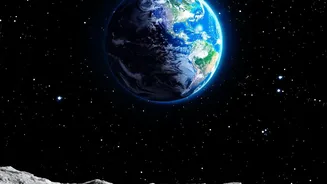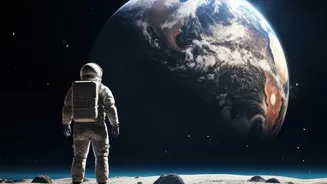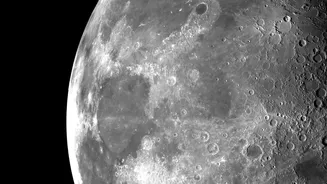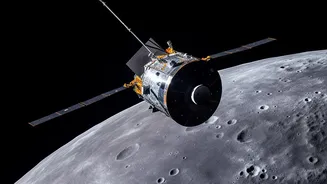




A Brutally Hostile Environment
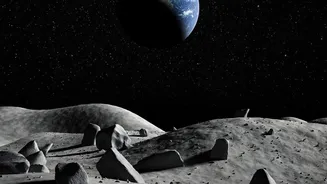
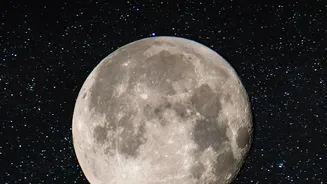
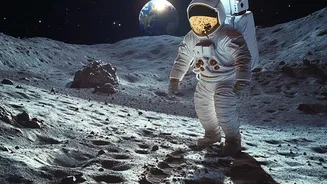
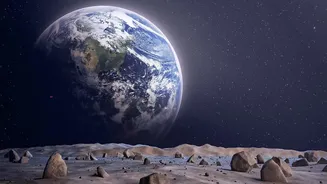
The Moon offers a profoundly challenging environment for life as we know it. With no significant atmosphere, its surface is a vacuum, exposed to a constant barrage of deadly ultraviolet (UV) and cosmic radiation from the sun and deep space. Temperatures
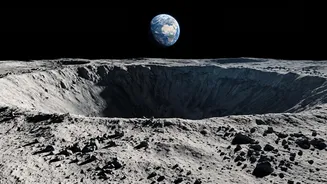
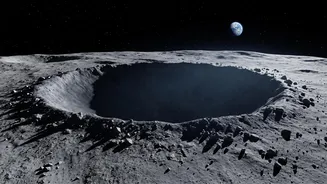
swing wildly, from scorching highs of around 120°C in direct sunlight to frigid lows plummeting below -200°C in the dark. The headline's "deep cold" is most pronounced in the Permanently Shadowed Regions (PSRs) near the lunar poles. These are craters and depressions that haven't seen direct sunlight in billions of years, making them some of the coldest places in our solar system and prime locations for harboring frozen water.
Earth's Toughest Stowaways
Despite these conditions, recent research suggests the Moon might not be as sterile as once thought. A NASA-led study published in August 2026 found that certain niches, particularly at the lunar poles, could be amenable to microbial survival. The key is that topography like crater walls, hills, and even an astronaut's bootprint can create tiny shadows that offer protection from direct UV radiation. The study simulated conditions for five common microbes found on spacecraft, including the fungus Aspergillus niger (black mold) and the bacterium Deinococcus radiodurans. These organisms, known for their resilience, could potentially survive in a dormant, suspended state known as cryptobiosis, where they don't grow or reproduce but remain viable.
Fungi Prove Hardier Than Bacteria
In simulations modeling the lunar south pole, a target for upcoming Artemis missions, fungi proved to be more resilient than bacteria. Aspergillus niger was the standout survivor, thanks to its thick cell walls and dark pigments that protect against radiation. Models showed it could potentially survive in up to 30% of the landscape during the lunar winter. While the bacteria tested were less resistant to the combination of UV and heat, the research still found that all five microbes could potentially survive for at least a day, and in some cases up to a week, in the most protected, permanently shadowed areas. However, it's crucial to note this is about survival, not thriving. Without liquid water and nutrients, these microbes cannot grow or colonise the Moon.
The Accidental Experiment of the Tardigrades
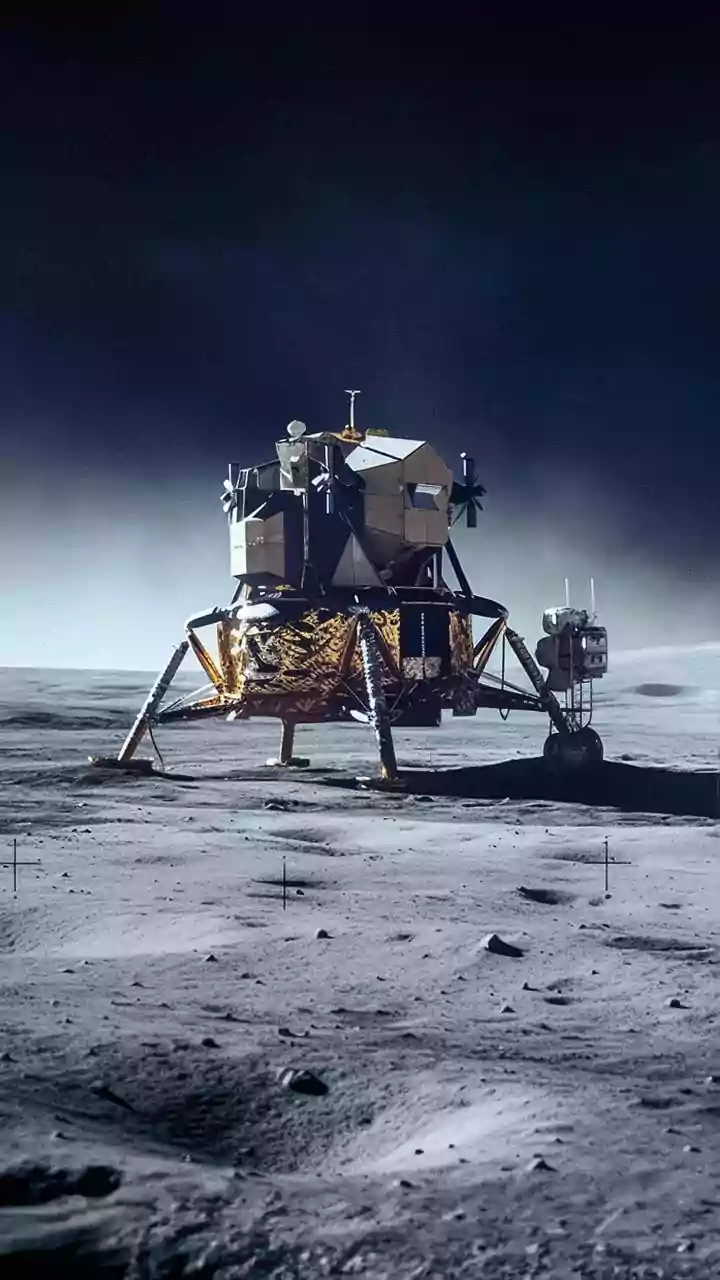
The question of microbial survival became a real-world scenario in 2019 when Israel's Beresheet lander crashed on the Moon. It was carrying a 'lunar library' that included thousands of tardigrades, microscopic creatures famed for their near-indestructibility. Tardigrades can enter a dehydrated 'tun' state, allowing them to withstand extreme temperatures, radiation, and the vacuum of space. While scientists believe it's unlikely they survived the immense shock pressure of the crash, if they did, they would remain in their dormant state. They cannot 'live' on the Moon, as they require water to reanimate, but the incident highlights how easily terrestrial life can be transported to other worlds.
Implications for Planetary Protection
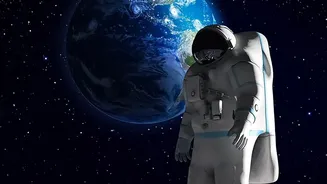
The potential for microbial survival has significant implications for future exploration. It raises concerns about 'forward contamination,' the process of inadvertently carrying Earth microbes to other celestial bodies. International agreements like the Outer Space Treaty require nations to avoid the harmful contamination of worlds like the Moon and Mars. As Artemis astronauts prepare to explore the lunar south pole, ensuring they don't contaminate scientifically valuable sites, especially those containing ancient water ice, is a top priority. Scientists need to establish a baseline of what is already on the Moon before humans arrive in greater numbers, to ensure that any future discovery of organic molecules is not just a case of finding our own biological baggage.