

Meet the Scientist in Charge
At the helm of this ambitious new venture is Dr. Ramya Manjunath Anche, a scientist whose journey began in Devanahalli, near Bengaluru. After completing her education in India, including her PhD at the prestigious Indian Institute of Astrophysics (IIA),
she moved to the United States. She is now an assistant research professor at the University of Arizona's Steward Observatory, a leading centre for astronomical research. Dr. Anche's expertise lies in astronomical polarimetry and high-contrast imaging, specialised fields that focus on the properties of light and the instruments needed to observe faint objects in space. Her deep knowledge in these areas was instrumental in the development and selection of her proposed mission by NASA.
The PUFFINS Mission
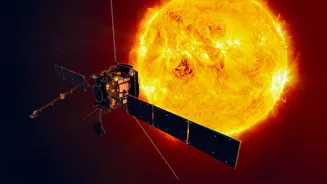
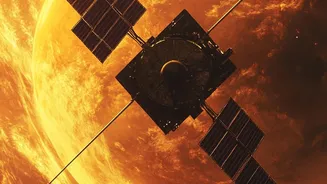
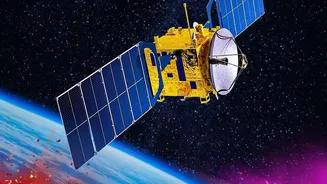
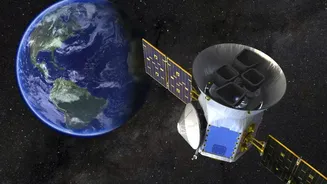
The mission Dr. Anche leads is called PUFFINS, which stands for 'Polarimetry in the Ultraviolet to Find Features in INterStellar dust'. With a budget of $20 million and a planned launch in 2030, PUFFINS is part of NASA's Astrophysics Pioneers program, which focuses on smaller, targeted science missions. The mission will use a SmallSat, a compact satellite carrying a 10-inch telescope, to observe the ultraviolet light from approximately 70 bright stars. It’s not just about looking at the stars themselves, but about what their light tells us about the dust it passes through on its way to us.
Why Space Dust is a Big Deal
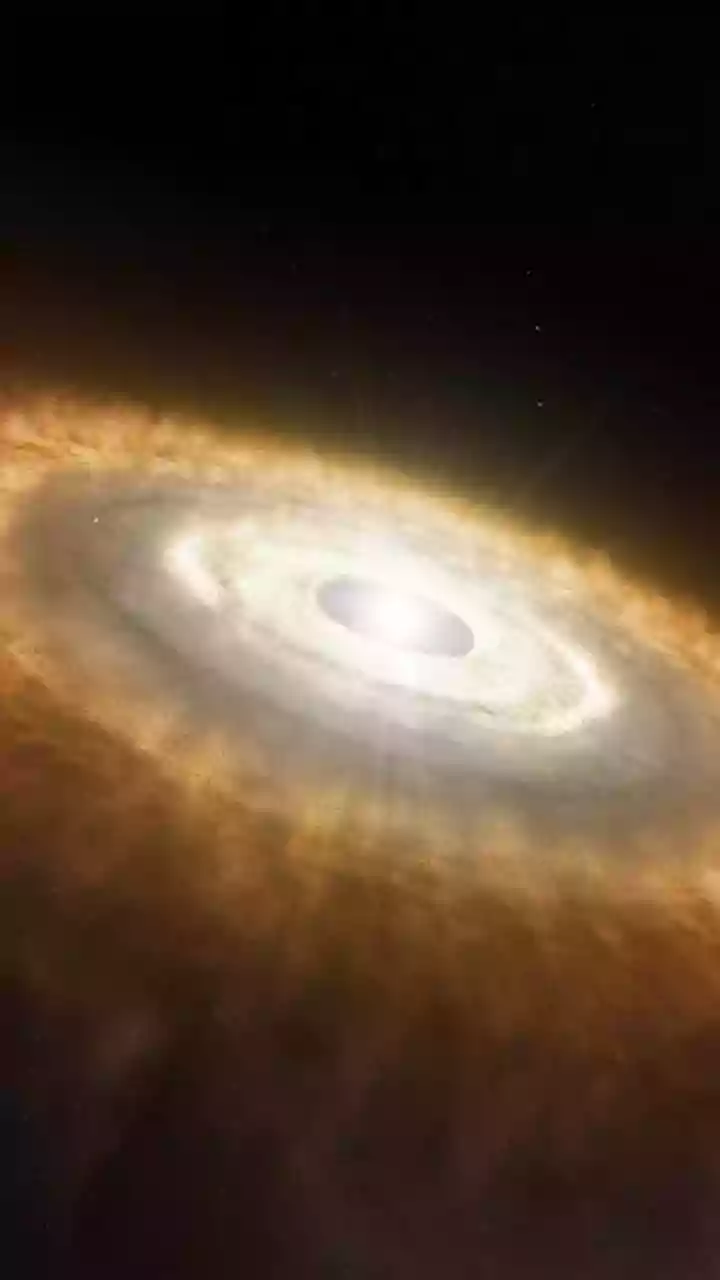
It might just sound like dust, but these tiny particles, often no bigger than a virus, are a fundamental component of the cosmos. Cosmic dust was once seen as a mere annoyance by astronomers, something that obscured their view of distant stars. However, scientists now know that this dust is the very building block of planets, moons, and even stars. These grains are the recycled ashes of long-dead stars, and within them are clues to how galaxies, stars, and planetary systems form and evolve. Dr. Anche explains that since dust is such a critical ingredient in how planetary systems and, eventually, life itself can form, understanding its properties is essential. The data from PUFFINS will help fill a long-standing gap in our knowledge of the universe's structure.
Reviving a Powerful Technique
To achieve its goals, the PUFFINS mission will use a technique called ultraviolet spectropolarimetry. This method involves measuring the polarization of UV light, which provides detailed information about the size, shape, and alignment of the dust grains. While the principle isn't new, it hasn't been used in a dedicated space mission for nearly three decades. By reviving and advancing this technique, Dr. Anche and her team of about 40 scientists from institutions in the US and India hope to gain unprecedented insights. The mission will focus on the smallest dust grains, which are nearly invisible to other telescopes but whose effects are imprinted on the starlight passing through them.
An Inspiration for a New Generation
Dr. Anche's leadership on a NASA mission is a significant achievement and serves as a powerful source of inspiration. Her journey from Bengaluru to leading a cutting-edge space science project highlights a path of dedication and excellence in the STEM fields. Throughout her career, she has also been actively involved in public outreach, sharing her passion for astronomy with school children and the general public in India. The PUFFINS mission, a collaboration that includes Indian research institutes like IUCAA and IIA, not only advances science but also strengthens the ties between the global scientific communities and showcases the incredible contributions of Indian scientists on the world stage.