




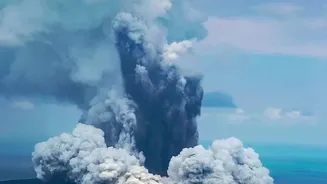
Why Distance Equals a Better View
When it comes to witnessing a volcanic eruption, proximity isn't always a virtue. Up close, your view is limited, the dangers are real, and the full scale of the event is hard to grasp. Toxic gases, unstable ground, and the risk of sudden explosions are all
serious hazards. From a distance, however, the entire spectacle unfolds. You can appreciate the towering column of ash, the glow of lava against the night sky, and the way the flow reshapes the landscape, all from a secure vantage point. Safe viewing platforms, often established by national parks or geological authorities, are designed to offer the best possible panoramic perspectives without the peril. They allow you to absorb the grandeur of the event responsibly.
Stromboli, Italy: The Lighthouse of the Mediterranean
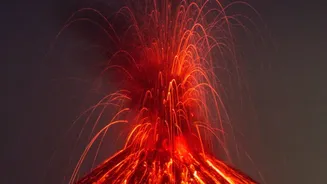
The island of Stromboli offers one of the most reliable volcanic shows on Earth, erupting roughly every 15-20 minutes. While guided hikes can take you to an authorized viewpoint at 400 meters, one of the most sublime ways to watch the fireworks is from the water. Evening boat tours position themselves off the coast of the Sciara del Fuoco, a massive scar running down the volcano's slope where ejected, incandescent rocks tumble into the sea. As darkness falls, you can watch the rhythmic bursts of glowing lava arc across the sky and cascade into the waves—a mesmerizing and completely safe experience from the comfort of a boat. It's an unforgettable display that has earned the volcano its 'lighthouse' nickname.
Kīlauea, Hawaii: America’s Drive-Up Volcano
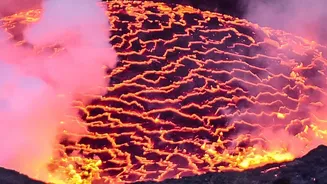
Located in Hawaiʻi Volcanoes National Park, Kīlauea is one of the world's most active and accessible volcanoes. The park is a model for safe volcano tourism, with numerous overlooks and trails situated a safe distance from the active Halemaʻumaʻu crater. For a stunning view, especially after dark, head to viewpoints along the Crater Rim Trail like Keanakākoʻi Overlook or the area near Volcano House hotel. From these spots, you can often see the otherworldly glow of the lava lake illuminating the caldera and the night sky. The park's infrastructure makes it easy to drive and walk to multiple vantage points, offering different perspectives on the eruption in a highly monitored and secure environment.
Mount Etna, Sicily: Views from an Ancient City
Europe's most active volcano, Mount Etna, dominates the skyline of eastern Sicily. While guided tours can take you to higher altitudes, some of the most dramatic views of its frequent eruptions are from towns miles away. The ancient hilltop town of Taormina, known for its Greek theatre, offers a picture-perfect frame for Etna's fiery displays. From this safe distance, you can watch ash plumes rise and, on a clear night, see lava flows glowing on the mountain's upper slopes. This perspective allows you to see the volcano not as an isolated feature, but as a powerful force shaping a landscape inhabited for millennia. It combines natural wonder with rich cultural history, all from the safety of a charming Sicilian town.
Sakurajima, Japan: The Urban Volcano
Sakurajima is a highly active volcano just a short ferry ride from the city of Kagoshima. This constant activity is so integrated into daily life that the city has developed excellent, safe viewing infrastructure. The Yunohira Observation Deck, the highest publicly accessible point on the volcano's flank, provides a close-up but secure look at the crater and the rugged lava fields. From here, you can often see plumes of ash rising into the air while taking in panoramic views of Kagoshima Bay. The contrast between the smoking peak and the bustling city below highlights the unique relationship between the community and its volatile neighbor, offering a fascinating and safe way to observe a powerful volcano.
Pacaya, Guatemala: The Accessible Adventure
As one of Guatemala's most active volcanoes, Pacaya offers a thrilling yet well-managed experience for visitors. While guided hikes take you onto the volcano's cooled lava fields, where you can even roast marshmallows over geothermal hot spots, the full majesty of an eruption is often best seen from a distance. Tour operators offer alternative viewing experiences from private farms across the valley, especially when the volcano is particularly active. This provides a safe vantage point to watch glowing lava flows snake down the mountainside at night—a spectacle that is both safer and more encompassing than being on the slope itself. Hiking is always done with certified guides who monitor activity to ensure safety.