

The Search for Martian Water
For decades, scientists have followed a simple mantra for exploring the Red Planet: “follow the water.” Buried water ice is not just a target for finding signs of past microbial life; it's a critical resource for future astronauts. It can be processed
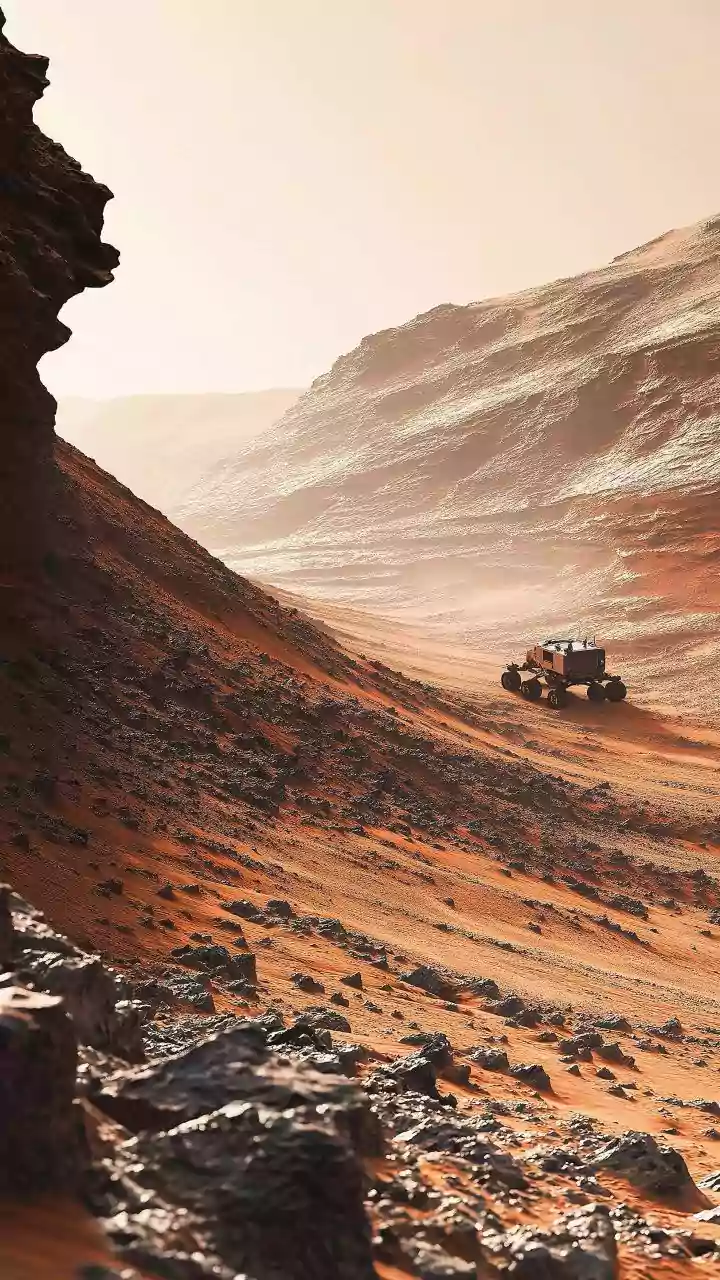
into drinking water, breathable oxygen, and even rocket fuel, drastically reducing the amount of material that must be launched from Earth. Orbiters have successfully mapped vast deposits of ice at the poles, but these regions are too cold and harsh for human or robotic missions to survive for long. Data also suggests ice exists buried at mid-latitudes, but orbiters lack the resolution to pinpoint its exact depth and purity in the crucial top few feet of soil. Rovers can analyze the ground up close but cover territory far too slowly. This creates a critical gap in our knowledge that a new kind of explorer is needed to fill.
Enter Skyfall: Helicopters on a Mission
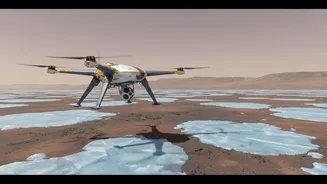
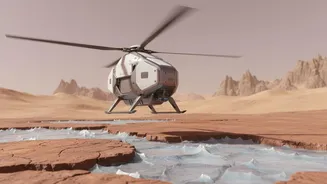
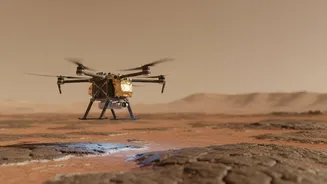
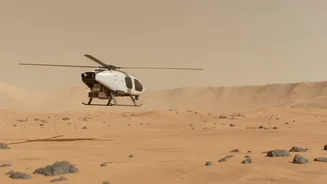
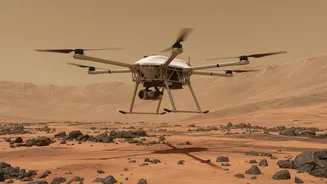
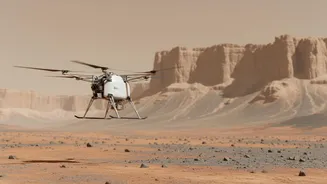
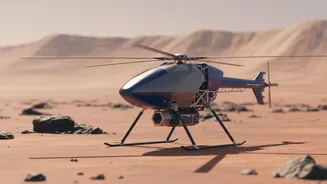
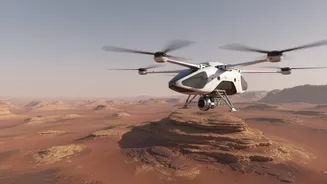
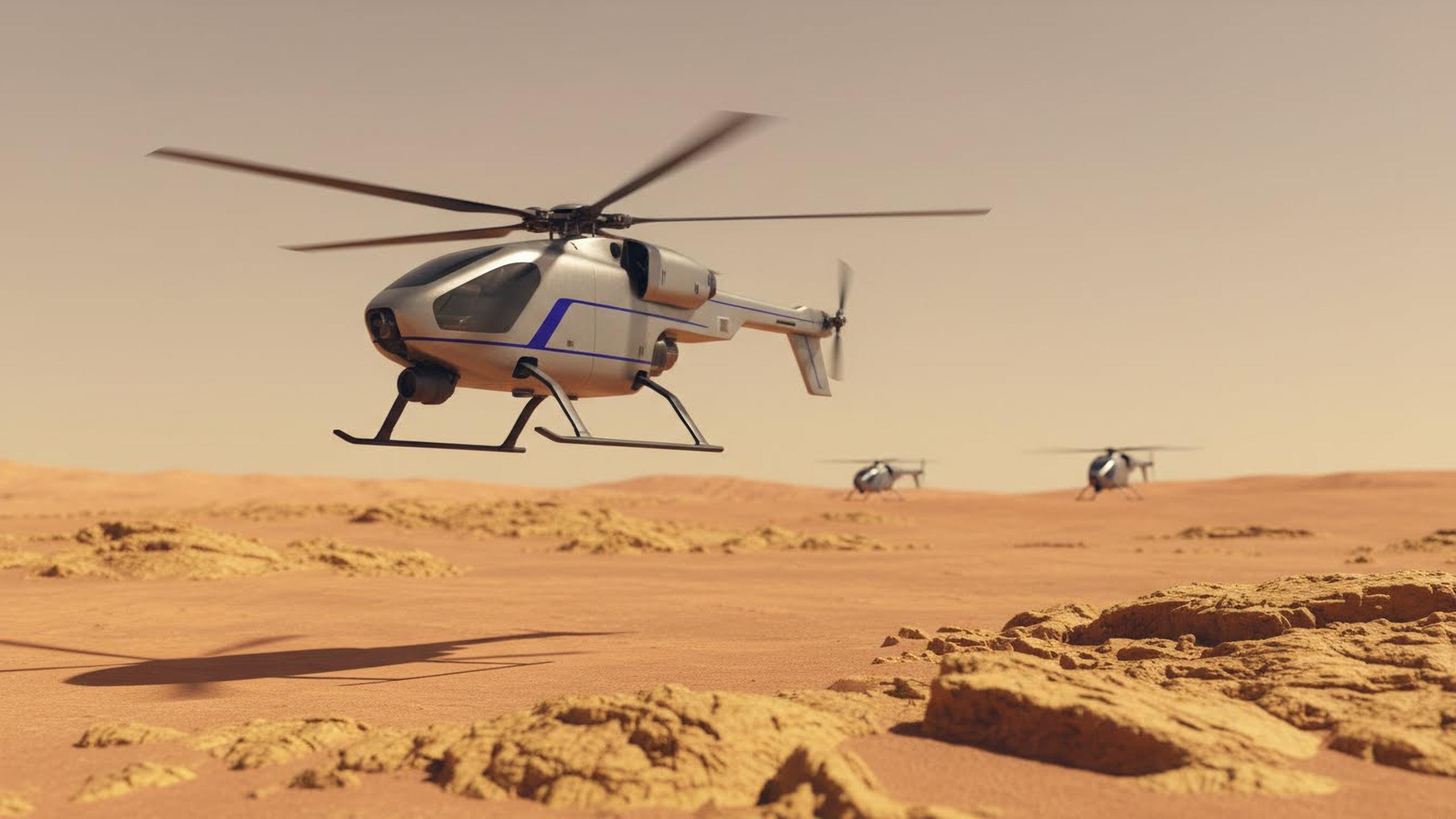
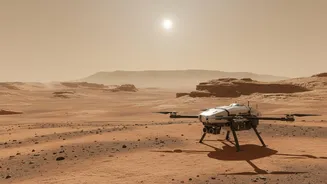
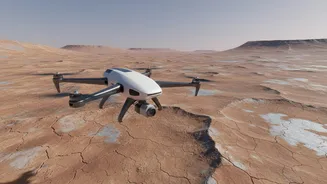
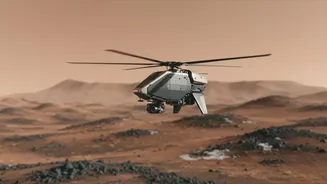
Building on the historic success of the Ingenuity helicopter, which proved powered flight in the thin Martian atmosphere is possible, NASA and its partners are developing the Skyfall concept. This ambitious mission proposes to deploy a team of three to six advanced helicopters to autonomously scout the Martian surface. These next-generation rotorcraft would be larger and more capable than their predecessor, equipped with a suite of scientific instruments designed specifically to hunt for subsurface ice. A key innovation is a daring landing technique called the 'Skyfall Maneuver,' where the helicopters would be released from their entry capsule mid-descent, using their own rotors to fly to the surface. This eliminates the need for a complex and heavy landing platform, a traditionally risky and expensive part of any Mars mission.
Seeing Beneath the Dust
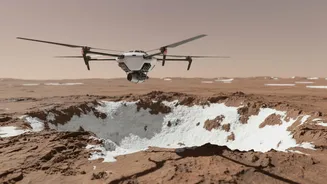
Skyfall's primary tool for finding hidden ice is a ground-penetrating radar. Recent tests at NASA's Jet Propulsion Laboratory have focused on a unique, flexible antenna that looks like a cape hanging below the helicopter. This design allows the antenna to fly close to the ground to collect high-resolution data without being damaged upon landing. By flying low and slow, Skyfall could create detailed 3D maps of the shallow subsurface, distinguishing dry soil from ice deposits. This aerial perspective provides a sweet spot between a rover's ground-level detail and an orbiter's broad coverage, allowing the mission to survey vast potential landing sites for human missions much faster than a rover ever could. The helicopters would be able to operate independently, mapping regions and beaming data directly back to Earth.
More Than Just a Water Detector
While finding ice is the primary goal, the Skyfall helicopters would be equipped with multiple instruments to create a comprehensive picture of their surroundings. Each rotorcraft is expected to carry a suite of four instruments. In addition to the ground-penetrating radar, an infrared camera would analyze the surface composition and temperature, looking for clues related to buried ice, which affects the temperature of the ground above it. Other onboard instruments would likely include high-resolution cameras for imaging and laser altimeters for creating precise terrain maps. This data is not only vital for science but also for mission safety, helping to identify the safest and most resource-rich zones for future crewed landings. The mission would effectively serve as an advance scouting party for the first humans on Mars.
The Next Leap in Martian Exploration
The Skyfall concept represents a paradigm shift in how we can explore other worlds. Following in the aerial footsteps of Ingenuity, which completed 72 flights, it scales up the idea of an aerial scout into a full-fledged exploration mission. The mission, which could be ready for a potential launch in the late 2020s, aims to provide detailed, actionable data that can directly inform the planning of human missions. By mapping subsurface water ice, identifying hazards, and certifying landing sites, a swarm of autonomous helicopters could solve some of the most significant challenges facing human exploration of Mars. It is a crucial next step, transforming our understanding of the Red Planet's resources and bringing humanity’s first footprints on its surface meaningfully closer.