

The Promise of Seamless Connectivity
For years, a faster, more efficient rail link between Bengaluru and Mangaluru has been a top priority. The two cities form a vital economic corridor, with Bengaluru’s tech and industrial might complementing Mangaluru’s status as a major port and commercial
hub. A Vande Bharat service promises to slash travel time, offering a comfortable, modern alternative to the winding, often congested highway journey. The completion of the full electrification of the Bengaluru-Mangaluru line in December 2025 was a major step, making the route theoretically ready for high-speed electric trains. Railway officials have expressed confidence that the service would boost tourism, trade, and daily commerce, cementing the connection between the coast and the state capital.
The Ghats Gauntlet
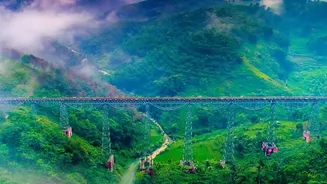
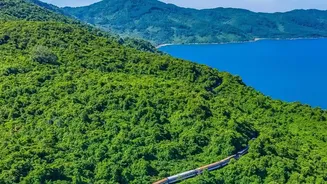
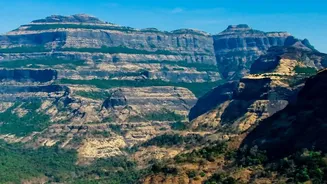
The primary obstacle is the 55-kilometre stretch of track between Sakleshpur and Subrahmanya Road. This section, often called the Shiradi Ghat line, is one of the most challenging railway passages in India. It features a steep gradient of 1 in 50, meaning the track rises one metre for every 50 metres travelled. The line navigates this daunting slope through a complex web of 57 tunnels and over 226 bridges, twisting through 108 sharp curves. This terrain, which has no direct road access for maintenance, is also highly susceptible to landslides, especially during the heavy monsoon season, which can disrupt services for days. For any train, this is a difficult run; for a high-speed Vande Bharat, it’s a severe engineering test.
Why Existing Systems Fall Short
Conventional trains have traditionally navigated this section with the help of 'banker' locomotives—extra engines added to the rear to push the train up the steep inclines. However, this approach is not practical for the integrated, self-propelled Vande Bharat trainsets. Furthermore, the severe curves and steep gradients impose a maximum speed limit of just 30 km/h in some parts, negating the very purpose of a semi-high-speed service. The greatest concern raised by the Research Designs and Standards Organisation (RDSO) was safety, particularly braking on such a steep descent. A standard Vande Bharat rake was deemed unsuitable without significant safety enhancements.
The Automatic Braking Solution
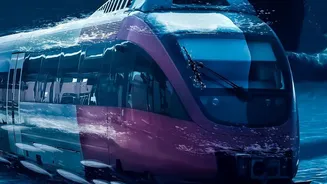
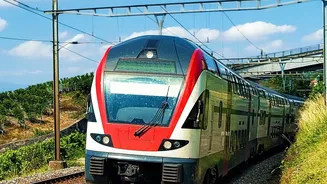
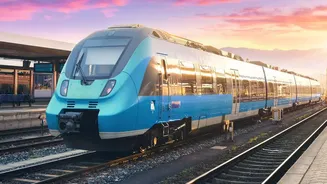
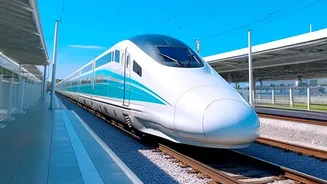
To address these safety concerns, Indian Railways has commissioned a specially-built 20-car Vande Bharat rake from the Integral Coach Factory in Chennai. This custom train is equipped with an Automatic Emergency Braking (AEB) system. This technology is designed to constantly monitor the train's speed and automatically apply the brakes if it exceeds the prescribed limit for the treacherous ghat section, adding a crucial layer of safety. In mid-August 2026, the South Western Railway began extensive field trials on the Sakleshpur-Subrahmanya section to test this very system. Personnel from RDSO are on board to evaluate the train's performance, assessing everything from acceleration and stability to braking effectiveness in real-world ghat conditions.
The Path Forward
The successful trial runs, which are scheduled to continue until August 20, are a critical step forward. One test run on August 12 saw the train successfully travel from Sakleshpur down to Subrahmanya Road in just over four hours. While the launch was initially anticipated by June 2026, it was postponed pending the availability of a rake with the mandatory AEB system. If these trials prove successful and receive the final green light from the Commissioner of Railway Safety, the dream of a Vande Bharat service linking Bengaluru and Mangaluru could finally become a reality. However, there remains debate about the train's final route, with some speculation that it might bypass Mangaluru Central station, which has caused concern among local commuters.