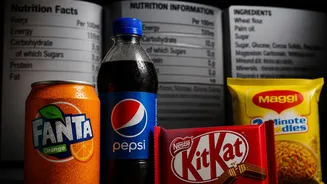






What FSSAI Proposed
For years, the Food Safety and Standards Authority of India (FSSAI) has been working on a new Front-of-Pack Labelling (FoPL) system. The goal is to make it easier for consumers to understand the health impact of packaged foods at a glance. One of the leading
proposals was a colour-coded 'traffic light' system, which would use red, amber, and green symbols to indicate high, medium, and low levels of salt, sugar, and saturated fat. The idea, supported by health advocates, is that these simple visual cues could help tackle rising rates of obesity and lifestyle diseases in India by empowering consumers to make healthier choices instantly. Approximately 20 countries have already adopted similar interpretive labelling systems.
Why the Food Industry Is Pushing Back
Food and beverage companies have strongly resisted the colour-coded warnings. Industry associations argue that such labels would be confusing and unfairly demonise many products. One major concern is that nearly 80% of India's packaged food and beverage market could receive red labels, which they fear would scare consumers and devastate sales. Representatives also claim that international standards don't fit the Indian context, where cuisine often has stronger flavours. They have pointed out that traditional foods like pickles or namkeen, which are naturally high in salt or fat but consumed in small portions, could be unfairly penalised. Some have argued for focusing on 'portion control' education instead.
The Public Health Crisis
On the other side of the debate, public health experts see the labels as a critical and urgent intervention. They point to an escalating health crisis, with a recent study in The Lancet estimating that 450 million Indians could be overweight or obese by 2050. Advocates argue that with the market for ultra-processed foods growing rapidly in India, clear warning labels are the most effective tool to help consumers, including those with lower literacy levels, identify unhealthy products quickly. The issue has become so contentious that it has reached the Supreme Court, which has criticised the FSSAI for delays and stressed that commercial interests cannot take precedence over public health.
A Change in Direction
Following significant pushback from the industry, the FSSAI appears to have backed away from the colour-coded proposal. The regulator told the Supreme Court it was difficult to match international standards and instead proposed a black-and-white table showing sugar, fat, and salt content. This move was seen as a victory for the industry but a setback for health activists, who argue a simple table is not as effective as an interpretive warning. Critics of the industry's position point out that many of the same global companies that opposed colour-coded labels in India, such as Coca-Cola and Nestle, voluntarily use them in European markets.
What Happens Next?
The debate is now under the scrutiny of the Supreme Court, which has questioned the FSSAI's change in stance and the influence of corporate lobbying. The court has urged the regulator to finalize its policy, stating that "the world should know that India is very much concerned about the overall health of its citizens." The final decision on what kind of label will appear on food packages remains in limbo. While the industry continues to advocate for less intrusive options like Guideline Daily Amount (GDA) charts or a 'Health Star Rating' system, public health bodies maintain that a clear, simple warning is essential for consumer welfare.