





The Centre's Policy Check
The Union Ministry of Housing and Urban Affairs (MoHUA) has returned the metro rail proposals for Coimbatore and Madurai for a second time, recommending that the state government focus on implementing a Bus Rapid Transit System (BRTS) instead. The decision
is rooted in the Metro Rail Policy, 2017, which sets specific criteria for such large-scale infrastructure projects. According to the Centre, the detailed project reports (DPRs) submitted by Chennai Metro Rail Limited (CMRL) did not sufficiently justify the massive capital investment required for a metro network in these cities. The ministry pointed to several key factors, including population figures that fall below the 20-lakh benchmark specified in the policy, modest projected passenger demand, and limited savings in travel time for commuters.
Ridership and Population Hurdles
A major point of contention is population. The Centre has insisted on using the official 2011 Census data, which puts the populations of both Coimbatore and Madurai at around 15 lakh each, well short of the two million required by the policy for considering a metro project. The Tamil Nadu government had argued its case using more recent projected population estimates for 2022 and highlighted the significant 'floating population' of tourists and business travellers in both cities—Coimbatore as an industrial hub and Madurai as a major tourism and religious centre. However, this argument did not persuade the ministry. Beyond population, the ministry found that the DPRs failed to establish enough passenger demand to make the projects financially viable and concluded that a metro would not offer significant time-saving benefits for most commuters once factors like walking and waiting time were included.
The Strong Case for Better Buses
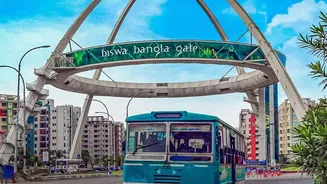
The Centre's recommendation for a BRTS is not merely a rejection of the metro; it is an endorsement of a different model for urban mobility. BRTS and other enhanced bus systems are significantly more cost-effective. Studies comparing BRTS with metro systems show that bus-based systems can be built at a fraction of the cost—sometimes as low as 2.5% of a metro's per-kilometre cost—and implemented much faster. They offer greater flexibility, as routes can be adapted more easily than fixed rail lines. For cities where daily commute distances are often less than 10 kilometres, a robust bus network with dedicated lanes, higher frequency, and better first- and last-mile connectivity can often be a more practical and immediate solution to traffic congestion. The Centre has even linked its decision to Tamil Nadu's non-participation in the PM e-Bus Sewa scheme, which could have strengthened the bus fleets in both cities.
The Enduring Metro Aspiration
Despite the practical arguments for buses, the push for metros remains strong. For many state governments and citizens, a metro is a symbol of modernity and development, a long-term solution that can handle future growth. The Tamil Nadu government had proposed projects worth over Rs 10,000 crore for each city: a 39-km elevated corridor for Coimbatore and a 31.93-km network for Madurai. The repeated rejection has led to protests and accusations of a discriminatory approach, with some activists pointing out that other smaller cities have received approvals for metro projects. Proponents argue that a metro offers a permanent, high-capacity infrastructure that reduces pollution and takes more private vehicles off the road in the long run.
Is There a Middle Ground?
The debate isn't just a binary choice between buses and heavy metro. The Union government itself has developed standards for 'MetroLite' and 'MetroNeo' systems. These are lower-cost, light urban rail transit systems designed specifically for smaller cities or areas with lower projected ridership. A Metrolite can be built at roughly 40% of the cost of a conventional metro, while a MetroNeo, which uses rubber-tyred electric coaches, offers even more flexibility. These systems aim to provide the comfort and reliability of a metro at a much lower capital investment, serving as a potential compromise. For Coimbatore and Madurai, these alternatives could represent a viable path forward, bridging the gap between the immediate practicality of buses and the long-term aspiration of a rail-based network.