



More Than Just a Workout
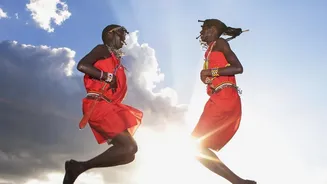
Forget counting reps. African dance is a full-body experience that merges culture, music, and movement. Many traditional dances across the continent are steeped in history and serve as a form of storytelling, celebration, or ritual. When adapted into
a fitness context, this rich heritage creates a workout that engages you mentally and emotionally, not just physically. Unlike repetitive exercises, each step has a purpose, a connection to the rhythm, and a place within a larger story. This dynamic engagement is a core reason why it's so effective for building mind-body awareness. The focus isn't just on burning calories; it's on expressing joy, connecting with the music, and mastering movements that are both powerful and graceful.
The Science of Rhythm and Control
At the heart of many African dance styles is polyrhythm—the layering of multiple, distinct rhythms played simultaneously. When you dance, your body learns to respond to this complex musical landscape. You might step to the beat of one drum while moving your arms to another. This challenges your brain in a unique way, forcing it to process multiple streams of information and coordinate different body parts independently. This process stimulates neural pathways that are crucial for motor control, balance, and cognitive flexibility. Studies on rhythmic movement training show that it can enhance the function of the cerebellum, the part of the brain responsible for coordinating voluntary movements like posture, balance, and speech. Essentially, you're training your brain to become a better conductor of your body's orchestra.
Building Awareness from the Ground Up
Many African dance forms are characterized by grounded, earthy movements. Dancers often keep their knees bent and maintain a low center of gravity, staying deeply connected to the floor. This style of movement is exceptional for developing proprioception, often called our "sixth sense." Proprioception is your body's innate ability to know where its parts are in space without you having to look. By practicing these grounded movements, you enhance the signals between your muscles, joints, and brain. This builds superior body awareness, which is the foundation of good balance and fine-motor control. Improved proprioception helps in all aspects of life, from navigating a crowded space to preventing falls and injuries during other physical activities.
A True Full-Body Workout
Unlike workouts that isolate specific muscles, African dance engages the entire body holistically. The movements are often complex, requiring you to isolate your chest, hips, or shoulders while maintaining a steady rhythm with your feet. This type of multi-part coordination is incredibly demanding and highly effective for building a strong, integrated physique. Your core is constantly engaged to stabilize your body, your legs build power from staying low to the ground, and your arms and shoulders gain strength and flexibility through expressive gestures. The result is a balanced workout that improves muscle tone, endurance, and flexibility all at once, leading to greater overall physical control.
What to Expect in a Class
Walking into an African dance fitness class for the first time is an energizing experience. Classes typically begin with a warm-up to prepare your body for movement. The instructor will then break down specific steps and combinations, often set to vibrant live or recorded drumming. The focus is on feeling the music and allowing your body to respond. Don't worry about getting every step perfect immediately. The environment is usually communal and supportive, emphasizing participation and personal expression over technical perfection. You can expect a high-energy, sweat-inducing session that will leave you feeling both physically tired and mentally uplifted.