



A Foundation of Instability
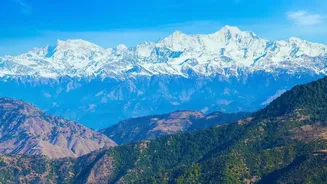
The story of the Himalayas' vulnerability begins with their very creation. These are geologically young mountains, formed by the ongoing collision of the Indian and Eurasian tectonic plates. This constant pushing and grinding, at a rate of about 40-50
mm per year, makes the region one of the most seismically hazardous on Earth. This immense tectonic stress means the ground is inherently unstable, with fractured rock and steep, fragile slopes. Earthquakes are a constant threat, and even small tremors can be enough to destabilize vast areas, setting the stage for subsequent hazards like landslides. Unlike older, more settled mountain ranges, the Himalayas are in a state of continuous geological flux.
Climate Change: The Great Accelerator
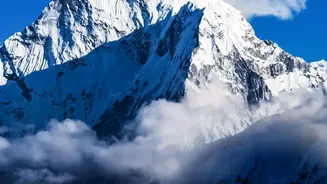
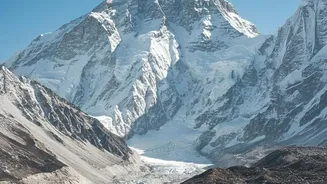
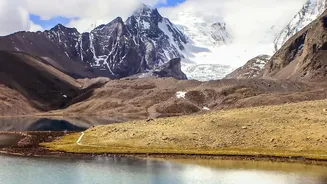
On top of this geological fragility, climate change is acting as a powerful force multiplier. The Himalayas, often called the 'Third Pole', hold the largest concentration of ice outside the polar regions, feeding rivers that support billions of people. But the region is warming at a rate double the global average. This accelerated warming is causing glaciers to retreat at an alarming pace, leaving behind unstable slopes and vast quantities of loose rock and sediment. More critically, the meltwater is forming thousands of new and expanding glacial lakes, often dammed only by unstable mounds of earth and rock called moraines. These lakes are ticking time bombs, with the potential to burst their banks and cause catastrophic Glacial Lake Outburst Floods (GLOFs).
The Human Footprint
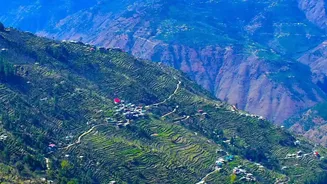
Natural forces are not the only culprits. Decades of unchecked and often unscientific human activity have severely compounded the risks. Widespread deforestation for agriculture and urbanisation has removed the natural tree cover that once bound the soil and absorbed excess rainwater. The rampant construction of roads, dams, and hydropower projects, often involving blasting and vertical cutting of slopes, further destabilizes the delicate terrain. This development not only weakens the mountainsides but also places more people and critical infrastructure directly in the path of potential disasters. When excavated debris from construction is improperly dumped into river channels, it adds to the destructive power of any subsequent flood.
The Cascade Effect in Action
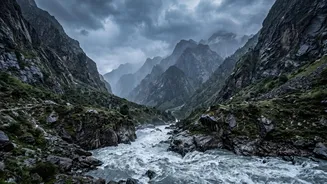
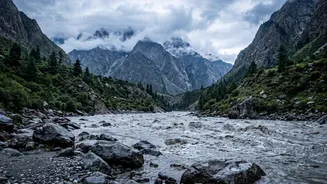
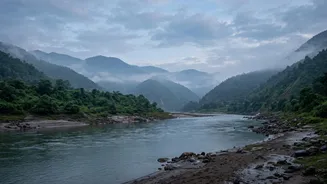
The term 'cascading disaster' refers to how these factors link together in a devastating chain reaction. An initial event, like an earthquake or an intense cloudburst, acts as the primary trigger. For instance, a heavy monsoon downpour, made more intense by a warmer atmosphere that holds more moisture, saturates a slope already weakened by deforestation and road construction. This triggers a massive landslide. The landslide debris then thunders into a river, forming a temporary dam and blocking the flow of water. As water builds up behind this unstable barrier, pressure mounts until the dam bursts, releasing a sudden, powerful wall of water and debris—a flash flood—that devastates everything downstream. This is how one event triggers another, turning a localised landslide or flood into a widespread catastrophe.