





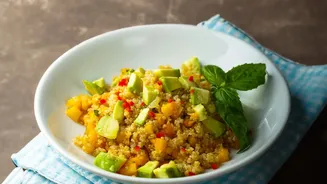
Meet the Orange Powerhouses
On the surface, sweet potatoes (shakarkandi) and butternut squash seem quite similar. Both boast a vibrant orange flesh, a hint of sweetness, and a texture that becomes wonderfully creamy when cooked. They are staples in soups, curries, and roasted side
dishes across India. Botanically, however, they are different; the sweet potato is a root vegetable, while butternut squash is technically a fruit. This fundamental difference leads to distinct nutritional profiles, making each uniquely suited to different dietary needs and goals. Understanding these differences can help you make more informed choices in the grocery aisle and in your kitchen.
Decoding Energy Density
Before diving into the numbers, it is helpful to understand 'energy density'. This term refers to the number of calories per gram of food. Foods with low energy density have fewer calories for their weight, often due to high water or fibre content. This means you can eat a larger, more filling portion without consuming excess calories. Butternut squash has a lower energy density than sweet potato, primarily because it contains more water. Per 100 grams, raw butternut squash has about 45 calories, whereas sweet potato has around 86-90 calories. If your goal is weight management, the lower energy density of butternut squash might be more appealing.
The Vitamin A Champion: Sweet Potato
When it comes to Vitamin A, the sweet potato is a clear winner. A single cup of cooked sweet potato can provide well over 100% of your daily recommended intake, while butternut squash offers a still-impressive amount. Sweet potato delivers its Vitamin A in the form of beta-carotene, a powerful antioxidant that the body converts into the vitamin. This nutrient is crucial for maintaining healthy vision, supporting a robust immune system, and promoting skin health. Both vegetables are fantastic sources, but if you're specifically looking to boost your Vitamin A, the sweet potato holds a significant edge.
Calories and Carbs: A Tale of Two Veggies
This is where the two diverge significantly. Butternut squash is the lighter option, with roughly half the calories and carbohydrates of a sweet potato for the same portion size. A cooked cup of butternut squash contains about 82 calories and 21.5 grams of carbs. In contrast, a cup of cooked sweet potato has around 180 calories and 41 grams of carbs. Sweet potato also contains more natural sugar. For individuals following a low-carb diet or carefully managing their calorie intake, butternut squash is the more suitable choice. For athletes or anyone needing a more substantial source of energy, the higher carbohydrate content of sweet potatoes is beneficial.
Fibre, Fullness and Minerals
Both vegetables are excellent sources of dietary fibre, which is essential for digestive health and promoting a feeling of fullness. Per cooked cup, they offer a nearly identical amount, about 6.6 grams. When it comes to minerals, the sweet potato again takes a slight lead in several key areas. It is particularly rich in potassium, a mineral crucial for regulating blood pressure and muscle function, providing nearly double the amount found in butternut squash. Sweet potatoes are also a better source of manganese, a trace mineral that supports bone health and metabolism. However, both provide valuable amounts of essential minerals like magnesium.
In the Indian Kitchen
Both vegetables lend themselves beautifully to Indian cuisine. Sweet potato, or 'shakarkandi', is famously used in 'shakarkandi ki chaat', a tangy and spicy street food snack. It can also be added to sabzis, curries, or simply roasted with spices for a delicious side dish. Butternut squash, with its slightly less dense texture, is perfect for creamy soups, dals, and purees. It can be used in place of pumpkin in many recipes, such as a hearty squash curry or a simple stir-fry with mustard seeds and curry leaves. Its subtle sweetness pairs well with bold Indian spices like cumin, coriander, and turmeric.