




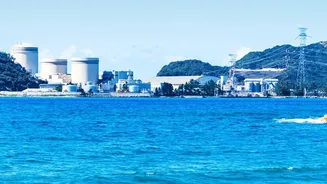
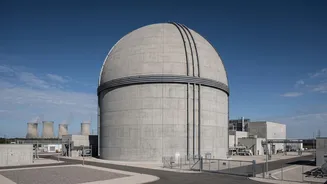
In the global race for stable, clean energy, nuclear power is re-emerging as a critical solution. At the heart of this conversation is the International Atomic Energy Agency (IAEA), whose latest projections signal a major shift in our energy future.
The World's Nuclear Guardian
The
International Atomic Energy Agency (IAEA) is the world's central intergovernmental forum for scientific and technical cooperation in the nuclear field. Established in 1957 as part of the United Nations family, its core mission is to promote the safe, secure, and peaceful use of nuclear technologies while simultaneously verifying that nuclear energy is not used for military purposes. It functions as both a promoter of peaceful atomic benefits and a watchdog ensuring global safety and non-proliferation. This dual role places the IAEA in a unique position to analyze and forecast the trajectory of nuclear power, making its annual projections a key indicator of global energy trends and government priorities.
A Surge in Projections
For the sixth year in a row, the IAEA has significantly revised its growth projections for nuclear power upwards. According to its latest annual report, presented in late 2026, global nuclear capacity could nearly double by 2060 in its conservative 'low case' scenario, reaching 696 gigawatts (GW). The more ambitious 'high case' scenario is even more striking, projecting that capacity could more than triple to 1284 GW by 2060. This dramatic upward shift reflects a growing consensus among nations that nuclear power is essential for achieving both energy security and climate goals. IAEA Director General Rafael Mariano Grossi noted that this growth is being driven by the need for reliable, carbon-free power to support mass electrification and the voracious energy demands of new technologies like AI-powered data centres.
Two Futures: High vs. Low Scenarios
The vast difference between the IAEA’s high and low projections hinges on several critical factors. The low case largely assumes a continuation of current market trends and policies. To achieve the high case, however, a more concerted global effort is needed. This includes supportive government policies that streamline regulation, greater access to financing, and significant investment in extending the life of existing reactors and building new ones. The World Bank’s recent decision to finance nuclear projects is seen as a major step in unlocking the necessary capital. Public perception and the successful deployment of next-generation technologies, particularly Small Modular Reactors (SMRs), are also pivotal. SMRs are seen as more affordable and flexible, making them attractive for developing countries and accounting for a significant portion of projected new capacity.
The Energy Security Imperative
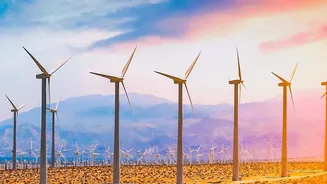
At its core, the renewed interest in nuclear is a quest for energy security. In a world of volatile fossil fuel markets and geopolitical instability, nuclear power offers a stable, domestically controlled source of baseload electricity. Unlike wind and solar, it is not intermittent, providing power 24/7 regardless of weather conditions. This reliability is becoming increasingly crucial for national grids straining to support industrial growth and the transition to electric vehicles. For many nations, a robust nuclear programme reduces dependence on foreign energy imports, insulating their economies from price shocks and supply chain disruptions. The IAEA reports that a growing number of countries view nuclear energy as a key component of their strategy to ensure a secure and resilient energy supply.
Implications for India's Energy Future
The global trends identified by the IAEA resonate strongly with India's own energy ambitions. As one of the world's fastestest growing major economies, India faces the dual challenge of meeting soaring energy demand while pursuing its net-zero emissions targets. Nuclear power is already an established part of India's energy mix, and the government has clear plans for expansion. The global momentum, particularly in financing and the development of SMRs, could provide a significant boost to these efforts. For India, a scaled up nuclear program represents a direct path toward greater energy independence, reduced carbon emissions, and the kind of reliable power needed to fuel its continued economic development, mirroring the very drivers the IAEA has highlighted on the world stage.