


The Claim: A Natural Antioxidant Powerhouse
One of the biggest health claims surrounding maple syrup is its antioxidant content. Scientific studies have indeed identified dozens of beneficial compounds, including polyphenols, which are known for their ability to fight cellular damage. Research
has isolated over 60 distinct compounds, some with anti-inflammatory and even anti-cancer properties in laboratory settings. One unique compound called Quebecol, which is formed when maple sap is boiled into syrup, has shown particular promise in early-stage lab research. These findings are the foundation of maple syrup's healthy halo, suggesting it contains much more than just empty calories.
The Reality: Lab Hype vs. Human Health
This is the most critical part of the story. The vast majority of exciting studies on maple syrup's compounds are conducted 'in vitro', meaning in a test tube or petri dish, not in a living person. While these studies are essential for identifying potential benefits, they don't tell us how our bodies actually absorb and use these compounds. A substance that kills cancer cells in a lab dish might not have the same effect when consumed as part of a meal. More recent research has included animal and some human trials, which provide better insights but are still in early stages. So, while the compounds are present, claiming they directly translate into major health benefits for humans is a significant leap that current, large-scale evidence does not fully support.
The Claim: Better for Your Blood Sugar
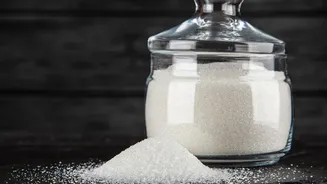
Compared to regular table sugar, maple syrup is often touted as being better for managing blood sugar. This claim is based on the glycemic index (GI), a scale that ranks how quickly a food raises blood glucose levels. Pure maple syrup has a GI of around 54, while table sugar (sucrose) scores higher at about 65. This means maple syrup does, in fact, raise your blood sugar more slowly than an equivalent amount of white sugar. The presence of trace minerals and plant compounds may contribute to this more moderate effect.
The Reality: It's Still Sugar
A lower glycemic index doesn't change the fundamental fact that maple syrup is still a sugar. It is primarily composed of sucrose, the same molecule as table sugar, and is high in calories. A single tablespoon contains around 52 calories and 12 grams of sugar. While it's a slightly better choice than refined sugar, using its lower GI as a license to pour it generously will still lead to a significant sugar and calorie intake. Moderation is non-negotiable. The health difference between sweeteners is often minimal in the context of a balanced diet, and overconsumption of any sugar, natural or not, carries health risks.
The Final Verdict: A Flavourful Choice, Not a Health Food
So, should you use maple syrup? If you enjoy its unique flavour, absolutely. Choosing pure maple syrup over highly refined white sugar or corn syrup is a reasonable switch, as you get a small bonus of minerals like manganese and zinc, plus a range of antioxidants. However, it's crucial to see it for what it is: a sweetener. The amount of syrup you would need to consume to obtain a medically significant dose of its beneficial compounds would be unhealthy due to the massive sugar load. Think of it as a more flavourful, slightly more nutrient-dense version of sugar, but not as a health supplement or miracle food.