




For centuries, the cryptic writings of Nostradamus have been a canvas for our deepest anxieties. No one has painted on that canvas more prolifically than John Hogue, a leading interpreter who often sees economic doom in the ancient verses.
The Modern Oracle of Nostradamus
John Hogue has
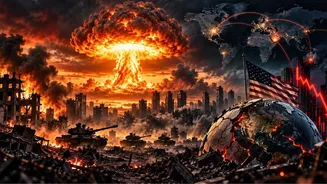
built a formidable career as one of the world's foremost authorities on Nostradamus. Defining himself as a 'rogue scholar', Hogue has authored numerous books and appeared in countless documentaries and radio shows, dissecting the 16th-century prophecies and applying them to modern times. His interpretations are not just historical curiosities; they are often urgent warnings about the immediate future, touching on war, political strife, and, most potently, financial disaster. Recent headlines in late 2026, for example, highlighted his forecasts of a severe U.S. economic breakdown before 2028, marked by crippling inflation and fuel shortages.
Prophecy as a Blank Check
The core of Nostradamus's work, 'The Prophecies', consists of nearly a thousand four-line poems, or 'quatrains'. Written in a mix of French, Latin, and Greek, they are famously obscure, allegorical, and lack specific dates. Academic scholars argue this vagueness is precisely why they persist: the prophecies are so ambiguous they can be retrofitted to match almost any major world event after it has already happened. This ambiguity is the fertile ground upon which interpreters like Hogue operate. It allows them to map contemporary anxieties—like the fragility of global markets or rising national debt—onto centuries-old verses about empires falling or wealth turning to dust.
The Allure of Economic Doomsday
Among all potential catastrophes, why do predictions of economic collapse feature so prominently in Hogue's work? The answer lies in their universal and personal impact. While geopolitical conflicts can feel distant, the threat of financial ruin—losing a job, seeing savings disappear, or being unable to afford basic goods—is deeply personal and universally understood. Hogue's specific warnings of a U.S. economic collapse, timed to an 'astrological cycle' ending in September 2028, tap directly into modern fears about inflation and national debt. These predictions offer a narrative for complex, impersonal economic forces, transforming them into a story of impending, prophesied doom. This provides a strange sort of comfort; in an uncertain world, even a negative prediction can feel more reassuring than total chaos.
A Record of Unverified Claims
The headline's term 'unverified' is crucial. Despite Hogue's decades of forecasting, his track record is a subject of debate. Critics often point out that many specific, date_stamped predictions fail to materialize. A common defense used by seers, including Hogue, is the idea that prophecies are not set in stone but are warnings that can be averted if humanity changes its course—an unfalsifiable 'charlatan trick', according to some analysts. For instance, while some of Hogue's broader predictions, like the increasing strength of hurricanes or China's rise, align with general trends, many of his more dramatic forecasts on world wars and specific events have not come to pass. The economic collapse predictions function similarly; they are always just around the corner, perpetually deferred but never fully disproven in the minds of believers.
More About Us Than the Future
Ultimately, the enduring role of economic collapse in Hogue's Nostradamus interpretations says more about our society than it does about the 16th century seer. Apocalyptic beliefs are surprisingly widespread, with studies showing a significant percentage of people believe the world will end in their lifetime. These beliefs are not just fringe ideas; they tap into a deep human need to find order in chaos and moral clarity in a complex world. Economic anxiety is a powerful driver of this thinking. When people feel powerless against vast economic forces, prophecies of collapse can provide a framework for understanding their fears. Whether the seer is Nostradamus or a modern interpreter like Hogue, the message resonates because the underlying fear is real and present.