




Mastering the Foundation: The Standard Plank
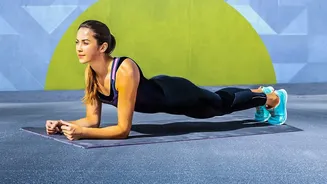
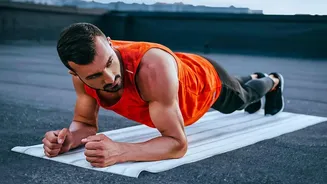
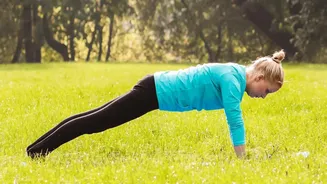
Before you can run, you must walk. In the world of planks, this means perfecting the standard hold. Start on your hands and knees. Place your hands directly under your shoulders and extend your legs back one at a time, coming onto your toes. Your body
should form a straight line from your head to your heels. It is crucial to avoid common mistakes like letting your hips sag towards the floor or pushing them up into the air. Engage your core by pulling your belly button towards your spine, and squeeze your glutes. Keep your neck in a neutral position by looking at the floor slightly in front of you, not up or down. Initially, aim to hold this for 15-30 seconds with perfect form. Quality is always more important than duration. A solid 20-second hold is better than a shaky minute-long one.
Step 1: The Elbow Plank
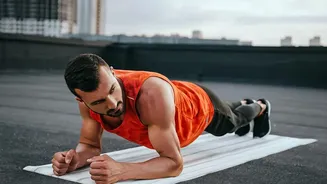
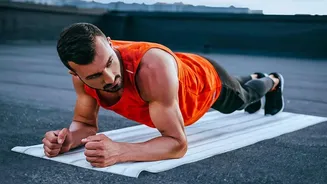
Once you can comfortably hold a standard high plank for around 60 seconds, you are ready to increase the challenge by moving to your forearms. From a kneeling position, place your elbows directly under your shoulders with your forearms parallel on the ground. Extend your legs back to lift your body into that same straight line. This variation increases the load on your core muscles compared to the straight-arm version. Pay close attention to your shoulder position; they should remain stacked over your elbows. Avoid clasping your hands together, as this can create tension and misalign your shoulders. Continue to focus on keeping your hips level and your core engaged. Work on holding this for 30-60 seconds before moving on.
Step 2: Introducing Gentle Movement
After mastering static holds, the next step is to introduce controlled movement. This challenges your stability as your body has to resist rotating or shifting. A great starting point is the Plank with Shoulder Taps. From a high plank position, slowly lift one hand to tap the opposite shoulder, then return it to the floor and repeat on the other side. The key is to keep your hips as still as possible. If they are swaying significantly, widen your feet for a more stable base. Another excellent option is the Plank Knee Drive, where you bring one knee towards your chest and then return it, alternating legs. These dynamic variations build functional strength by teaching your core to remain stable while your limbs are in motion.
Step 3: Challenging Stability Further
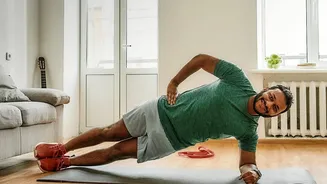
Now it's time to create more instability. One of the best ways to do this is with a Side Plank. Lie on your side with your elbow directly beneath your shoulder and your legs stacked. Lift your hips until your body is in a straight line from head to feet. This is fantastic for targeting the oblique muscles on the sides of your core. Hold for 30 seconds on each side. To progress this, you can add a hip dip, where you lower your hips towards the floor and then raise them back up. Another way to add a challenge is by lifting one leg or arm during a standard forearm or high plank. This reduces your points of contact with the ground, forcing your core to work much harder to maintain balance.
Step 4: Advanced Plank Variations
Once you feel strong and stable with the previous progressions, you can explore more advanced variations. The Plank Jack involves keeping your upper body stationary in a plank position while 'jumping' your feet in and out, similar to a jumping jack. Another challenging move is the Plank with Dumbbell Drag, where you place a dumbbell on one side of your body and, while holding a high plank, reach across with the opposite hand to drag it to the other side. For those with access to gym equipment, introducing a BOSU ball or physioball for your hands or feet dramatically increases the stability challenge, engaging even more of the small stabilizing muscles in your core.
Listen to Your Body and Breathe
Throughout every stage of this progression, two rules are paramount. First, listen to your body. Muscle fatigue is normal, but sharp pain is a signal to stop. Proper form should always be your priority; as soon as your form breaks down (e.g., your back starts to arch or your hips sag), it's time to end the set. Second, remember to breathe. It's a common mistake to hold your breath during a plank, which can increase tension. Focus on steady, controlled breathing—inhaling for three to four seconds and exhaling for the same duration—to stay calm and properly contract your muscles. Consistent practice, even in short bursts, is the key to building strength over time.