







A Sudden Change at the Top
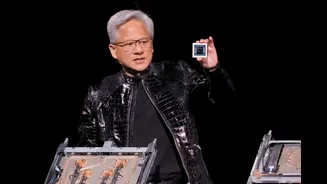
The architect of Nvidia’s transformation from a gaming chip company to an AI powerhouse, Jensen Huang, has stepped down as CEO. The departure of the co-founder, who has led the company since 1993, marks the end of an era for the technology giant. In his
place, the board has appointed Colette Kress, the company's long-time Chief Financial Officer, as interim CEO. The company announced it has initiated a search for a permanent successor and will consider both internal and external candidates, with executive search firm Heidrick & Struggles leading the effort. The transition follows a period of intense scrutiny and was officially announced by the board, which accepted Huang's resignation effective immediately.
The Board's Decisive Statement
In the wake of the announcement, Nvidia's board issued a public statement designed to project stability and control. The primary message was one of continuity. The board expressed its full confidence in the leadership team under interim CEO Colette Kress and stated it expects 'the company's operations, customer commitments and product roadmap to continue without interruption'. This move was crucial to calming jittery markets and reassuring enterprise customers who have built their AI strategies around Nvidia's technology. The board also appointed its first-ever Chair, Harvey C. Jones, to provide additional oversight during this critical period. Despite Huang's public expression of willingness to return, the board has firmly stated it does not intend to reinstate him, signalling a clear break and a commitment to moving forward under new leadership.
What 'Roadmap Continuity' Means
For customers and developers, the most important assurance is that Nvidia's aggressive product roadmap is not at risk. The company has moved to a rapid one-year cadence for its GPU architectures, a strategy that has kept it far ahead of competitors. This roadmap includes the upcoming 'Rubin' platform, set to follow the current 'Blackwell' architecture, which has been wildly successful in data centers. The promise of continuity means that the development and release schedules for these next-generation GPUs, which power everything from large language models to scientific research, are expected to proceed as planned. Nvidia's advantage lies not just in its chips but in its entire ecosystem, including the CUDA software platform, which has become an industry standard for AI development. Maintaining this roadmap is essential for the thousands of companies whose own innovation cycles depend on Nvidia's technology.
Navigating the Path Forward
While the board's statements provide a layer of confidence, the transition still introduces long-term questions. Jensen Huang was more than a CEO; he was the company's chief strategist and visionary, deeply involved in everything from chip design to customer relationships. His departure removes a leader who was synonymous with the company's identity and success. The key challenge for the next CEO will be execution and maintaining the relentless pace of innovation that Huang established. While the existing roadmap provides a clear path for the next few years, the ability to anticipate the next big shift in computing will define Nvidia's continued dominance. The search for a new leader is therefore not just about finding a capable manager, but about finding a new visionary who can steer the multi-trillion-dollar company into its next chapter of growth while fending off rising competition from rivals like AMD and big tech's in-house chip efforts.