







The Serving Size Illusion
Breakfast cereal boxes are masters of illusion. They list calories, sugar, and fat based on a recommended serving, which is often a scant 30 grams. But who eats just 30 grams? Studies have shown that most people pour significantly more, sometimes two
or even three times the recommended amount. Research has found that the images on boxes themselves often depict portions much larger than the official serving size, encouraging over-serving. This disconnect between the label and reality means you could be consuming far more sugar and calories than you realise, turning a seemingly healthy start into a sugar-laden calorie bomb. It's not about deception, but about understanding how food volume and perception can trick our brains and our bowls.
The Classic: Corn Flakes
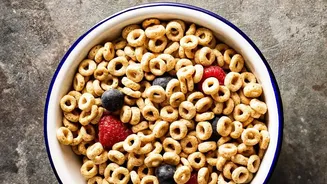
Let's start with a breakfast staple: corn flakes. Per the box, a 30g serving is quite modest. Using nutritional data for a popular brand, this would be around 113 calories and 2.8 grams of sugar. It's low in fat and seems like a light way to start the day. But a more realistic bowl holds closer to 80-90g. Suddenly, your breakfast looks very different. That larger bowl could easily top 340 calories and contain over 8 grams of sugar before you even add milk or fruit. While still not the worst offender, it shows how quickly a light breakfast can become a significant meal just by filling the bowl.
The 'Healthy' Choice: Muesli
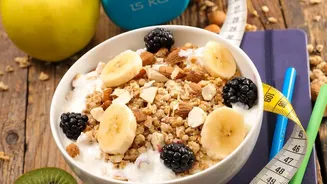
Muesli is often seen as the virtuous choice, packed with oats, fruits, and nuts. And it can be, but it's also very energy-dense. A standard 30g serving of a popular crunchy muesli with almonds and honey contains about 116 calories and 4.8 grams of sugar. However, because muesli is heavier and less voluminous than flakes, it's incredibly easy to pour a much larger serving. A generous 100g bowl, which doesn't look enormous, would bring your intake to roughly 388 calories and a hefty 16 grams of total sugar. The fibre and protein are higher, which is a plus, but so are the calories and sugar if you're not mindful of the portion.
The Kids' Favourite: Chocolate Cereals
This is where the numbers really jump. A sugary, chocolate-flavoured cereal is a favourite for many, but it's designed to be sweet. A small 30g serving already packs around 116 calories and 9 grams of sugar. Now, consider a larger, more realistic 90g bowl that a hungry child or adult might pour. You are now looking at approximately 348 calories and a staggering 27 grams of sugar. That's more sugar than many doughnuts, and it's all consumed before the day has truly begun. This highlights the importance of portion control, especially with cereals that are high in added sugars.
The Humble Hero: Plain Oats
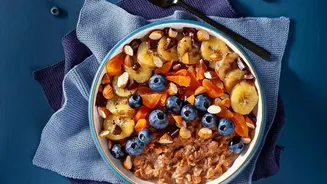
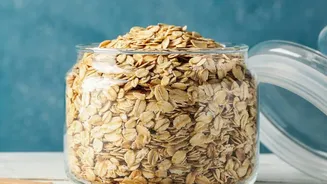
So, what's a better option? Plain rolled oats offer a fantastic nutritional profile that holds up better to larger portions. A 40g serving of dry rolled oats is about 150 calories but contains virtually no sugar (less than 1g) and is high in beneficial fibre. If you double that to a very filling 80g bowl, you're at around 300 calories, still with minimal sugar and a great dose of protein and cholesterol-lowering soluble fibre. The key is that you control what you add. By using fresh fruit for sweetness instead of relying on pre-added sugars, you get a genuinely nutritious and satisfying meal without the hidden downsides.