
A Celestial Photobomb
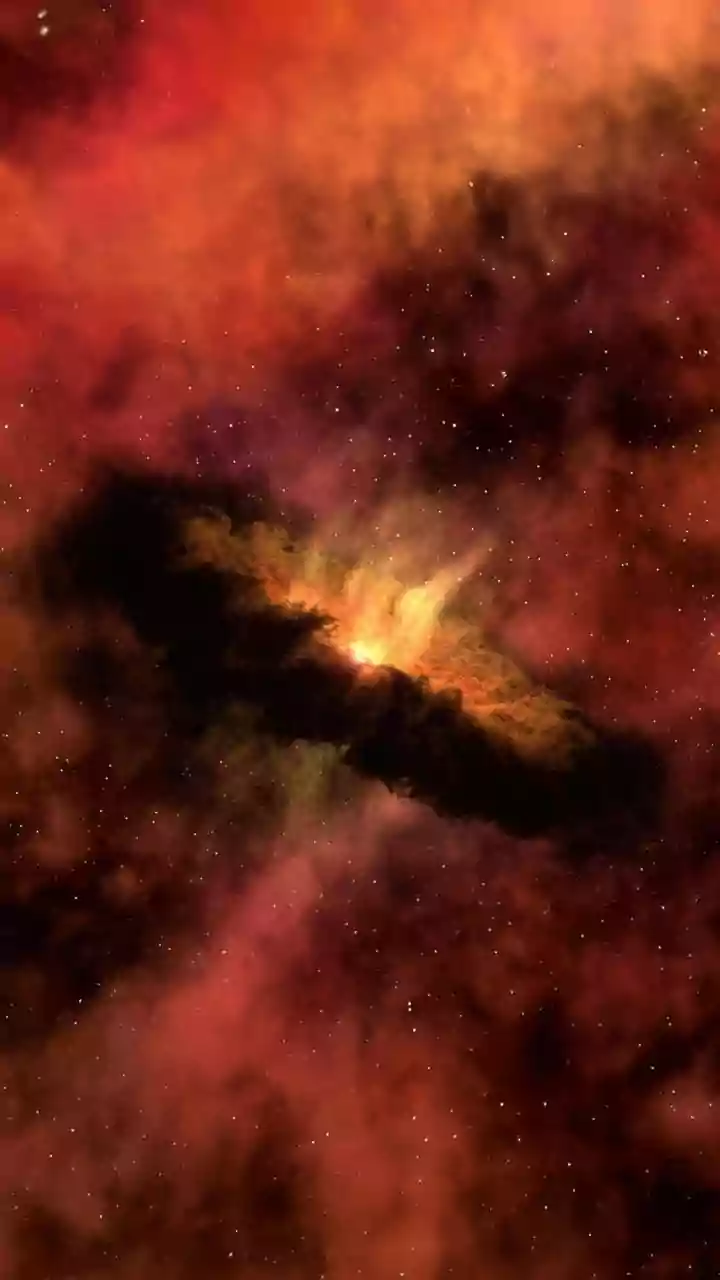
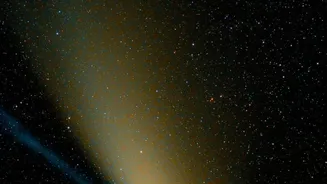
The image in question wasn't the result of a planned meteor hunt. Instead, it was a cosmic accident. Captured by an observatory in Nevada, the photograph was a long-exposure shot of the Great Lacerta Nebula. During the exposure, a bright meteor streaked
across the frame, effectively photobombing the distant nebula. What makes this image so special is its clarity and detail. The photograph not only shows the meteor's bright path but also captures the subtle shifts in colour as the tiny space rock vaporized in Earth's atmosphere. This accidental masterpiece provides a frozen record of a dynamic event, allowing for a much deeper analysis of what happens when a meteoroid burns up.
The Science of Shooting Star Colors
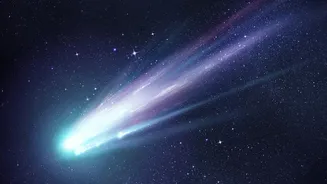
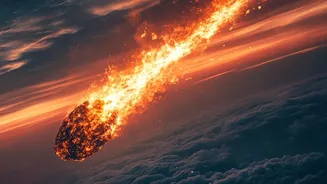
The colour of a meteor is a fiery fingerprint of its chemical makeup. As a meteoroid—often no bigger than a grain of sand—slams into our atmosphere at immense speed, friction generates incredible heat. This heat vaporizes the rock and excites the elements within it, causing them to glow. Different elements emit light at specific wavelengths, resulting in different colours. For instance, meteors rich in sodium burn with an orange-yellow hue, while iron content produces a yellow glow. More dramatic colours like blue-green are typically caused by magnesium, while calcium can create a violet or purple streak. Even the air around the meteor plays a role; atmospheric nitrogen and oxygen can glow red when superheated.
What This New Picture Reveals
While scientists have understood the basics of meteor colours for some time, this new image adds a new layer of detail. It shows how the colours are not uniform along the meteor's path. Instead, the image reveals a transition, hinting at the complex layering of minerals within the original meteoroid. As the rock burns through its outer layers and exposes new ones, the dominant colour of its light can change. This visible shift provides a timeline of the meteor's disintegration. The image, according to NASA's analysis, shows how the wind-blown gas and dust left in the meteor's wake retain these colour signatures, giving clues to its composition from start to finish. The speed of the meteor also influences what we see; faster meteors can cause the surrounding air to glow more intensely, sometimes producing violet light, while slower meteors might be dominated by the red glow of the atmosphere itself.
More Than Just a Pretty Picture
Studying meteor colours in such detail is about more than just appreciating a celestial light show. It's a form of remote science. By analyzing the light spectrum of a meteor, astronomers can determine the composition of the original meteoroid without ever needing a physical sample. This helps them understand the makeup of comets and asteroids, which are the parent bodies of most meteors. For example, the Perseid meteor shower, which peaks in mid-August, is known for its bright, multi-coloured meteors because its parent comet, Swift-Tuttle, is rich in elements like calcium, magnesium, and iron. Each meteor is a tiny messenger from our solar system's past, and detailed images like this one allow us to read its message more clearly, piecing together the history and chemistry of the cosmic neighbourhood we call home.