




What is PRIMA?
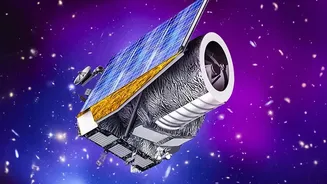
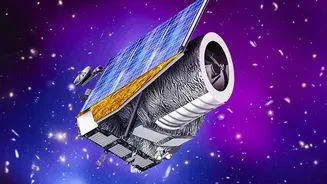
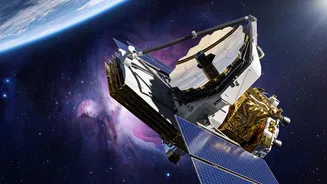
PRIMA, short for the PRobe far-Infrared Mission for Astrophysics, is NASA's next major observatory, designed to explore the cosmic history of the universe. Announced as the first in a new class of 'Probe Explorer' missions, PRIMA will be a 5.9-foot space
telescope tasked with surveying the cosmos in far-infrared light. Think of it as a successor to previous infrared missions like the Spitzer and Herschel space telescopes, but with far greater sensitivity and power. The mission is being managed by NASA's Jet Propulsion Laboratory (JPL) and, if it passes all its reviews, is projected to launch no earlier than 2033 for a five-year mission. Its primary goal is to unravel the formation of planets, stars, and black holes, and even shed light on how water, a key ingredient for life, came to be on Earth.
The Importance of 'Phase B'
When NASA says a mission has advanced to Phase B, it is a significant vote of confidence. The lifecycle of a NASA mission is a long and meticulous process broken down into several phases, from Pre-Phase A (initial concept studies) to Phase E (operations). PRIMA has now officially entered the 'preliminary design' stage. In this phase, engineers and scientists will transform the conceptual blueprint into a baseline technical solution. They will finalize requirements, prepare detailed specifications, and advance the technology needed for the spacecraft and its instruments. It’s the critical step where the mission’s feasibility, cost, and schedule are solidified before it can receive final confirmation to move into Phase C, which involves final design and fabrication. This milestone signals that PRIMA has moved from a promising idea to a tangible project on the path to launch.
Seeing the Universe in a New Light
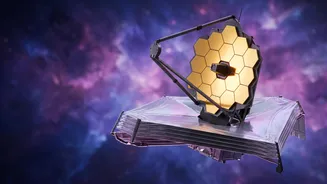
PRIMA's superpower is its ability to see the universe in far-infrared light. This part of the electromagnetic spectrum is invisible to the human eye and largely inaccessible to other famous telescopes. While the James Webb Space Telescope (JWST) is a powerhouse in near- and mid-infrared, PRIMA will fill a crucial observational gap between what JWST sees and what radio telescopes like ALMA detect from the ground. Why does this matter? Many of the universe's most fascinating events, like the birth of stars and planets, happen inside dense clouds of cosmic dust. Visible and even near-infrared light cannot penetrate these dusty nurseries. Far-infrared light, however, can pass through the dust, allowing astronomers to witness these formative processes directly. It will also help trace elements and cosmic dust across the universe, revealing how the building blocks of galaxies and planets have accumulated over time.
Answering Three Cosmic Questions
The mission is designed around three core scientific themes. First, it will investigate the origin of planets and their atmospheres, with a special focus on tracking cool water vapor within the planet-forming disks around young stars. Second, PRIMA will explore the intertwined evolution of galaxies and the supermassive black holes at their centers, helping us understand why our universe looks the way it does today. Third, it will study how the universe created elements heavier than hydrogen and helium, the raw materials produced by the Big Bang. By examining cosmic dust in different environments and at different times, scientists hope to build a comprehensive history of how the universe became enriched with the elements necessary for planets and life.
A Technological Deep Freeze
To achieve its ambitious goals, PRIMA must overcome a major technical hurdle: heat. Telescopes that observe in the far-infrared are extremely sensitive to their own thermal glow, which can easily overwhelm the faint signals from distant celestial objects. To combat this, PRIMA's telescope and instruments must be cryogenically cooled to an astonishingly low temperature of just 4.5 Kelvin, which is colder than -268 degrees Celsius. This deep freeze suppresses the telescope's own infrared emission, allowing its highly sensitive detectors to capture the faint light from the dawn of star and galaxy formation. This level of cooling represents a significant leap beyond previous far-infrared observatories and is key to unlocking this new window on the cosmos.