

What is an 'Evening Elongation'?
In simple terms, an elongation is when a planet appears farthest from the Sun in our sky. Because Venus orbits closer to the Sun than Earth, it never strays far from the Sun's glare, appearing either as a “morning star” or an “evening star”. On August
15, 2026, Venus reaches its greatest eastern elongation. This means it will be at its widest separation from the Sun on the eastern side, making it visible for a longer period after sunset. Think of it as Venus stepping out from behind the Sun's curtains and taking centre stage in the twilight sky. This event marks the peak of its evening appearance.
Why Venus Shines So Brightly
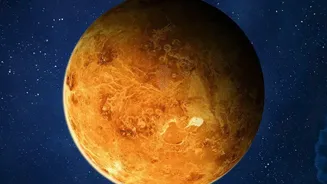
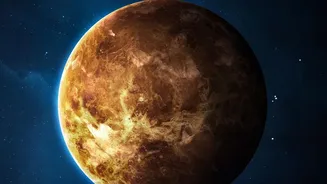
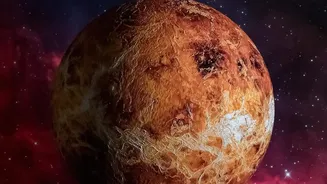
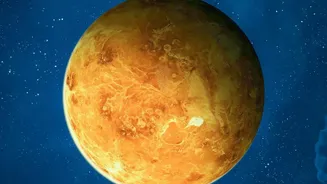
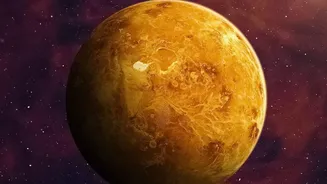
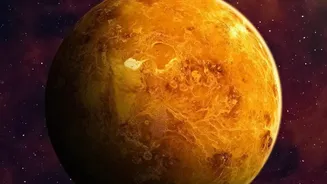
Venus is often called the “Evening Star” for a reason. After the Sun and Moon, it is the brightest natural object in our sky. Its brilliance comes from two main factors: its proximity to Earth and its thick, highly reflective clouds that wrap the entire planet. These clouds are excellent mirrors, bouncing a huge amount of sunlight back into space and towards our eyes. During its August elongation, Venus will shine at a magnitude of around -4.4, making it easily visible even during twilight before the sky is completely dark. Its brightness is so intense that you can't mistake it for any other star.
How to See Venus on August 15
The best part about this celestial event is its simplicity. You don't need any special equipment to enjoy it. Starting around 30 to 90 minutes after sunset, simply look towards the western horizon. Venus will be the unmissably bright point of light lingering as darkness falls. For observers in India, the planet will be well-placed for viewing. Finding a spot with a clear, unobstructed view of the western horizon will give you the best experience, especially in cities where buildings might block the view. On the same evening, a slender crescent Moon will be visible nearby, creating a beautiful celestial pairing.
Do You Need a Telescope?
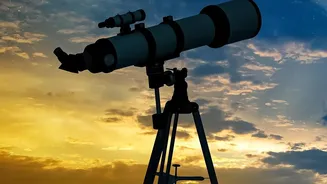
While Venus is a stunning naked-eye object, looking through a telescope or even a good pair of binoculars reveals a fascinating detail. At greatest elongation, Venus appears about half-illuminated, looking like a tiny, first-quarter Moon. This phase occurs because, from our viewpoint on Earth, we are seeing the sunlit side of Venus at an angle. Observing this phase is a great way to appreciate that the planets in our solar system are three-dimensional worlds with their own orbits and day-night cycles, not just points of light. Even so, the sheer brightness visible to the naked eye is the main attraction.
Other Sights in the August Sky
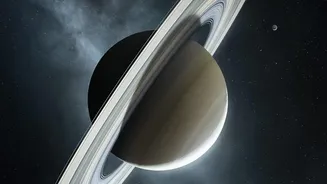
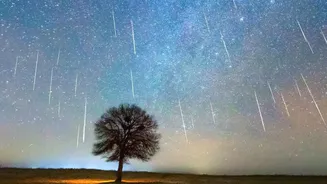
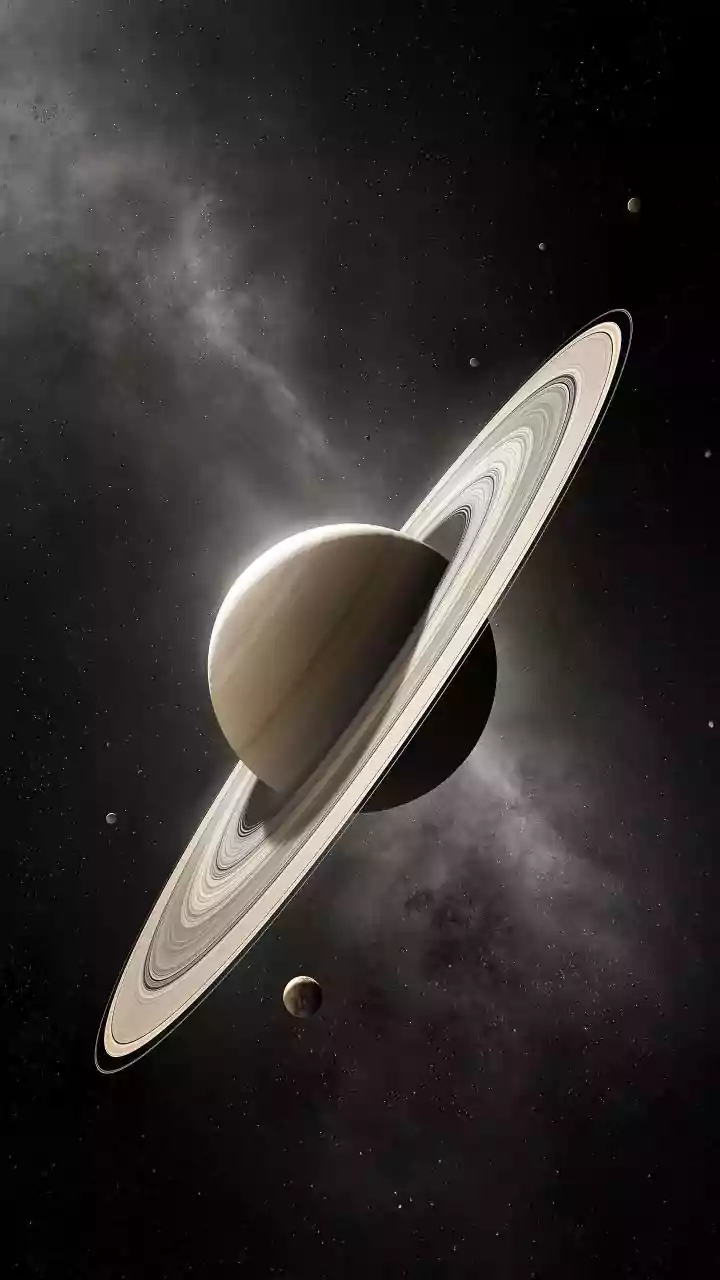
August 2026 is a fantastic month for skywatching. While Venus dominates the evening, early risers are in for a treat with a parade of other planets. Throughout the month, Mars, Saturn, Mercury, and Jupiter are visible in the pre-dawn sky. The famous Perseid meteor shower also peaks around August 12-13, with the dark skies of a new moon providing ideal conditions for spotting shooting stars. After enjoying Venus in the evening, you could set an early alarm to catch the morning planet show, making for a full astronomical experience. Mars and Saturn will be the easiest morning planets to spot with the naked eye.