





A Time Capsule Beneath the Waves
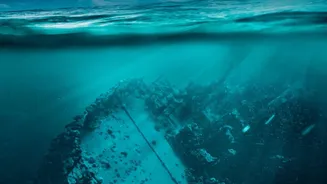
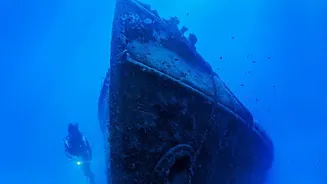
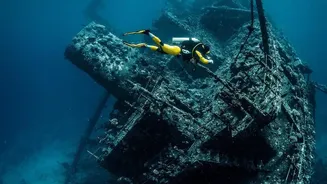
In the waters near Kekova Island, a region of southern Turkey known for its treacherous currents, underwater archaeologists have located what they believe to be the world's oldest shipwreck. While the wooden hull of the nearly 10-metre-long vessel has
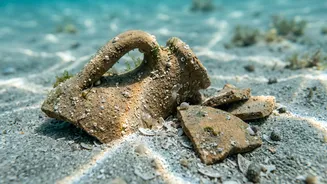
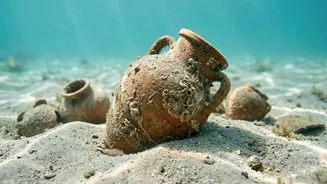
long since disintegrated, its cargo remains as a 'time capsule' from the Early Bronze Age. Scattered on a rocky slope about 30 metres deep lie more than 30 large ceramic jars, known as amphorae, and three stone anchors. The discovery was announced in October 2026 by Turkey's Ministry of Culture and Tourism, though the site was first documented in 2024 by a team from Akdeniz University led by Associate Professor Hakan Öniz.
Dating a Discovery Without a Ship
Without the ship's timbers to carbon-date, researchers turned to the next best thing: the pottery. The style of the amphorae — with their flat bases, side handles, and distinctive ridges — was the crucial clue. Initially, the team thought the jars might be a few centuries old, but after consulting with experts and comparing them to artifacts found near the Giza pyramids in Egypt, they realised they had something much older. The style matches pottery known to be from the Early Bronze Age, placing the wreck between 4,400 and 4,700 years old. This means the ship would have been sailing the Mediterranean around the same time the Great Pyramid was being constructed.
The Claim to 'World's Oldest'
The Kekova discovery is a strong contender for the title of 'world's oldest shipwreck evidence'. The previous record-holder was a wreck found near the Greek island of Dokos, dated to about 4,200 years ago. It is important to distinguish this from the 'oldest intact shipwreck', a 2,400-year-old vessel found preserved in the Black Sea, where the lack of oxygen kept its wood from rotting. The Kekova find consists of the cargo and anchors, not the ship's structure, but the age of these artifacts provides powerful evidence of the vessel's existence and its final voyage. The claim hinges on this archaeological dating of its contents, which experts say is definitive proof of an Early Bronze Age sinking.
Rewriting Ancient Trade Routes
Beyond the title, the discovery offers profound insights into a period of history we are still piecing together. Analysis of the clay suggests some of the jars were made in workshops in the Jordan Valley. Inside some of the pots, a glossy residue remains, which could be the remnants of olive oil or wine. This suggests the ship was part of a bustling trade network, possibly sailing from the Levantine coast toward destinations like Crete or even Troy. It provides rare physical proof of what was previously only hinted at in historical texts: that complex, long-distance maritime trade was happening nearly five millennia ago. One peculiar jar with holes in it even suggests sailors may have kept goats onboard to make fresh cheese or butter during their long voyages.