



A Landmark Launch
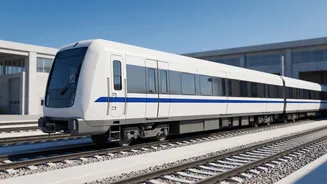
On September 27, 2026, Union Home Minister Amit Shah flagged off the country's first LNG-powered train from Sabarmati station in Ahmedabad, Gujarat. This inaugural run, operated between Sabarmati and Mahesana, is more than just a new train service; it represents
a pivotal moment in India's push for alternative fuels in its vast railway network. The launch is a key part of Indian Railways' broader strategy to reduce its carbon footprint, coming just months after the introduction of India's first hydrogen-powered train.
How the Dual-Fuel System Works
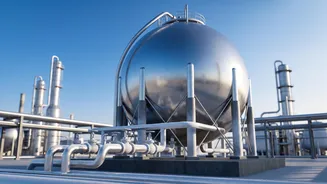
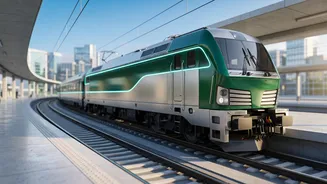
This train isn't running purely on LNG. Instead, it employs a sophisticated dual-fuel system that combines LNG with diesel. Technicians have retrofitted the Driving Power Cars (DPCs) — the engines of the train — to operate using both fuels simultaneously. The system is designed to substitute up to 40% of diesel consumption with cleaner-burning LNG. This hybrid approach offers crucial flexibility; the train can continue to run on diesel alone if LNG is unavailable, ensuring operational reliability. Before the launch, the converted DPCs underwent over 2,000 km of extensive field trials to ensure their performance and safety.
The Green and Economic Benefits
The primary motivation behind this innovation is twofold: cutting costs and curbing pollution. LNG is not only cheaper than diesel but also significantly cleaner. By using this dual-fuel technology, Indian Railways expects to see a considerable reduction in harmful emissions, including carbon dioxide (CO2), nitrogen oxides (NOx), and particulate matter. Preliminary data from the trial runs are promising. The Railways estimates that this technology could lead to annual fuel cost savings of approximately ₹11.9 lakh per Driving Power Car, which translates to about ₹23.9 lakh for an eight-coach train rake. With each DPC's 2,200-litre LNG tank supporting around 1,600 km of operation, the system also reduces the frequency of refuelling stops.
A Step Towards 'Mission Net Zero'
This LNG train is a concrete step towards Indian Railways' ambitious goal of becoming a 'Net Zero Carbon Emitter' by 2030. As the fourth-largest rail network in the world, Indian Railways is a major consumer of diesel fuel. Transitioning away from conventional fossil fuels is crucial for India to meet its national climate targets. The government is pursuing a multi-pronged strategy that includes complete electrification of broad-gauge routes, harnessing solar and wind power, and now, exploring alternative fuels like hydrogen and LNG for routes that are yet to be electrified. The introduction of this LNG train showcases a commitment to finding practical, transitional technologies that can deliver immediate environmental and economic benefits while the larger green infrastructure is built.
The Road Ahead
While the launch in Gujarat is a significant achievement, it is currently a pilot project. The success of this dual-fuel system will be closely monitored to determine its scalability across the wider network. The challenges include the high initial cost of retrofitting engines and the need to establish a robust LNG refuelling infrastructure across the country, which is a significant undertaking. However, with the potential for substantial fuel savings and major emission reductions, the wider adoption of LNG technology could be a game-changer for Indian Railways. This initiative, along with the push for hydrogen fuel and full electrification, paints a clear picture of a railway system actively working to become greener, more efficient, and future-ready.