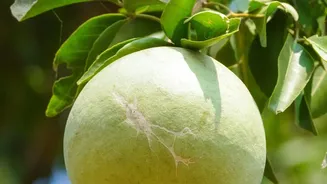







The humble amla, or Indian gooseberry, is a staple in kitchens and medicine cabinets across the country. But did you know this small, tart fruit has a 'capital'? In the heart of Uttar Pradesh lies Pratapgarh, a district that has earned this title.
A Title Built on Numbers
Pratapgarh's
claim to fame isn't just a local boast; it's backed by staggering production figures. Uttar Pradesh is India's largest amla-producing state, accounting for approximately 60% of the nation's total output. Within the state, Pratapgarh is the undisputed leader. The district has dedicated around 20,000 hectares of land to amla orchards, a scale of cultivation that sets it apart from any other region in the country. This overwhelming concentration of farming has made 'Amla Capital' more than just a nickname; it's an agricultural and economic reality. The official district website even proudly calls it the 'City of Aonla'. This identity was further solidified when amla was chosen as the district's flagship product under the 'One District One Product' (ODOP) scheme, a government initiative to promote local specialities.
From Fruit to a Thriving Industry
The story of Pratapgarh is not just about growing the fruit, but about what happens after it leaves the tree. Since fresh amla has a short shelf life, a vibrant processing industry has emerged as the backbone of the local economy. More than just selling the raw crop, farmers and hundreds of small-scale units transform the sour berry into a wide array of products. The most popular of these are amla murabba (sweet preserve), candy, juice, pickles, and powders. This culture of value addition turns a seasonal harvest into a year-round economic engine, providing sustained income and employment. Recent government initiatives under the ODOP programme have specifically focused on boosting this processing ecosystem, with an emphasis on better packaging and marketing to help these local products reach national and even global markets.
The Economic and Social Impact
The amla industry is deeply woven into the social fabric of Pratapgarh, employing thousands of people either directly in farming or indirectly in processing, packaging, and transport. This single fruit supports the livelihoods of countless small and marginal farmers who rely on it as a primary source of income. In recent years, the expansion of processing units has created significant employment opportunities for rural women. Many women associated with self-help groups have received training and support to produce amla products, empowering them with financial independence. As Prime Minister Narendra Modi noted in a 'Mann Ki Baat' address, these groups are now successfully making and marketing everything from amla candy to digestive powders, transforming their economic condition.
A Mark of Authenticity
Adding another feather to its cap, the Pratapgarh Amla received a Geographical Indication (GI) tag in March 2023. This coveted certification acts as a mark of quality and authenticity, confirming that the amla grown in this specific geographical region possesses unique characteristics. The GI-tagged Pratapgarh amla is described as having a greenish-yellow colour and a distinctively balanced sour and astringent taste, which makes it particularly suitable for traditional preparations. For farmers and producers, the GI tag is more than a matter of pride; it gives their produce a special identity in a crowded market, protects them from imitation, and often helps in fetching better prices for their unique crop.
Challenges and the Road Ahead
Despite its success, the amla industry in Pratapgarh is not without its challenges. Farmers often face issues like fluctuating market prices, the high cost of inputs like fertilisers and pesticides, and a historical dependence on middlemen. While the ODOP scheme has helped, gaps in infrastructure, such as a lack of modern storage and processing technology, still persist. However, the future looks promising. The growing consumer demand for natural and health-based products has created a strong, expanding market for amla and its derivatives. With continued government support, a focus on technological upgrades like solar dryers for better preservation, and improved market access through online platforms, Pratapgarh is well-positioned to strengthen its reign as India's undisputed Amla Capital.