





The Persistent Problem of Splash Erosion
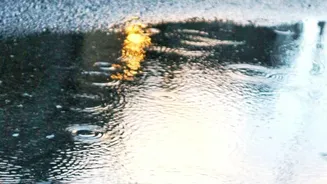
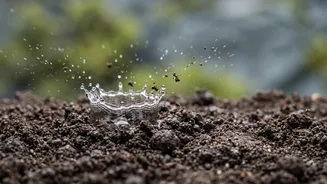
Soil erosion is a critical environmental issue in India and across the globe, threatening agricultural productivity and leading to land degradation. One of the primary drivers of this process is known as splash erosion. This occurs when a single raindrop
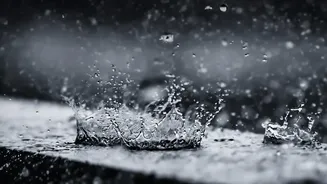
strikes bare soil, acting like a tiny hammer. The impact dislodges soil particles, splashing them outwards and clogging soil pores, which reduces water infiltration and increases surface runoff. For decades, scientists understood this process in terms of the kinetic energy and downward momentum of the raindrop. However, the precise physics of why a soft liquid could inflict such significant damage on hard surfaces over time remained partially unsolved. Ancient wisdom tells us that 'dripping water hollows out stone,' but the scientific explanation was missing a key component.
A Deeper Look Reveals a 'Micro-Bomb'
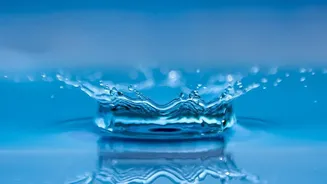
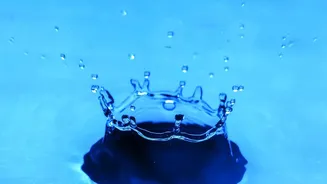
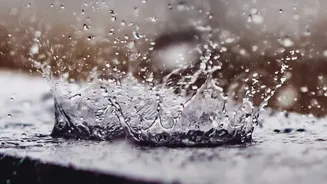
Researchers at the University of Minnesota Twin Cities have provided a dramatic new perspective on this age-old phenomenon. Using a novel technique called 'high-speed stress microscopy,' they were able to move beyond simple visual analysis with high-speed cameras. For the first time, they measured the hidden forces, shear stress, and pressure directly underneath a liquid droplet at the moment of impact. Their findings, published in Nature Communications, were explosive—literally. The study revealed that a falling droplet behaves like a tiny bomb upon impact. The force is not concentrated at the center as previously thought; instead, it spreads out with the impacting drop. This rapid spreading creates a shock wave that moves across the surface, releasing its impact energy explosively and giving it the power to erode surfaces over time.
The Power of Supersonic Spreading
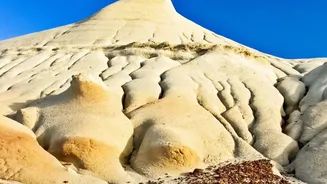
The most startling discovery from the Minnesota study was the incredible speed of the droplet's post-impact spread. The researchers found that the water droplet spreads out at speeds that, for a very short time, exceed the speed of sound. This supersonic movement is what generates the powerful shock wave responsible for transmitting stress to the surface below. This mechanism explains how the seemingly gentle force of rainfall can, over countless repetitions, wear down even rock. According to Xiang Cheng, the study's senior author, this research was motivated by the desire to understand the paradox of how something so soft can damage something so hard. The new technique finally allowed his team to quantify the forces that had previously only been observed visually, confirming the immense power packed into each tiny drop.
Implications for a Changing World
This new understanding of erosion physics has significant real-world implications. In India, where monsoon rains are a defining feature of the climate, understanding the mechanics of splash erosion is crucial for protecting valuable topsoil. This is especially true for the country’s vast agricultural lands. The findings could lead to the development of more effective erosion-resistant surfaces and materials. For example, coatings for buildings or wind turbine blades, which are constantly exposed to the elements, could be engineered to better mitigate the shear stress caused by droplet impacts. As weather patterns become more intense, designing surfaces that can withstand this newly understood force will be essential for infrastructure longevity and land conservation.
From the Lab to the Land
The University of Minnesota team plans to expand their research to test how different surface textures and materials might reduce the erosive power of droplets. This knowledge could inform a new generation of soil conservation strategies. Techniques such as using cover crops or leaving crop residue on fields are known to be effective because they shield the soil from the direct impact of raindrops. With a more precise model of erosion physics, land managers and agricultural scientists can refine these practices. This fundamental research into the mechanics of a single raindrop provides a powerful tool in the ongoing effort to manage our landscapes, protect our food supply, and build a more resilient world in the face of environmental challenges.