


The Latest Numbers Game
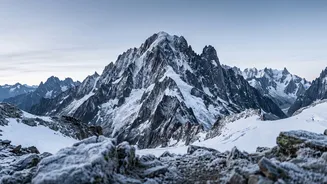
In a highly anticipated announcement on October 14, 2026, a team of French surveyors revealed the new official height of Mont Blanc, Western Europe's highest peak. The summit now stands at 4,807.47 metres. This is a significant increase of nearly two
metres from its last official measurement of 4,805.59 metres in 2023, which was the lowest recorded since modern surveys began. However, the headline's paradox holds true. Interim scientific reports indicated that measurements in 2025 actually recorded a higher peak, meaning the mountain has technically shrunk in the last year even as it has grown since 2023. This fluctuating measurement paints a picture not of a solid, unchanging landmark, but of a dynamic natural wonder.
A Summit of Ice, Not Rock
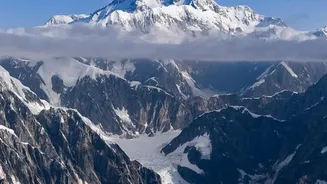
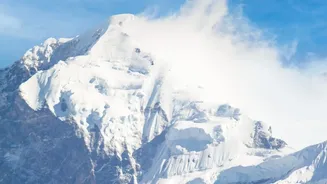
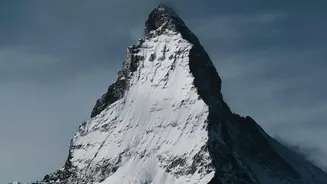
The key to understanding this geological riddle is that surveyors are not measuring the mountain's rock. The solid rock peak of Mont Blanc has a stable altitude of around 4,792 metres. What changes is the thick cap of ice and snow that sits on top of it. This perennial dome of snow can be anywhere from 15 to 20 metres thick, and it is this 'soft summit' that grows and shrinks, leading to the fluctuating official height. Think of it less like the mountain itself growing, and more like it wearing a hat of varying thickness depending on the weather.
The Weather's Deciding Vote
So, what makes this icy hat change its size? The answer is a complex interplay of weather conditions. The height of the snow cap is influenced by the amount of winter precipitation and, crucially, by the wind. In years with heavy snowfall and relatively calm conditions, the summit can accumulate more snow, leading to a greater height. Conversely, strong winds can scour snow from the peak, effectively lowering the summit, even if snowfall was significant. A lack of rain and hotter summers can also contribute to a lower measurement, as was suspected in the 2023 reading. Therefore, these biennial measurements are more of a snapshot of recent weather patterns than a statement on the mountain's geology.
What About Climate Change?
It is tempting to immediately link these changes to the broader trend of global warming. However, the surveyors and scientists involved are cautious. They stress that tracking the impact of climate change requires decades of data, not just a few measurements. While a single year's increase in height does not disprove the long-term melting of Alpine glaciers, these regular 'health checks' provide invaluable data for future generations of climatologists. Glaciologist Luc Moreau noted that for now, the summit itself has 'not been significantly altered by climate change'. The focus remains on the long-term trend, as glaciers across the Alps have seen significant retreat over recent decades, a clear sign of a warming planet.
A Biennial Alpine Expedition
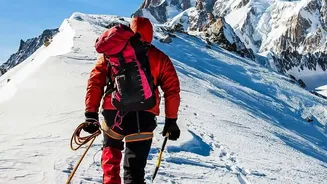
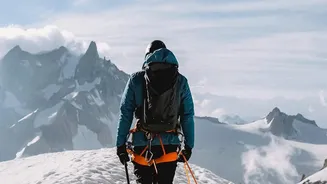
Measuring the peak is no simple task. Since 2001, teams of experts have embarked on an expedition every two years to gather this data. The process involves a challenging multi-day climb, with teams carrying nearly 30 kilograms of high-precision equipment, including GPS systems and ground-penetrating radar, to the summit. This ambitious project, organised by surveyors from France's Haute-Savoie region, aims to create a detailed model of the ice cap and monitor its evolution. Jean des Garets, the region's chief surveyor, emphasizes that the summit is in 'constant motion', and these regular measurements are crucial for understanding the forces at play on this iconic mountain.