







The Annual Indian Tax Scramble
For most salaried individuals in India, July 31 is a date circled in red. It’s the deadline to declare income, claim deductions, and pay the taxes that fund our country's vast infrastructure and public services. India employs a progressive tax system,
meaning the more you earn, the higher the percentage you pay. Under the default new tax regime for the 2025-26 financial year, incomes are divided into various slabs, with rates climbing from 5% to 30% for the highest earners. This system involves navigating a complex web of forms, deductions, and exemptions, whether you opt for the old regime with its various savings-linked benefits or the newer, simplified one with lower rates but fewer deductions. The entire exercise is a cornerstone of our national economy, but it’s a significant source of annual anxiety for many.
A Different World: The Monaco Model
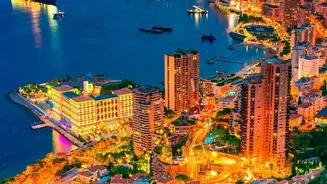
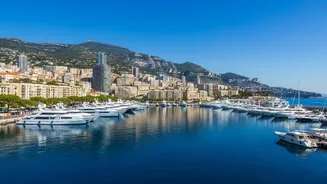
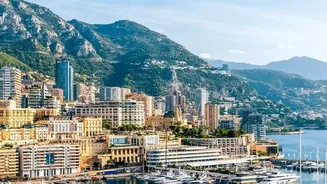
Now, imagine a country where residents haven't had to worry about personal income tax since 1869. Welcome to Monaco. For its residents, there is no tax on salaries, investment income, capital gains, or dividends. This policy has turned the tiny, glamorous principality on the French Riviera into a magnet for the world's ultra-wealthy. The core principle is simple: the government does not take a direct cut of an individual's earnings. This doesn't mean it's a completely tax-free paradise, but the absence of the single biggest tax most people face globally is the central pillar of its economic identity. The one major exception involves French citizens, who, due to a 1963 bilateral treaty, are generally still subject to French income tax even if they live in Monaco.
So, How Does Monaco Fund Itself?
If not from personal income, where does the government's money come from? Monaco relies on a few key revenue streams. The largest is a Value-Added Tax (VAT), which functions like a sales tax. Through a customs union with France, Monaco applies French VAT rates, with the standard rate currently at 20%. This tax on goods and services provides a substantial portion of the state's budget. Another major source is corporate tax, officially known as the Business Profits Tax. This 25% tax generally applies only to companies that earn more than 25% of their revenue from outside Monaco. Finally, revenue flows from state-owned enterprises, including the famous Monte Carlo casino, real estate transactions, and taxes on inheritances for assets located within the principality.
The Real Price of Paradise
Before you pack your bags, it's important to understand that becoming a resident of Monaco is an exclusive and expensive process. The 'no income tax' benefit is reserved for those who can navigate the stringent residency requirements. Applicants must prove they have a place to live, which, in one of the world's most expensive real estate markets, is a significant financial hurdle. Furthermore, they must demonstrate financial self-sufficiency by depositing a substantial sum—often cited as at least €500,000—into a Monaco bank. Applicants also need a clean criminal record. Even after becoming a resident, achieving citizenship is a long road, typically requiring ten years of residency after the age of 18, with the final decision resting solely with the Sovereign Prince of Monaco.
Two Systems, Two National Philosophies
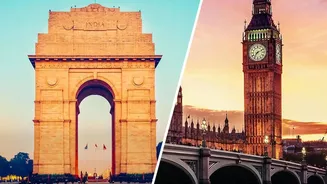
The contrast between India's and Monaco's tax systems highlights two fundamentally different national philosophies. India, a developing nation of over 1.4 billion people, uses its complex direct taxation system to fund massive social welfare programs, defense, infrastructure, and public services on a continental scale. It’s a tool for wealth redistribution and national development. Monaco, a city-state with a population of under 40,000, has tailored its economic model to attract foreign capital and high-net-worth individuals. Its system prioritizes creating an appealing fiscal environment for a specific demographic, funding its high-quality public services through consumption and business taxes rather than individual income.