








The Art of the Restomod
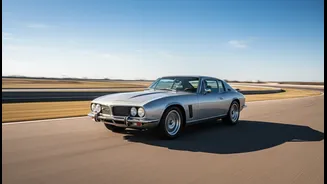
To understand the gravity of JIA's new direction, you first need to appreciate its past. The company built its stellar reputation on the concept of the 'restomod'—taking a classic car and rebuilding it with modern technology. Their muse was the Jensen
Interceptor, a brutish and beautiful grand tourer from the 60s and 70s that blended Italian design with American V8 power. JIA's Interceptor R models are masterpieces of this craft. They start with an original Interceptor, perform a nut-and-bolt restoration, and then thoughtfully upgrade everything. The old, heavy Chrysler engines are replaced with modern, reliable supercharged V8s from GM, the chassis is modernized with independent rear suspension, and the brakes are upgraded to powerful AP Racing units. The result is a car that preserves the timeless cool of the original but drives with the performance and reliability of a modern sports car.
A New Chapter: The Interceptor GTX
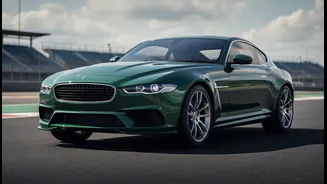
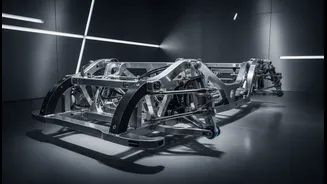
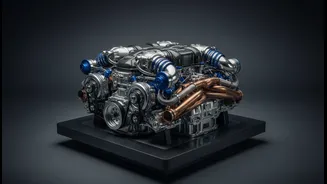
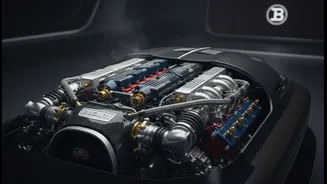
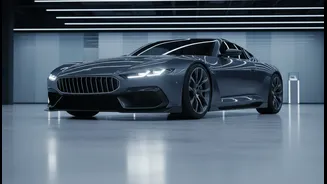
Now, JIA is stepping out of the shadow of history. The company has announced it is developing a completely new car: the Jensen Interceptor GTX. Crucially, this is not another restomod. Described as a "clean-sheet design," the GTX is being engineered from the ground up by a dedicated team within JIA. Recent announcements confirm the new model will debut first as a track-only special, designed to showcase the car's performance potential before future road-going versions are released. This strategy allows the company to demonstrate the capabilities of its new platform in an extreme environment. The car will be built on a lightweight aluminium chassis with an aluminium body, powered by a supercharged V8 engine.
A Leap of Faith for a Niche Builder
The move from restoring classics to designing and manufacturing a new car is a monumental undertaking. Restomodding, while highly complex, starts with an existing, proven platform. Creating a vehicle from scratch involves navigating a labyrinth of design, engineering, safety regulations, and supply chain logistics. It's a high-risk, high-reward venture that has challenged even the largest automakers. For a small, specialized firm like JIA, it represents a courageous leap of faith in its engineering and design capabilities. The company is transitioning from being a master of reimagination to a creator of original art, a move that fundamentally changes its business model and positions it against other niche supercar manufacturers.
Analogue Soul in a Digital World
Despite being an all-new car, the Interceptor GTX aims to capture the spirit of its namesake. JIA has emphasized that the car will offer a "fully analogue driving experience." In an era of digital dashboards, extensive driver aids, and semi-autonomous features, this promise is a powerful statement. It suggests a focus on driver engagement, with physical controls, minimal digital interference, and potentially a manual gearbox. The goal is to deliver a deeply immersive V8-powered experience that connects the driver to the machine and the road, a philosophy that resonates strongly with enthusiasts who feel modern supercars have become too computerized. While the initial release is track-focused, this analogue ethos is expected to carry over to the eventual road cars.
What's Next for Jensen?
The Interceptor GTX project is being guided by a team that includes Jeff Qvale, son of Kjell Qvale, who owned Jensen Motors during its 1970s heyday, linking the new venture to the brand's historic past. While a firm debut date for the customer version has not been set, the company has hinted that a reveal could happen by the end of the year, aligning with the 60th anniversary of the original Interceptor's launch. The initial track-only model will act as a rolling showcase for the technology and design that will define the future of Jensen. It's a bold strategy: prove the car's performance credentials on the track to build excitement and anticipation for the road-legal grand tourer to follow. The automotive world will be watching closely.