



The Moon’s Cold Traps
For decades, the lunar surface was considered profoundly hostile to life. With no atmosphere, it is blasted by intense ultraviolet (UV) radiation and cosmic rays, and experiences wild temperature swings. However, scientists have long been intrigued by the Moon’s
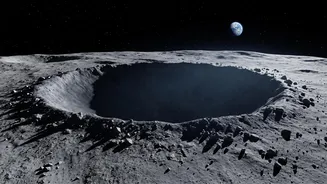
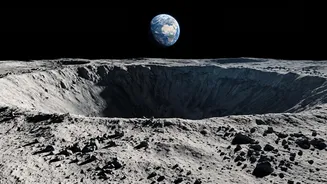
permanently shadowed regions (PSRs), especially near the south pole. Because of the Moon’s slight axial tilt, the floors of some deep craters never see direct sunlight. These areas are among the coldest places in the solar system, cold enough to trap water ice and, as new research indicates, potentially shelter microbial stowaways from Earth.
Testing Earth’s Toughest Life
A recent NASA-led study, published in August 2026, didn't use physical experiments on the Moon but instead ran sophisticated simulations. Researchers modeled the conditions at several candidate landing sites for the upcoming Artemis missions near the lunar south pole. They used temperature and illumination data from NASA's Lunar Reconnaissance Orbiter to create detailed maps of radiation exposure, even accounting for light scattered off crater walls. They then cross-referenced these maps with the known survival limits of several hardy microorganisms commonly found in spacecraft environments, including bacteria like Deinococcus radiodurans and a fungus called Aspergillus niger. These lifeforms are known for their resistance to extreme cold, vacuum, and radiation.
Surprising Pockets of Survival
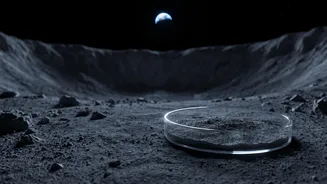
The results showed that while most of the lunar surface would sterilize Earthly microbes quickly, these shadowed polar regions are a different story. The models revealed that small niches, shielded from direct UV radiation by crater rims or even small rocks, could allow some microbes to survive. Surprisingly, the most resilient organism in the simulation was Aspergillus niger, a common black mold. Its dark pigments and durable cell walls helped it tolerate UV radiation better than even the famously radiation-resistant Deinococcus bacterium. In some deeply shaded areas, the models suggest these dormant microbes could remain viable for several days, and possibly much longer inside permanently shadowed craters. It's important to note this is survival, not growth; the microbes would be in a dormant, non-reproductive state called cryptobiosis.
The Risk of Forward Contamination
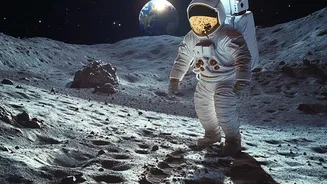
This discovery creates a major challenge for planetary protection. Humans are covered in microbes, and it's impossible to launch a completely sterile mission. When astronauts explore these polar regions, they will inevitably shed microorganisms from their suits and equipment. This is known as "forward contamination." The concern is that these Earthly microbes could interfere with one of the primary scientific goals of the Artemis program: searching for ancient chemistry and resources like water ice. If scientists find organic molecules in a lunar sample, they need to be certain they are genuinely from the Moon and not just contamination from a recently arrived astronaut.
New Rules for a New Era of Exploration
Historically, the Moon has been considered low-risk for planetary protection, meaning spacecraft sent there don't require the stringent sterilization procedures needed for missions to Mars. This new understanding may change that. The findings highlight the need for updated protocols for Artemis astronauts operating near these scientifically valuable shadowed regions. The Moon's south pole is no longer just a barren landscape; it's now also a potential natural laboratory for studying the limits of life. Understanding how our own microbes behave there is the first step in ensuring that when we search for the Moon's secrets, the answers we find are not simply our own reflection.