



The Foundation of Grains
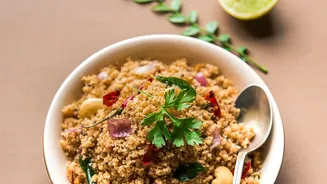
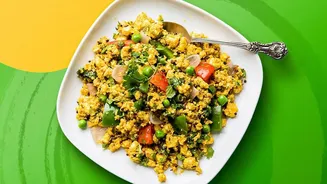
The story of Indian breakfast starts with its grains. While rice and wheat are foundational, the variety is immense. In Maharashtra and Madhya Pradesh, breakfast often begins with poha, or flattened rice, which is quickly rehydrated and tossed with spices,
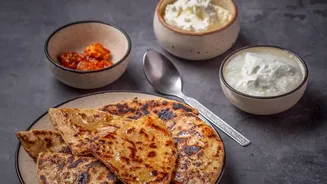
onions, and sometimes potatoes. In the north, whole wheat flour is king, forming the basis for countless stuffed flatbreads known as parathas. These can be filled with spiced potatoes (aloo paratha), cauliflower (gobi paratha), or paneer, shallow-fried in ghee, and served with yogurt and pickles. But the grain story doesn't end there. Ancient millets are making a strong comeback, celebrated for their nutrition. Grains like ragi (finger millet), jowar (sorghum), and bajra (pearl millet) are used to make everything from rotis to porridges and dosas, offering gluten-free and nutrient-dense alternatives. Even lentils get in on the action, with gram flour (besan) being used to create savoury pancakes called chilla.
The Magic of Batters
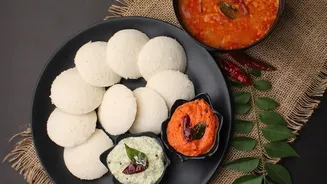
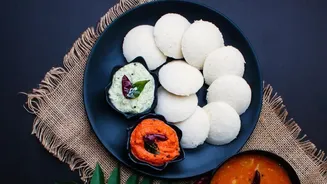
If grains are the foundation, batters are the magical transformation. The most iconic breakfast dishes of South India, idli and dosa, are born from the same elemental batter of soaked and ground rice and urad dal (black lentils). The key is fermentation. Left to rest overnight, the batter rises, developing a subtle sourness and a light, airy texture thanks to natural yeasts. This single batter then leads to two entirely different outcomes based on the cooking method. In contrast to the patient art of fermentation, there are also instant batters. A classic Rava Dosa, for instance, uses semolina (rava/sooji), rice flour, and spices mixed with water or buttermilk to create a thin, pourable batter that’s ready almost immediately. Similarly, Andhra Pradesh’s Pesarattu is a crepe made from a quick batter of soaked green moong dal. These instant options provide convenience without sacrificing flavour, showcasing another dimension of Indian culinary ingenuity.
The Art of the Cooking Method
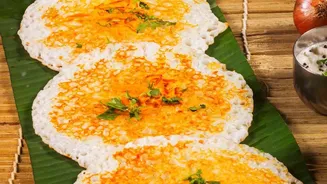
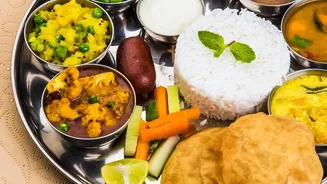
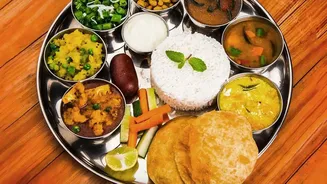
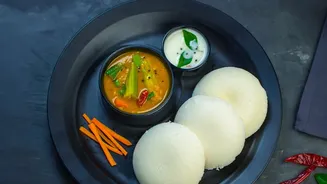
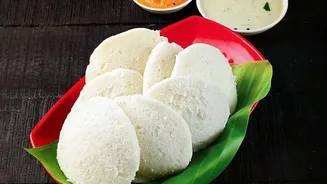
The final element that unlocks astonishing variety is the cooking method. Take the fermented rice and lentil batter from the South. When poured into small, circular moulds and steamed, it becomes idli—soft, fluffy, pillow-like cakes that are incredibly light and easy to digest. But when that very same batter is spread thinly on a hot, oiled griddle (tawa), it transforms into a dosa—a large, crispy, golden-brown crepe with a soft interior. Steaming is also central to Gujarat's famous dhokla, a spongy, savoury cake made from a fermented batter of chickpea flour. Meanwhile, deep-frying creates some of the most indulgent breakfast treats. In the North, puffy, golden bhature are served with a spicy chickpea curry (chole), and crisp puris are paired with a simple potato sabzi. Pan-frying and shallow-frying on a tawa are used for a huge range of dishes, from the wheat-based parathas and theplas of the North and West to the lentil-based chillas found across the country.
A Symphony of Regional Combinations
Each region in India combines these three elements—grains, batters, and cooking—to create its own signature breakfast culture. The South is the undisputed master of fermented rice and lentil batters, giving the world idli, dosa, and appam (a bowl-shaped pancake made with coconut milk). In the West, states like Maharashtra and Gujarat favour dishes made from flattened rice (poha) and gram flour (dhokla, khaman). The North relies heavily on wheat for its hearty, ghee-laden parathas and deep-fried puris, designed to fuel a day of hard work. In the East, you might find luchi (similar to puri) served with aloo dum (spicy potatoes), showcasing another regional take on fried bread. This framework demonstrates how a few core culinary principles can blossom into a breakfast landscape of near-infinite variety, changing from state to state and even household to household.