







The UK’s top cybersecurity agency has issued a stark warning: AI-powered cyberattacks on critical infrastructure are no longer a distant threat, but an imminent reality. For a digitally dependent nation like India, this is more than a headline.
What the UK's NCSC Is Warning
The UK's
National Cyber Security Centre (NCSC), part of its GCHQ intelligence agency, recently published its 'State of the Cyber Nation' report. It concluded that it is 'highly likely' an AI-powered malware attack will hit the country's critical national infrastructure by 2028. Critical infrastructure refers to the essential services that are vital for daily life, including power stations, water supplies, transport networks, hospitals, and financial systems. The NCSC's CEO, Dr Richard Horne, stated that the world faces 'a real prospect of an unprecedented rise in the number of cyber incidents'. However, he clarified that the primary danger isn't that AI has invented entirely new attack methods. Instead, AI allows adversaries to discover and exploit long-standing security weaknesses at a scale and speed that was previously unimaginable.
How AI Changes the Game for Attackers
Artificial intelligence is acting as a force multiplier for malicious actors. It dramatically lowers the barrier to entry for less-skilled criminals and supercharges the capabilities of sophisticated state-sponsored groups. Attackers can now use AI to automate reconnaissance, scanning vast networks to find unpatched software or weak credentials in minutes. They can generate highly convincing and personalised phishing emails, a stark departure from the poorly worded scams of the past. AI can also write custom malware variants on the fly, making them harder for traditional security software to detect. Nation-states like Russia and China are expected to routinely use these AI capabilities to pursue their geopolitical goals, increasing the threat to rival nations.
Why Critical Infrastructure Is a Prime Target
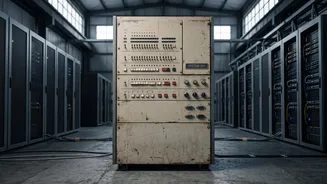
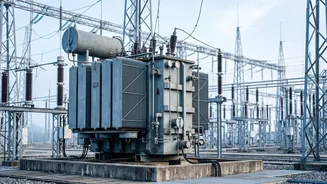
Critical infrastructure presents a uniquely attractive target for several reasons. Disrupting these services can cause widespread societal panic and economic damage. Many of these systems, especially in sectors like energy and transport, rely on older operational technology (OT) that was not designed with modern cybersecurity in mind. This legacy technology, now increasingly connected to the internet, creates a massive and often poorly defended attack surface. The NCSC specifically highlighted that years of 'tech on the cheap'—delaying upgrades and underinvesting in security—have left these vital systems dangerously exposed. An attack on a power grid, a banking system, or a logistics network can have cascading effects, crippling an entire economy.
The Implications for India
The NCSC's warning is a global one, and for India, the stakes are incredibly high. As one of the world's fastestest growing digital economies, India's reliance on critical infrastructure like the Unified Payments Interface (UPI), power grids, and transportation networks is immense. Recent years have already seen significant attacks, including intrusions into government systems and ransomware attacks on hospitals, highlighting existing vulnerabilities. India's own computer emergency response team, CERT-In, has issued advisories about AI agents being used in attacks on Indian organisations. The Ministry of Electronics and Information Technology (MeitY) has urged government bodies to review their security posture, acknowledging that AI is lowering the bar for cybercriminals. With adversaries able to craft more sophisticated social engineering campaigns and discover flaws faster, India’s digital-first services are at increased risk.
The Path Forward: Fighting AI with AI
The consensus among security experts is that the only way to counter AI-driven attacks is with AI-powered defence. Defensive AI tools can monitor vast networks for anomalous behaviour, identify threats at machine speed, and help overburdened security teams prioritise the most critical alerts. The UK government is already investing heavily in a national 'Cyber Shield' and an AI Cyber Security Centre of Excellence. For India, the path forward involves a multipronged strategy. This includes strengthening its national cybersecurity policies, promoting the development of indigenous security technologies, and fostering publicprivate partnerships. Investing in AIenabled defensive tools and continuous security audits, especially for critical sectors, is no longer optional. As the NCSC report makes clear, the time for treating cybersecurity as a lowpriority expense is over.