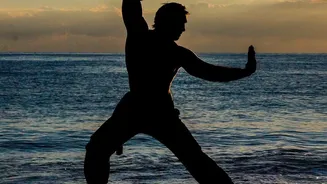





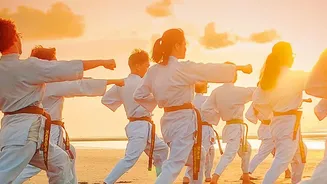

The idea of practicing Tai Chi on a sandy beach, with the sound of waves and a gentle breeze, is undeniably appealing. But this idyllic setting presents unique challenges to your body that differ greatly from practicing on a firm, flat floor.
Why Sand Changes Everything
The core
difference between a studio floor and a beach is surface stability. A hard floor provides consistent, reliable feedback to your feet. Sand, on the other hand, is an unstable surface that shifts and yields under pressure. This quality is precisely what makes walking or exercising on sand more strenuous—your muscles have to work harder just to keep you upright. In Tai Chi, which emphasizes slow, controlled weight shifts and a strong connection to the earth, this instability fundamentally alters the practice. The soft surface can feel good, but it also means your body receives less information about its position, a sense known as proprioception, which is critical for balance.
Ankles on High Alert
Your ankles bear the brunt of this instability. On solid ground, your ankle muscles make small, predictable adjustments. On sand, they are forced into overdrive, making constant, rapid micro-adjustments to prevent you from wobbling or falling. This significantly increases the strain on the muscles, tendons, and ligaments surrounding the ankle joint. Without proper awareness and conditioning, this can lead to fatigue, strain, or even injury. Studies show that specific Tai Chi forms can enhance ankle stability by training the very muscles that prevent common ankle injuries, but this assumes a stable surface. When you take that practice to the sand, the challenge is amplified, requiring a more conscious effort to protect these vital joints.
The Challenge of 'Rooting'
A central concept in Tai Chi is 'rooting' or 'grounding', which describes a stable, connected feeling to the earth, as if you have roots growing from your feet. This allows energy to be directed through the body and into the ground. However, the shifting nature of sand makes achieving a solid root incredibly difficult. Your weight sinks, but the ground doesn't push back with the same force, disrupting the feeling of a stable base. This can make it feel less like you are commanding the movement and more like you are simply trying not to fall over. To practice effectively on sand, you must re-learn how to establish this connection, not by fighting the sand but by adapting to its properties.
How to Adapt Your Practice Safely
Instead of abandoning the beach, you can modify your practice. Start on wet, compact sand near the water's edge, which offers more stability than dry, loose sand. Consciously slow your movements down even further than usual, focusing on the quality of each weight transfer. Think of your weight sinking 'grain by grain'. Shorten your stances to create a more stable base and lower your centre of gravity. Rather than trying to achieve the full expression of a posture immediately, prioritize balance. It may be helpful to practice single-leg balancing exercises on the sand to improve your proprioception and ankle strength before moving into your forms. Exercises like 'Circles in the Sand', where you gently draw circles with your toes, can help your ankles and feet adapt.
Strengthen and Warm Up First
Before you even begin your Tai Chi form, it's crucial to warm up, with a special focus on the feet and ankles. Gentle ankle rotations, pointing and flexing your feet, and rising up onto your toes can activate the stabiliser muscles. Because exercising on sand demands more from your smaller muscles, building their strength is a key preventative measure. Think of it as preparing your body for the unique demands of the environment. This preparation ensures that the natural resistance of the sand builds strength rather than causing strain. By being mindful and prepared, you can turn the challenge of the sand into a powerful tool for enhancing your balance and deepening your mind-body connection.