





The Familiar Rush of India's ITR Season
For salaried individuals and many others across India, the end of July marks a crucial deadline: filing their Income Tax Return. It's a period defined by gathering documents like Form 16, reconciling bank statements, and navigating the income tax portal
to ensure all sources of income are declared correctly. For businesses and professionals, this period can extend to October. This annual compliance is a fundamental part of India’s fiscal structure, where personal income tax is a major source of revenue for the government, funding everything from infrastructure projects to social welfare schemes. The process, while essential, is often seen as complex and stressful, making the idea of a country without it seem like a financial fantasy.
A Glimpse into Life Without Income Tax
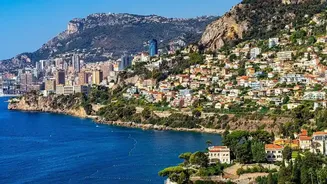
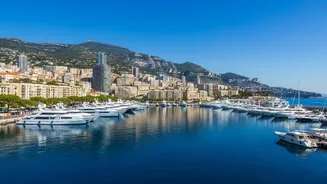
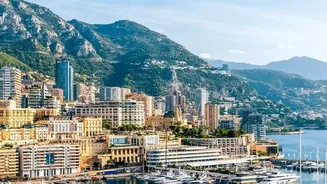
Welcome to the Principality of Monaco, a tiny city-state on the French Riviera famous for its casinos, luxury yachts, and a policy that sounds too good to be true: zero personal income tax. This rule has been in place since 1869, when Prince Charles III abolished it to attract wealthy residents after losing a significant portion of his territory and revenue. For residents of Monaco, this means no tax on salaries, dividends, capital gains, or interest income. However, there's a significant exception. A 1963 treaty with France means that French citizens who move to Monaco are generally still required to pay French income tax as if they were living in France. For nearly everyone else who manages to become a resident, their personal income remains untaxed by the Monegasque government.
How Does Monaco Fund Itself?
If not from personal income tax, where does Monaco's government get its money? The answer lies in a diversified and clever economic model. The single biggest contributor is Value Added Tax (VAT), which is levied on goods and services at the same rate as in France, with a standard rate of 20%. This consumption tax generates a substantial portion of the state's revenue. Another key pillar is corporate tax. While it's not a blanket tax, businesses that generate more than 25% of their turnover outside of Monaco are subject to a profits tax of 25%. The state also retains monopolies in several sectors, including the famous Monte Carlo Casino, tobacco, and postal services, which provide a steady income stream. Finally, taxes on real estate transactions and inheritance for non-direct descendants also add to the government's coffers.
The High Price of a Tax-Free Life
Moving to Monaco to enjoy its tax benefits is not a simple affair. The principality has strict and expensive residency requirements designed to attract high-net-worth individuals. Prospective residents must prove they have sufficient financial resources to live there without working. This typically involves depositing a substantial amount, often cited as at least EUR 500,000, in a Monaco bank. Applicants must also secure accommodation, which means either buying property in one of the world's most expensive real estate markets or signing a lease for a year. Finally, they must have a clean criminal record and undergo an official interview to be granted a residence permit, known as a Carte de Séjour. This high barrier to entry ensures that while residents don't pay income tax, they contribute significantly to the local economy through banking, spending, and real estate.
Could India Replicate the Monaco Model?
During the peak of ITR season, it’s tempting to wonder if India could ever adopt a similar no-income-tax policy. In short, the answer is no. The two nations are fundamentally different in every conceivable way. Monaco is a microstate with a population of under 40,000 people in an area smaller than many Indian suburbs. Its economy is built on finance, luxury tourism, and serving a small, ultra-wealthy population. India, by contrast, is a developing nation of over 1.4 billion people with vast and diverse economic needs. Income tax is a critical tool for the Indian government to fund national defence, infrastructure, education, healthcare, and poverty alleviation programs on a massive scale. The Monaco model is a unique economic ecosystem that thrives on its exclusivity and specific circumstances, making it an interesting case study but not a blueprint for a large, populous country like India.