




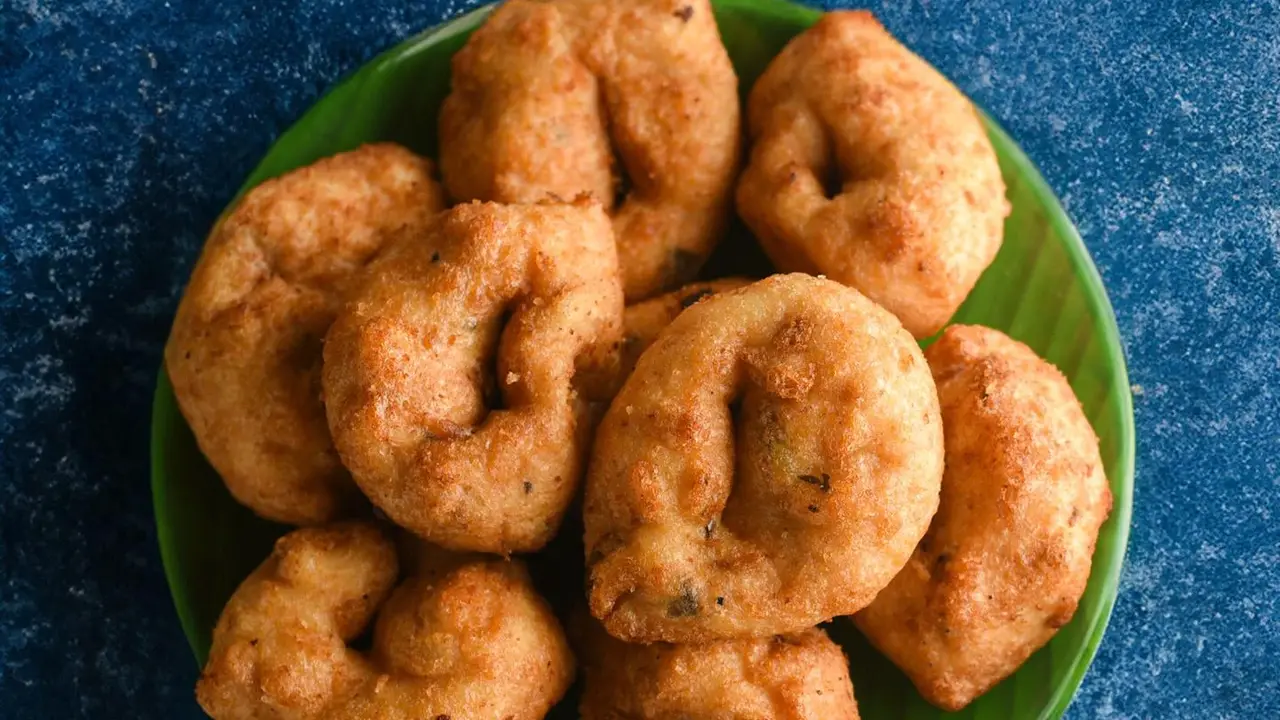
The Health Showdown: Oil vs. Air
The most significant difference lies in the oil content. Deep-frying submerges food in hot oil, leading to significant fat absorption. An air fryer, on the other hand, is a compact convection oven that uses rapidly circulating hot air to cook, requiring
only a teaspoon of oil or a light brush of ghee. This method can reduce the fat content in foods by 70-80%. For popular snacks like samosas or tikkis, this translates to a substantial drop in calories. For example, an air-fried samosa can have up to 60% less fat than its deep-fried counterpart. Beyond calories, there's the question of harmful compounds. High-heat cooking can form acrylamide, a substance classified as a probable human carcinogen. Several studies suggest that air frying can reduce acrylamide formation by up to 90% compared to deep-frying, largely due to the lower oil usage and shorter cooking times.
Taste and Texture: The Quest for the Perfect Crunch
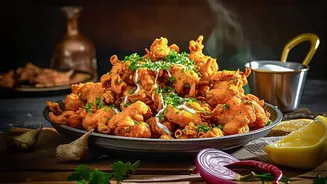
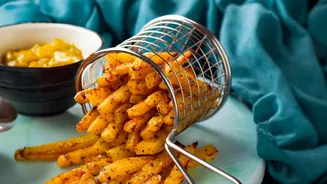
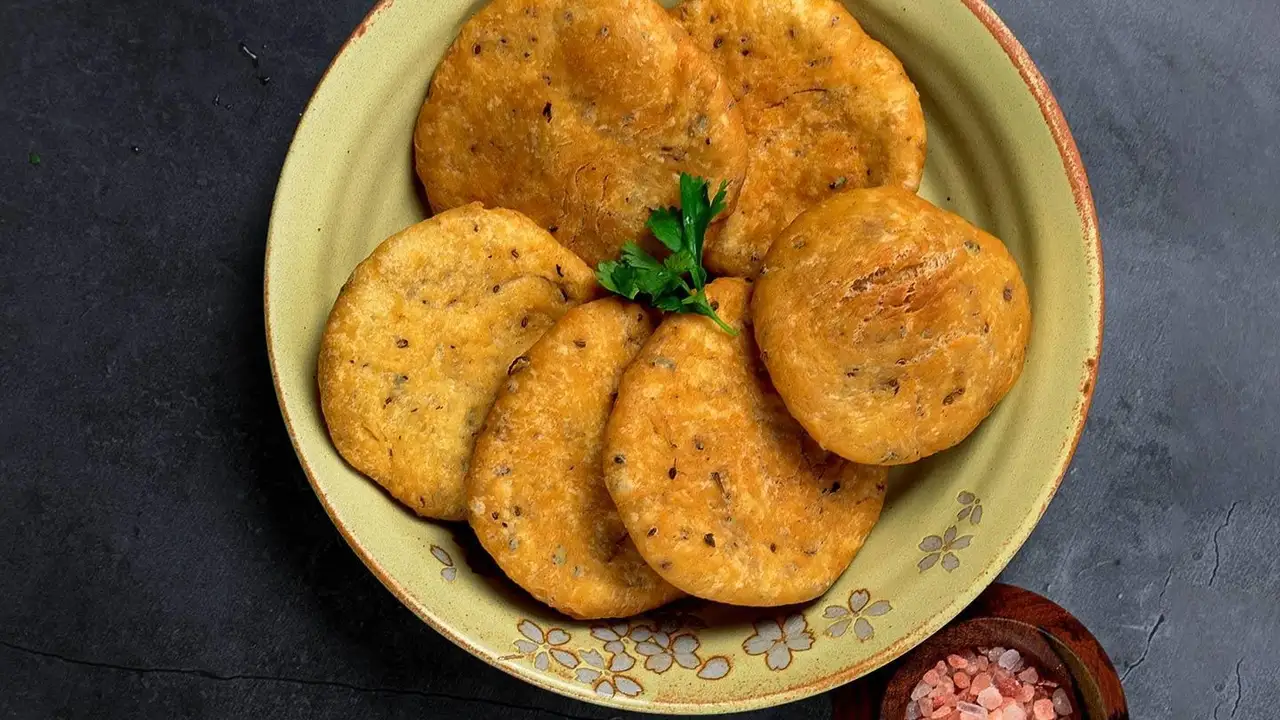
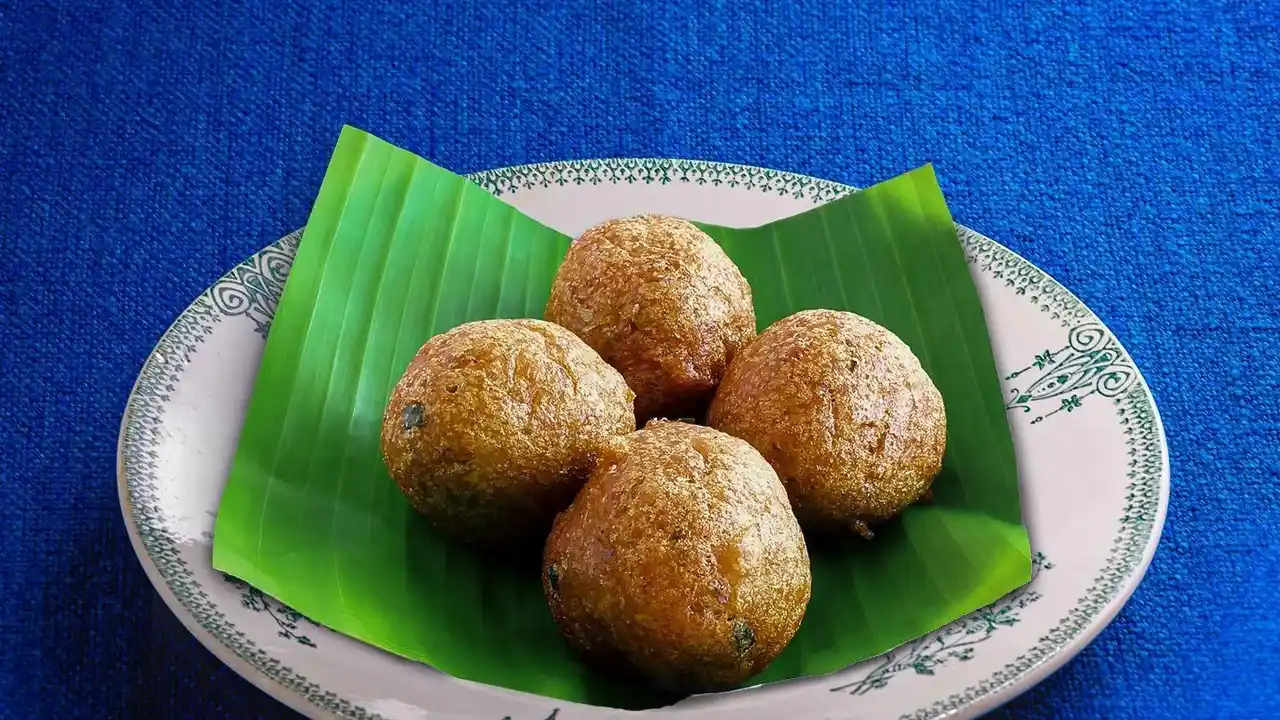
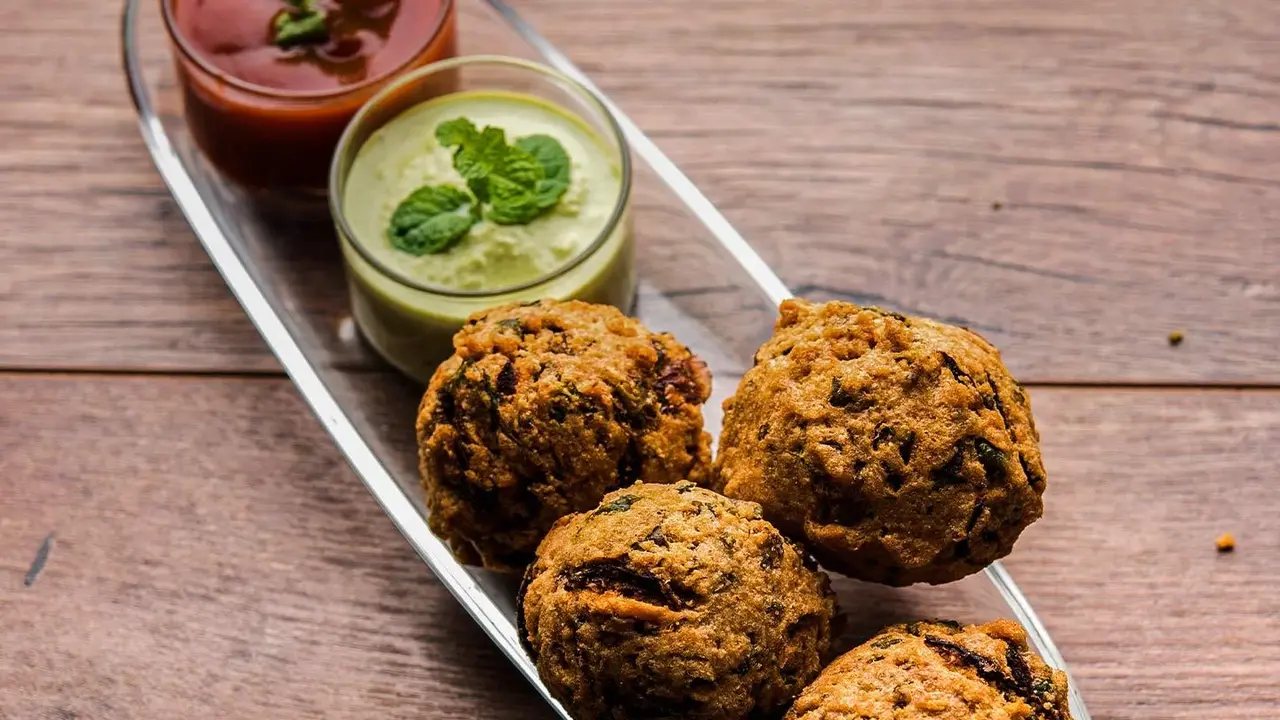
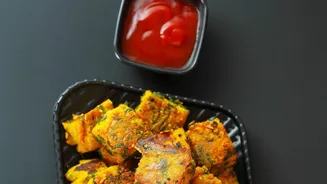
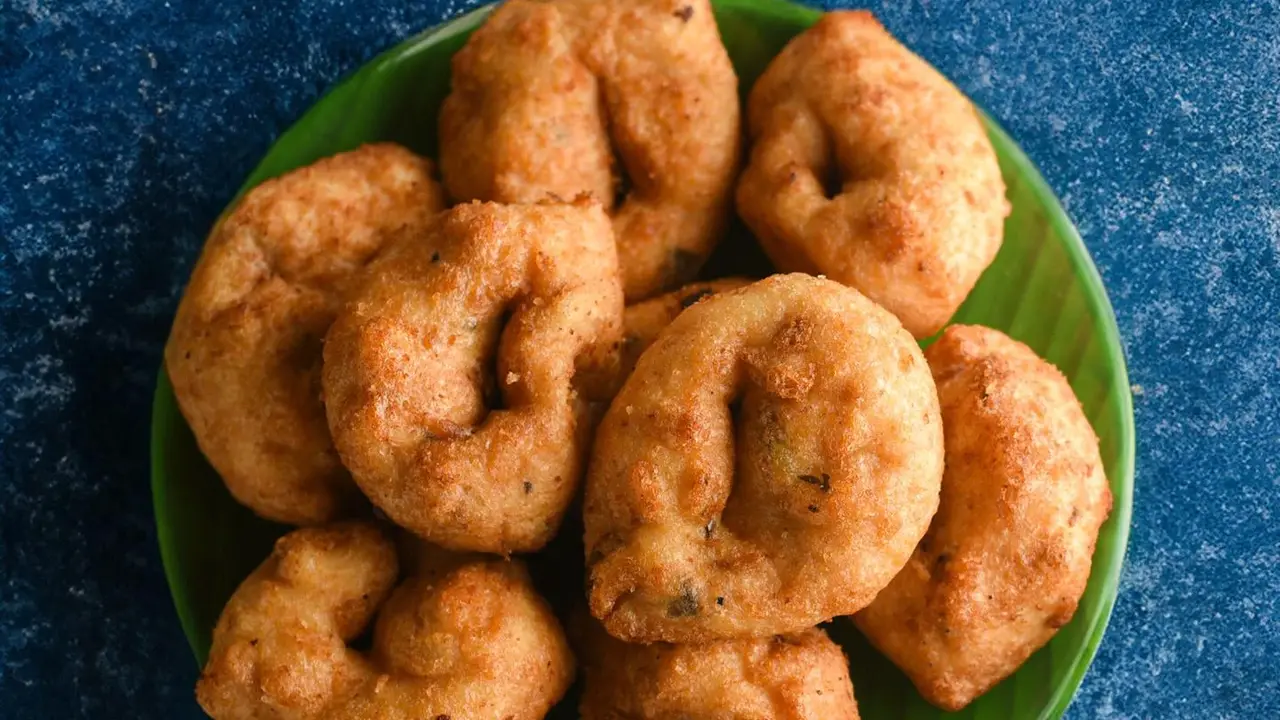
This is where personal preference plays a huge role. Deep-frying creates a unique, bubbly, and flaky crust because the food is completely enveloped in hot oil. Snacks like sabudana vadas and kuttu ke pakore get an undeniably rich flavour and a uniform golden-brown colour. Air-frying produces a crispiness that is often described as slightly drier and firmer. While an air-fried samosa will be crunchy, it may lack the flaky, layered texture of a traditionally fried one. However, many find that the cleaner taste of air-fried snacks allows the flavour of the ingredients and spices to stand out more. For many vrat snacks like sweet potato fries or paneer fingers, the difference in texture is minimal, and the result is still highly satisfying.
How Popular Vrat Snacks Fare
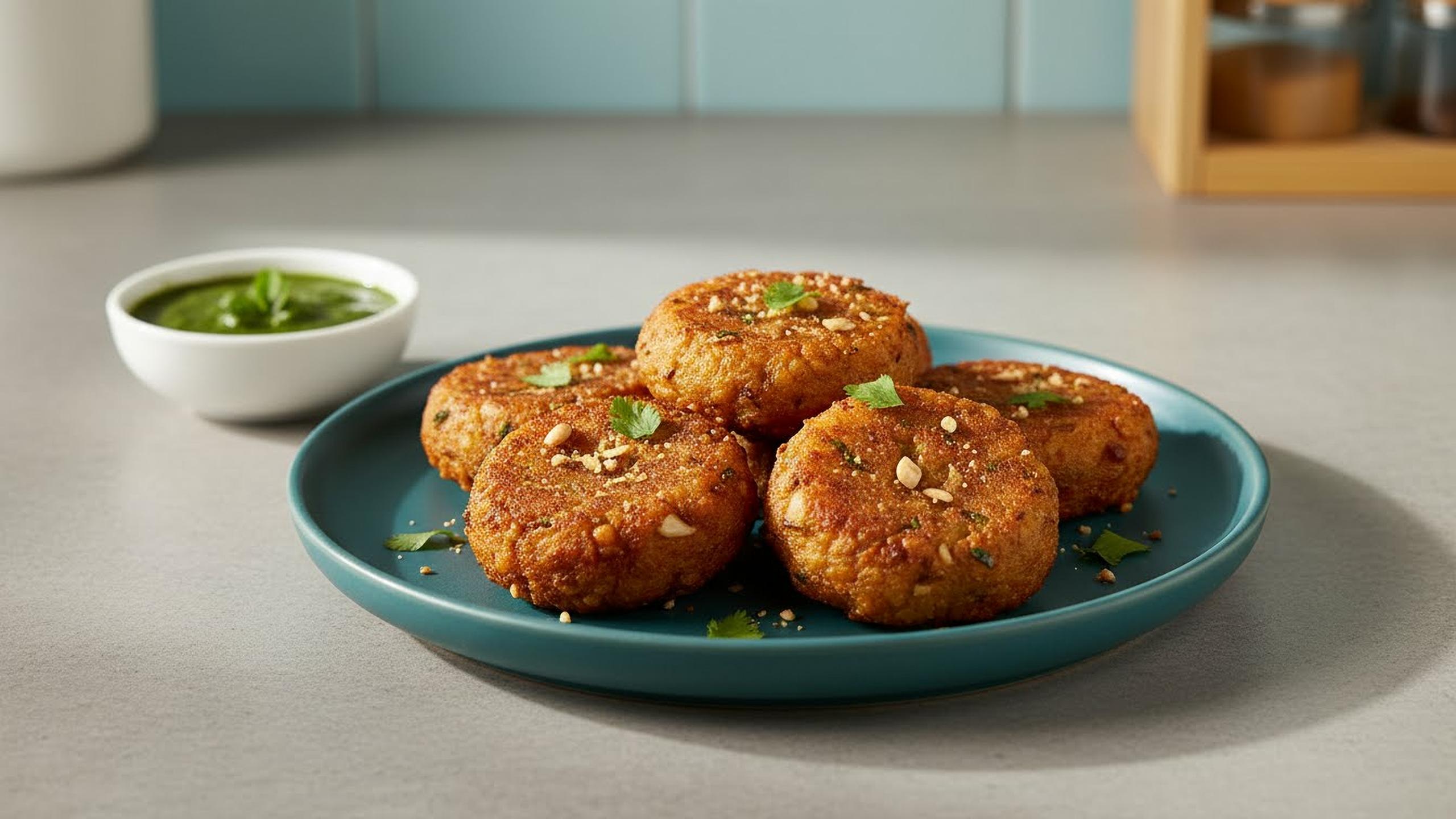
Not all snacks are created equal when it comes to adapting them for an air fryer. Drier, patty-style snacks work exceptionally well. Sabudana vadas, for instance, become wonderfully crisp on the outside and remain soft inside with just a brush of ghee. Kuttu flour tikkis, raw banana cutlets, and sweet potato (shakarkandi) fries are also excellent candidates for air-frying, yielding great results with minimal effort. However, snacks with a very wet batter, like some traditional pakoras, can be challenging. The liquid batter might drip through the air fryer basket before it has a chance to set. In these cases, a slightly thicker batter might be needed for a successful air-fried version. Singhara flour pakoras made with a potato-based dough, however, hold their shape well and crisp up beautifully.
Convenience, Cleanup, and Cost
In the modern kitchen, convenience is king. An air fryer wins this round decisively. There's no large pot of oil to heat, monitor, or cool down. Cleanup is significantly easier; most air fryer baskets are non-stick and dishwasher-safe, eliminating the greasy mess of a kadai and splattered countertops. An air fryer also preheats quickly and cooks food in timed batches, freeing you up to prepare other things. From a cost perspective, the initial investment in an air fryer is offset over time by the drastic reduction in cooking oil consumption. You are no longer using litres of oil for frying but mere millilitres.