







A Market in High Gear
The latest figures from the Federation of Automobile Dealers Associations (FADA) paint a clear picture of an industry hitting its stride. The 37,049 electric passenger vehicles registered in October 2026 represent a staggering 76.47% growth compared to the 20,995
units sold in the same month last year. This surge is even more significant when contrasted with the broader passenger vehicle market, which saw an overall decline. Electric cars now command a 7.3% share of all new passenger vehicle registrations, more than double their 3.5% share from October 2025. This demonstrates not just a recovery but a fundamental change in consumer preference, with more buyers choosing to plug in rather than fuel up.
The Titans of the Trade
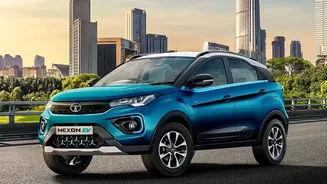
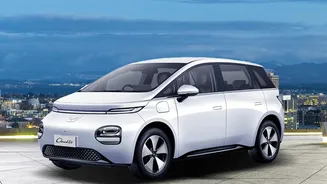
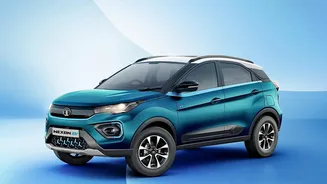
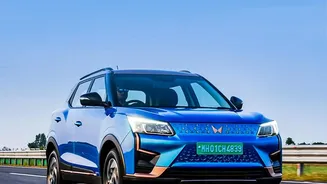
Tata Motors continues its reign as the undisputed leader in India's EV space. The company sold 14,669 electric vehicles in October, capturing nearly 40% of the market. This represents a remarkable 77.6% year-on-year growth for the automaker. However, the competition is intensifying. Mahindra & Mahindra has firmly secured the second spot with 8,538 units sold, an impressive 85.65% annual growth, signalling its aggressive push into the electric segment. Following them is JSW MG Motor, which sold 5,939 units. Together, these three legacy automakers account for nearly 79% of the entire electric passenger vehicle market, showcasing their successful pivot to electric mobility. Newcomers are also making their presence felt, with Vietnamese automaker VinFast selling 2,571 units and both Kia and Maruti Suzuki crossing the 1,000-unit mark.
Policy Powering the Plug-In Push
This impressive growth isn't happening in a vacuum. It is heavily supported by government policy aimed at accelerating EV adoption. Schemes like the previous FAME (Faster Adoption and Manufacturing of Electric Vehicles) and the current PM E-DRIVE have been instrumental. These programs reduce the high upfront cost of EVs through direct subsidies, making them more accessible to the average buyer. The PM E-DRIVE scheme, with an outlay of ₹10,900 crore, aims to support over 2.8 million EVs and includes significant allocations for building out a robust charging network. These incentives, combined with state-level policies like road tax waivers, create a powerful financial argument for prospective car owners to go electric.
The Infrastructure Question
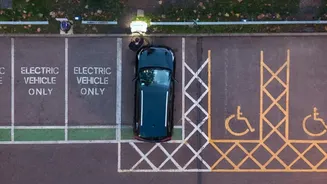
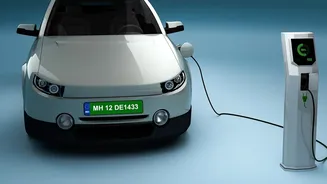
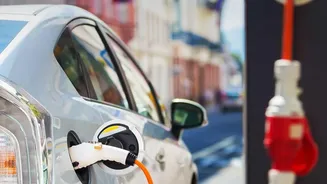
Perhaps the biggest question looming over the EV transition has been charging infrastructure. The good news is that the network is expanding rapidly. As of early 2026, India had installed tens of thousands of public charging stations, a massive increase from just a few thousand in 2022. Government schemes are a key catalyst, with the PM E-DRIVE program allocating ₹2,000 crore to deploy over 72,000 new public charging stations by 2028. However, challenges remain. The ratio of public chargers to EVs is still far from global benchmarks, and the rollout of crucial DC fast chargers for highway travel needs to accelerate. While home charging remains the primary method for most owners, the expansion and reliability of the public network are critical for long-distance travel and alleviating 'range anxiety'.