





Two Scientists and a Dream
The story begins in 2018 with two former ISRO scientists, Pawan Kumar Chandana and Naga Bharath Daka. Having worked on some of India’s most prestigious rocket programs, they shared a vision that was both simple and audacious: to make space accessible,
affordable, and on-demand. At a time when India's space sector was the domain of the government, they left their secure jobs to start a company. Their mission was to build the foundation—the "root"—for India's private journey to the "sky". They wanted to create the equivalent of a space taxi service, offering quick, reliable launches for the booming small satellite market.
The First Small Step: Mission Prarambh
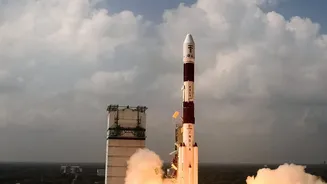
Before you can run, you must walk. For Skyroot, the first major public step was 'Prarambh' (The Beginning). On November 18, 2022, the company successfully launched Vikram-S, a suborbital rocket, from the Satish Dhawan Space Centre. It was a historic moment, marking the first-ever launch of a privately developed rocket in India. The vehicle reached an altitude of nearly 90 kilometres, proving their core technologies and clearing the path for their much larger ambition: reaching Earth's orbit. This successful demonstration was a crucial stepping stone that built confidence among investors and the entire industry.
Fueling the Fire: The Funding Journey
Building rockets is incredibly capital-intensive. Skyroot's journey from a small office in Hyderabad to a launchpad in Sriharikota was fueled by a series of successful funding rounds. The company attracted a wide range of investors, from early-stage venture capitalists to major global players like Singapore’s sovereign wealth fund, GIC. A significant Series B round in 2022, which raised $51 million, was a major validation of their progress after the Vikram-S launch. By May 2026, further investment had elevated the company to a valuation of over $1.1 billion, making it India's first space-tech unicorn. This financial backing was critical to scaling up production and developing their orbital-class vehicle.
The Giant Leap: Vikram-1 Reaches Orbit
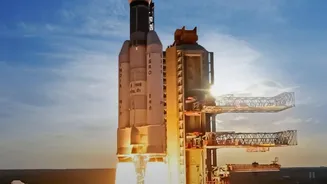
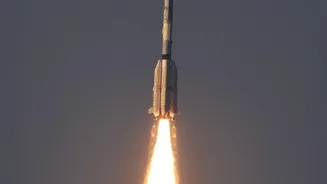
The suborbital flight of Vikram-S was the test; the orbital launch of Vikram-1 was the final exam. After years of development, testing 3D-printed engines, and perfecting carbon-composite structures, the moment arrived. On July 18, 2026, Skyroot's Vikram-1 rocket lifted off on its maiden flight, 'Mission Aagaman' (The Arrival). The seven-story-tall rocket successfully deployed its payloads into a 450-km orbit, completing its mission flawlessly. With this single launch, Skyroot became the first private Indian company to reach orbit, placing India in an exclusive club with the US and China as nations with private orbital launch capabilities.
A New Space Era for India
Skyroot’s success is more than just a corporate milestone; it represents the dawn of a new era for India. The government's decision in 2020 to open the space sector to private players, and the establishment of the regulatory body IN-SPACe, created the policy environment for companies like Skyroot to thrive. With over 400 space startups now active in the country, Skyroot’s achievement serves as a powerful proof of concept. It demonstrates that private Indian firms can compete on the global stage, offering cost-effective and reliable launch services. This opens up a multi-billion dollar market and positions India as a key player in the future of the global space economy.