




A New Space Race Begins
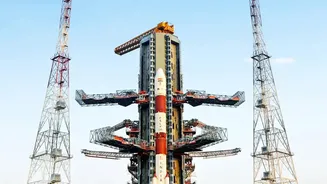
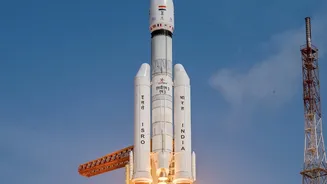
India's journey into space, once solely steered by the venerable Indian Space Research Organisation (ISRO), is now a dynamic, multi-lane highway. A quiet revolution has taken hold, fueled not by superpower rivalry, but by entrepreneurial spirit and landmark
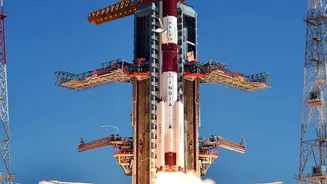
policy shifts. Today, the Indian space ecosystem is teeming with over 400 private companies, a dramatic increase from just a handful years ago. This new space race is about collaboration as much as competition, creating a vibrant industry projected to be worth over $40 billion in the next decade. Companies are no longer just supplying components to ISRO; they are designing, building, and launching their own rockets and satellites. This marks a fundamental change, transforming a government-led programme into a national space economy.
The Policy That Opened the Skies
The catalyst for this explosion of activity was the government's decision in 2020 to open the space sector to private participation. This led to the creation of two crucial bodies: the Indian National Space Promotion and Authorisation Centre (IN-SPACe) and NewSpace India Limited (NSIL). Think of IN-SPACe as the traffic controller and facilitator—a single-window agency that promotes, authorises, and supervises private space activities, from rocket launches to ground station operations. NSIL, on the other hand, acts as the primary commercial arm of ISRO. Its job is to transfer mature technologies developed by ISRO to private industry and market space products and services, like satellite launches, on a commercial basis. This clear division of labour allows ISRO to focus on what it does best—pioneering research and complex deep-space missions—while the private sector scales up production and services.
Start-ups Reaching for the Stars
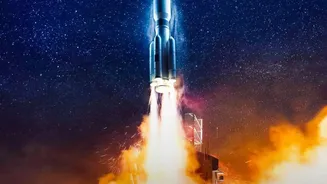
This new framework has emboldened a generation of ambitious startups. Hyderabad-based Skyroot Aerospace made history in July 2026 by launching Vikram-1, India's first privately developed rocket to successfully reach orbit. This milestone placed India in an elite club with the U.S. and China as nations with private orbital launch capability. Another key player, Chennai's Agnikul Cosmos, successfully test-launched its Agnibaan rocket, powered by the world's first single-piece 3D-printed semi-cryogenic engine, from its own private launchpad. Other startups like Pixxel and Dhruva Space are focusing on building constellations of small satellites for applications ranging from earth observation to communications. These companies are not just innovating in technology but also in business models, aiming to make space access more affordable and frequent.
The University Launchpad
It's not just companies getting in on the action. India's universities are becoming critical incubators for space technology and talent. Premier institutions are establishing dedicated space-tech incubation programs and labs to nurture the next wave of innovators. These initiatives provide students and early-stage entrepreneurs with the mentorship, resources, and access to testing facilities needed to turn bold ideas into viable products. Startups like Agnikul Cosmos, incubated at IIT Madras, are a testament to the success of this model. By fostering a close collaboration between academia and industry, these university programs are building a robust talent pipeline, ensuring India has the skilled engineers and scientists required to power its growing space economy.
Challenges on the Horizon
Despite the incredible momentum, the path ahead is not without its challenges. The space industry is capital-intensive, with long development cycles that can be daunting for many investors. While early-stage funding has increased, securing larger, late-stage domestic capital remains a significant hurdle for companies looking to scale their operations. There is also a need for a clear and comprehensive national space law to provide regulatory certainty on issues like liability and licensing. Furthermore, as private players become more capable, they face stiff global competition from established giants like SpaceX. Overcoming these obstacles will require continued government support, a deeper pool of venture capital, and a relentless focus on innovation to build sustainable businesses that can compete on the world stage.