









A Crisis of Staggering Scale
The statistics surrounding missing persons in India are staggering. According to the National Crime Records Bureau (NCRB), between 2019 and 2021, over 1.3 million girls and women were reported missing. In 2022 alone, more than 83,000 children were reported missing,
with over 75% of them being girls. These aren't just numbers; they represent families torn apart and individuals, often vulnerable, who have disappeared. The reasons are complex, ranging from trafficking and forced labour to individuals leaving voluntarily. For law enforcement, the sheer volume of cases makes manual investigation an almost impossible task, creating a desperate need for a more efficient solution.
How AI Enters the Picture
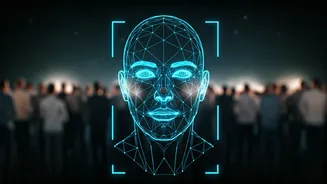
Artificial intelligence, specifically facial recognition technology (FRT), is emerging as a game-changer. Police forces across various states are now deploying AI-powered systems to automate the process of finding missing people. These systems use sophisticated algorithms to scan and compare millions of images in minutes. An officer can upload a photograph of a missing person to a centralized database. The AI then scours vast digital archives—including photos from CCTV networks, orphanages, and public portals—to find a potential match. This ability to process visual data at a scale far beyond human capacity is what gives the technology its immense potential.
The Promise of Technology in Action
The results have already been promising. In one notable trial in New Delhi, police used facial recognition to scan 45,000 photos of children in institutional care. In just four days, the software identified nearly 3,000 children who were listed as missing. More recently, police in states like Telangana and Rajasthan are using specialized software. Cyberabad police, as part of their 'Operation Muskaan', use an application called 'Darpan' to identify missing children rescued from labour or trafficking. A recent instance during 'Operation Muskaan XII' saw the Darpan app successfully identify a missing boy by matching his photo to data from a 2024 case. Another platform, Khoji.in, allows both police and the public to upload photos, leading to successful reunions, like that of an autistic boy who was found after 40 days.
Not a Magic Bullet
Despite these successes, the use of AI is not without significant challenges and ethical dilemmas. The primary concern revolves around privacy. The mass collection and scanning of facial data for one purpose could lead to mission creep, where the same infrastructure is used for broader surveillance, potentially chilling free speech and assembly. There are also major concerns about algorithmic bias. Facial recognition systems trained on limited or non-diverse datasets may be less accurate when identifying women or individuals from certain ethnic backgrounds, a critical issue in a country as diverse as India. This could lead to false matches and wrongful accusations, further marginalizing vulnerable communities.
Navigating the Path Forward
For AI to be a truly effective and just tool, a strong legal and ethical framework is essential. Experts argue that India needs clear legislation governing how facial recognition data is collected, stored, and used, especially by law enforcement. This includes ensuring transparency in how the algorithms work and establishing accountability for errors. The technology's accuracy depends heavily on the quality of data, and creating robust, representative datasets of the Indian population is a significant but necessary hurdle. Without these safeguards, the technology risks creating as many problems as it solves. The goal is to build a system that protects citizens' rights while harnessing AI's power for good.