

The Galaxy's Most Common Planet
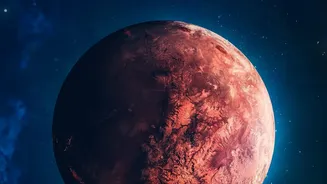
Across the Milky Way, one of the most frequently observed types of planets is the “super-Earth”—a world larger than our own rocky planet but smaller than icy giants like Neptune. These planets, ranging from five to ten times the mass of Earth, are everywhere
astronomers look. Their glaring absence in our own solar system has long been a major puzzle for planetary scientists. Why would our cosmic neighborhood be so different? For years, theories have pointed to the chaotic dance of giant planets like Jupiter, whose immense gravity could have prevented a super-Earth from forming or kicked it out of the system entirely. But a recent study introduces a more dramatic and compelling possibility: what if a super-Earth did form in our early solar system, only to meet a fiery end?
A Planet for Breakfast
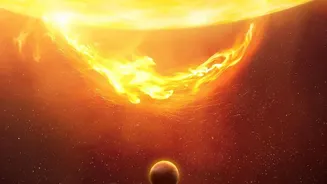
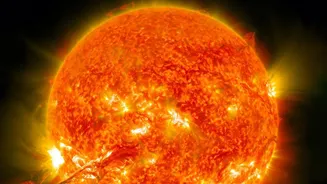
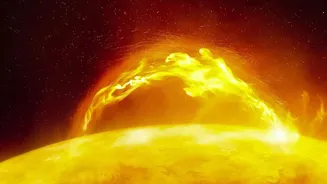
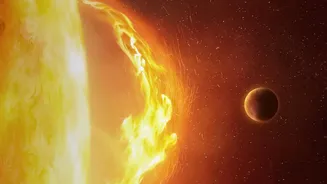
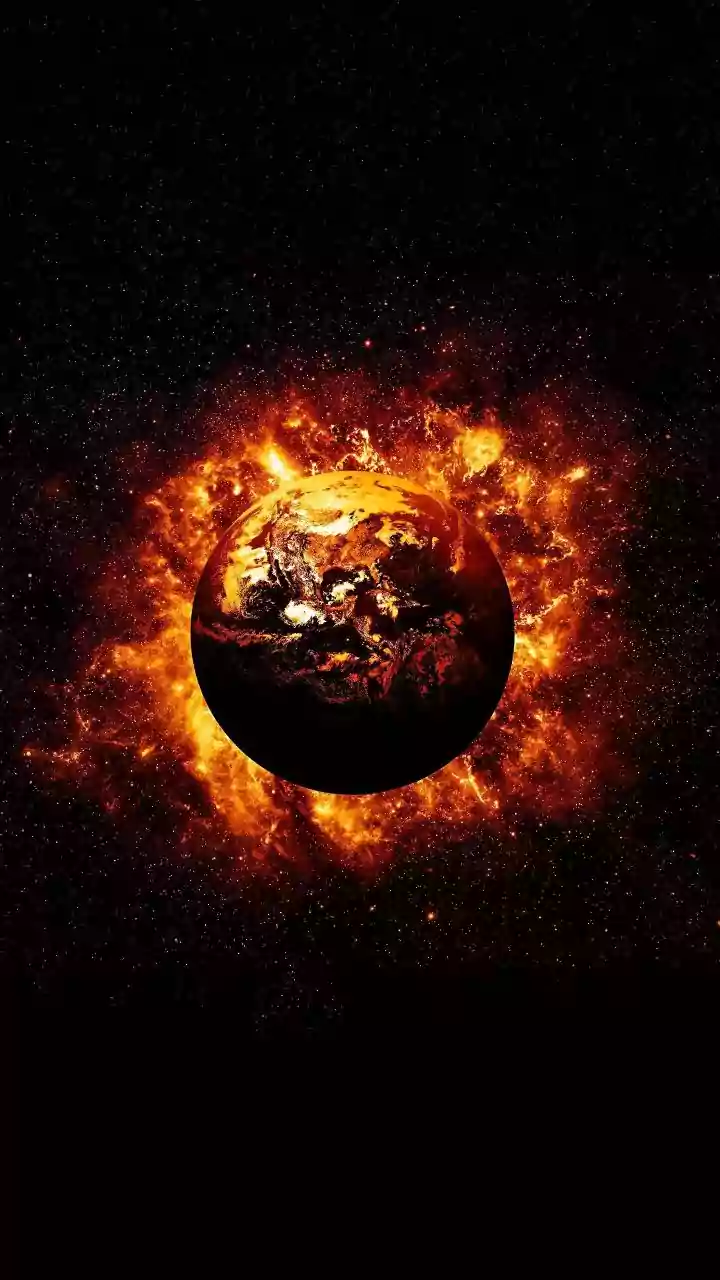
A new modeling study published in the Monthly Notices of the Royal Astronomical Society proposes that our young sun may have swallowed a super-Earth billions of years ago. Research led by Professor Mutlu Yildiz of Ege University in Turkey used advanced computer simulations to rewind the clock on our star's evolution. The team found that models in which the sun ingested a rocky, dense super-Earth aligned much better with the sun's current, real-world characteristics than standard models. This isn't just a wild theory; it helps explain several nagging inconsistencies that have puzzled solar physicists for decades. For instance, the sun has an unusually low amount of lithium on its surface, and there are subtle discrepancies between its observed internal structure and what stellar models predict. According to the new research, a swallowed planet could account for these anomalies, leaving a faint but lasting chemical fingerprint deep inside the star.
What It Means in Practice
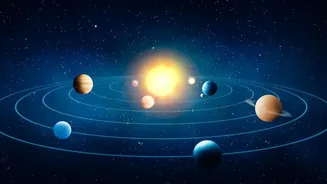
The practical implications of this theory are significant for the business of astronomy and planetary science. Firstly, it reshapes our understanding of solar system formation. Instead of a relatively orderly process, it paints a picture of a violent and destructive 'demolition derby' in the inner solar system, where planets could be flung into their star. This chaotic history could explain the surprising emptiness of the region inside Mercury's orbit; a migrating super-Earth on a collision course with the sun would have swept up all the rock and debris in its path. This refined model provides a more accurate framework for scientists searching for other solar systems that might harbor life. Understanding the violent architectural forces that shaped our own system is crucial for identifying which exoplanetary systems might have had a stable enough history for habitable planets to form and survive. It helps astronomers know what to look for when trying to distinguish between stable systems and those that might have lost planets along the way.
The Hunt for Evidence
While compelling, the idea of a planet-devouring sun remains a hypothesis based on models. Proving it requires tangible evidence. The next step for scientists is to use a technique called helioseismology, which studies how sound waves travel through the sun, to search for the predicted structural and chemical signatures left behind by an engulfed planet. Just as seismologists study earthquakes to understand Earth’s interior, solar scientists can use these stellar vibrations to probe the sun's deepest layers. If they can detect lingering traces of heavy elements or structural changes that match the models, it would provide strong evidence that our sun once consumed one of its own children. This work could also influence the search for the hypothetical Planet Nine, another potential super-Earth thought to exist in the far outer reaches of our solar system. Uncovering the history of one lost planet could ultimately help us find another.