



Why September is Prime Time for Stargazing
September marks a welcome transition for amateur astronomers in India. The end of the monsoon season often brings more stable and transparent skies, free from the haze and humidity that can obscure celestial views. With the arrival of the autumnal equinox
on September 22, the nights grow longer, providing an extended canvas for the stars to put on their show. The temperatures are also more comfortable for spending time outdoors in the evening. This combination of clearer, longer, and more pleasant nights makes September an ideal and 'easy' month to begin your skywatching journey, requiring little more than a clear view and a bit of curiosity.
The Full Harvest Moon Rises
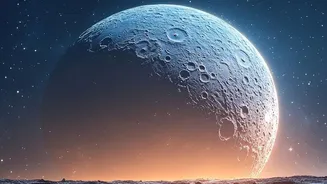
The main event this month is undoubtedly the Harvest Moon, which will reach its peak illumination on the night of Saturday, September 26, 2026. In India, the full moon will be at its peak at approximately 10:19 PM IST. This full moon is named the 'Harvest Moon' because it is the one closest to the autumnal equinox. Historically, its bright light, rising around sunset for several consecutive nights, helped farmers extend their workday to bring in crops. For the most dramatic view, try to watch the moonrise on the evening of the 26th, when it will appear large and potentially orange-hued near the eastern horizon. In the Hindu calendar, this full moon is known as Bhadrapada Purnima and marks the start of Pitru Paksha, a period for honouring ancestors.
A Parade of Planets
September offers fantastic opportunities to spot several planets. Saturn will be a prominent feature, rising in the east shortly after sunset and remaining visible for most of the night. On the night of the Harvest Moon (September 26) and the following night (September 27), the Moon and Saturn will appear close together, making the ringed planet easy to identify. Venus will be a stunningly bright object in the western sky just after sunset, reaching its peak brightness for the year this month. For early risers, the pre-dawn eastern sky will be dominated by very bright Jupiter and the reddish glow of Mars. On September 6, a crescent Moon will pass near Mars, and on September 8, it will have a close encounter with Jupiter, creating beautiful pairings.
Constellations to Look For
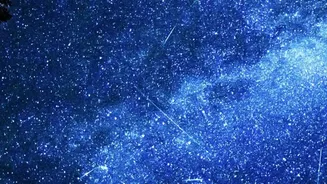
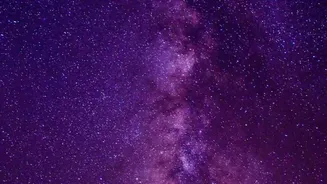
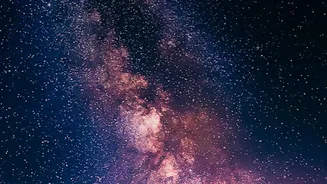
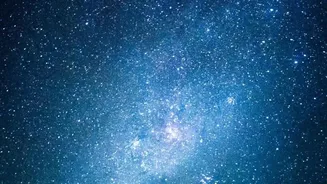
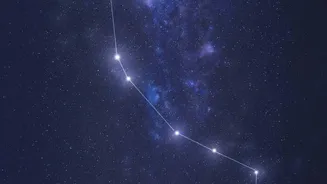
Even without a telescope, you can trace ancient patterns in the sky. The Summer Triangle, an asterism formed by the three bright stars Vega, Deneb, and Altair, will still be prominent high in the sky during the evening. These stars mark the constellations Lyra, Cygnus (the Swan), and Aquila (the Eagle). As the night progresses, look to the east for the Great Square of Pegasus, a large boxy shape of four stars that signals the arrival of autumn constellations. From a dark location, you might also see the faint, hazy band of our own Milky Way galaxy stretching across the sky, particularly through Cygnus.
Simple Tips for a Great Viewing Experience
You don't need expensive equipment to enjoy the September sky. Find a location away from bright city lights; a park, a rooftop, or the outskirts of town can make a huge difference. Give your eyes about 20-30 minutes to fully adapt to the darkness, and avoid looking at your phone's bright screen. If you need light, use a red flashlight as it preserves your night vision. While most of this month's highlights are visible to the naked eye, a simple pair of binoculars can reveal stunning details, like craters on the Moon or even the four largest moons of Jupiter. Most importantly, be patient and have fun exploring the cosmos from your own backyard.