




The Gravity of the Capital
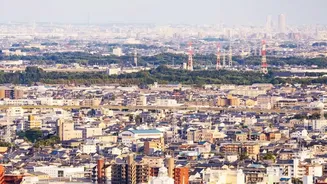
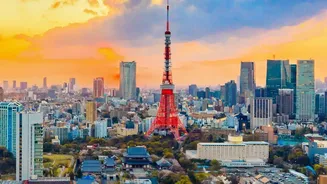
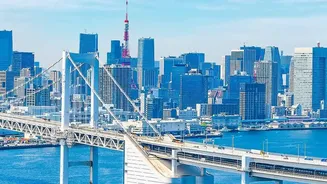
The Greater Tokyo Area is one of the most populous urban agglomerations on Earth, home to roughly 38 million people—about 30% of Japan's entire population. This immense scale extends to its economic might. Tokyo's gross metropolitan product rivals the GDP
of entire countries like the Netherlands. It hosts nearly half of Japan's major companies and over 75% of its foreign-affiliated firms. For decades, this concentration has acted like a powerful magnet, pulling in talent, capital, and opportunity from across the archipelago. Young people, in particular, migrate to the capital for education and jobs, a trend that has persisted for over half a century. This creates a self-reinforcing cycle: the more companies and people gather, the more attractive the city becomes, further accelerating the inflow.
A Nation's Single Point of Failure
This hyper-concentration is what experts call a 'single point of failure'—a vulnerability where one major disruption could have catastrophic, nationwide consequences. The most glaring risk is natural disaster. Tokyo sits in a seismically active region, and experts have long warned of the potential for a devastating earthquake. A major tremor could cripple Japan's political and economic heart in an instant. But the risks aren't just geological. The COVID-19 pandemic highlighted how a public health crisis in such a dense area can have an outsized national impact, with the Greater Tokyo Area initially accounting for about half of Japan's cases. Beyond sudden shocks, this imbalance starves the rest of the country. As people flock to Tokyo, many rural municipalities face depopulation, shrinking tax revenues, and the potential disappearance of entire communities, a phenomenon the government has acknowledged as a serious long-term threat.
The Push for Decentralization
Recognizing this vulnerability, successive Japanese governments have tried to encourage decentralization for decades, with limited success. The latest and most ambitious push is the Regional Revitalization program. One of its key pillars involves offering significant financial incentives for people to leave the Greater Tokyo Area and relocate to designated regional towns and cities. Under the expanded program, a family can receive a base grant for moving, with an additional substantial payment per child. The goal is not just to move people, but to revitalise struggling regions by injecting them with new residents, skills, and entrepreneurial energy. To qualify, individuals must find work locally, continue their old job remotely, or start a new business, and they must commit to staying in their new home for at least five years.
An Uphill Battle Against Gravity
Despite these efforts, reversing Tokyo's gravitational pull is a monumental challenge. For many, the career opportunities, cultural dynamism, and sheer convenience of the capital are too powerful to resist. Past decentralization policies have struggled to make a significant dent in the migration trend. Even with the rise of remote work, many companies have been slow to fully embrace it, and the net population flow into Tokyo has often remained positive. Furthermore, the financial incentives, while helpful, may not be enough to cover the costs and risks of uprooting a family and starting over in a new community with potentially fewer job prospects and lower wages. The success of these programs depends not just on paying people to move, but on making regional areas genuinely attractive places to live and work, with robust local economies and infrastructure. This involves complex, long-term strategies that go beyond simple cash grants, focusing on creating sustainable local industries and vibrant communities.