







A Dream Born from Dominance
In the late 1960s, McLaren was an unstoppable force in motorsport. The team, led by New Zealand racing legend Bruce McLaren, dominated the ferocious Can-Am Challenge Cup with its mighty M6A race cars. The series was nicknamed the 'Bruce and Denny Show'
for the command he and fellow Kiwi driver Denny Hulme had over the competition. But Bruce McLaren had a bigger ambition: to translate that track dominance into a road car. He envisioned a 'civilised' version of his race cars, the fastest and best-specified supercar in the world. The plan was to create a coupe version of the M6 race car to compete in endurance racing, which required a number of road-legal versions to be built for homologation. This car was to be called the M6GT.
The Original Supercar Blueprint
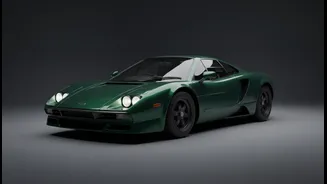
Long before the iconic McLaren F1 rewrote the supercar rulebook in the 1990s, the M6GT was the true genesis of the McLaren road car story. The prototype was everything you would expect from a race car for the street: incredibly light, low, loud, and blisteringly quick. It used the same monocoque chassis as the race cars, clothed in a sleek, aerodynamic body with the butterfly doors that would become a McLaren trademark. Powered by a thundering Chevrolet V8, the M6GT was a machine of incredible performance for its time. Bruce was so confident in the concept that he used the first prototype as his personal daily driver, proving that his vision of a road-legal racer was viable.
A Vision Tragically Halted
The M6GT project was well underway, with plans for a production run to challenge the European sports car elite. But on June 2, 1970, history took a devastating turn. While testing a new Can-Am car at the Goodwood Circuit in England, Bruce McLaren was killed in an accident. He was just 32 years old. With his sudden and tragic passing, the driving force behind the M6GT was gone, and the entire road car project was shelved. Only a couple of prototypes were ever completed, leaving the M6GT as one of motorsport's great 'what-if' stories—a tantalizing glimpse of a future that never was.
Unfinished Business, Finally Completed
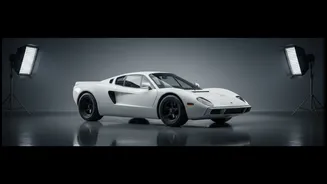
Now, more than 50 years later, McLaren's in-house bespoke division, McLaren Special Operations (MSO), has finished the job. In a project described as a labor of immense craft and care, the team unveiled the 'M6GT: Restored by MSO'. This is not a modern reinterpretation or a restomod. It is a painstakingly authentic recreation, built with the singular goal of fulfilling Bruce's original vision. Using a period-correct M6A race car chassis, original body molds discovered in the UK, and archival engineering drawings, MSO has effectively built the car from scratch, just as it would have been in 1970.
Authenticity in Every Detail
The commitment to historical accuracy is breathtaking. The car is powered by a period-correct small-block V8 engine and gearbox. The suspension uses original M6GT hardware, which was painstakingly restored, even requiring the sourcing of obsolete imperial-era bearings. The car is finished in a bespoke shade called 'Colnbrook White', a tribute to the location of the factory where Bruce first developed his road car ideas. The green interior vinyl is a nod to the livery of his first Formula 1 car, the M2B from 1966. From the hand-turned walnut gear knob to the specific type of aluminum rivets used in construction, every element has been chosen to preserve the spirit of the original design.