




From Scenery to Story
In older Hindi films, Kolkata's biggest festival was often used as beautiful, but passive, scenery. It signified a Bengali setting, much like a yellow taxi or the Howrah Bridge. Think of brief, atmospheric shots of pandals or idol processions meant to
establish location without engaging with the festival's soul. However, a shift began with films that wove the celebration into the fabric of their stories. Pradeep Sarkar’s 'Parineeta' (2005) was a significant step. Set in 1960s Calcutta, it used the Puja not just as a setting but as a catalyst for the central romance between Lalita (Vidya Balan) and Shekhar (Saif Ali Khan). The famous Dhunuchi Naach sequence wasn't just a dance; it was a moment charged with jealousy and affection, deepening the characters' emotional conflict. The festival became a witness to their evolving relationship.
The Kahaani Turning Point
If 'Parineeta' opened the door, Sujoy Ghosh’s 'Kahaani' (2012) blew it wide open. The thriller is perhaps the most powerful example of a film using Durga Puja as a core narrative device. The entire story unfolds as Kolkata prepares for the festival, the rising tempo of the city mirroring the escalating suspense of the plot. The climax, set on Vijayadashami, is a masterclass in symbolic filmmaking. As Vidya Bagchi (Vidya Balan) finally confronts her target, she does so amidst the chaos of Sindoor Khela, a ritual where married women smear vermilion on each other. Her victory is deliberately synchronised with the immersion of the goddess's idol, drawing a direct parallel between the divine triumph of good over evil and a mortal woman’s quest for justice. In 'Kahaani', Durga Puja wasn't just in the background; it was the story’s heartbeat.
A National Cinematic Spectacle
Filmmakers like Sanjay Leela Bhansali further cemented the festival's place in the national imagination with visual grandeur. In 'Devdas' (2002), the song 'Dola Re Dola' created a spectacular cinematic moment. Featuring Aishwarya Rai and Madhuri Dixit dancing in traditional red-and-white sarees against the backdrop of a grand Puja celebration, it brought the opulence of the festival to mainstream audiences like never before. More recently, Karan Johar’s 'Rocky Aur Rani Kii Prem Kahaani' (2023) used the festival to explore themes of cultural identity and family conflict. The song 'Dhindhora Baje Re' became a vibrant celebration of Bengali tradition, showcasing its energy to a pan-India audience and earning accolades for its choreography. These films presented Durga Puja as a grand, unmissable event, contributing to its perception as a national cultural treasure.
The Feedback Loop: Cinema and Reality
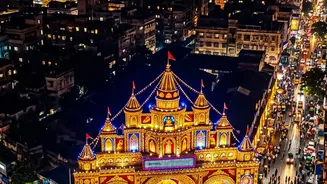
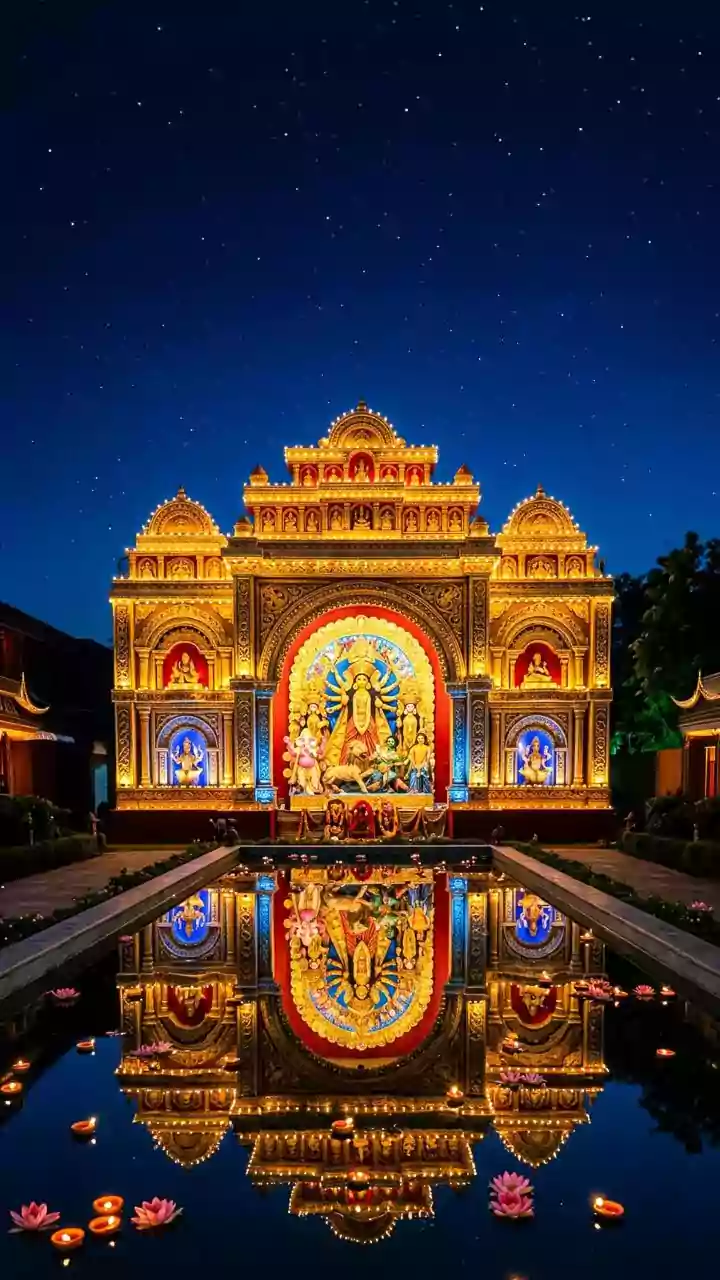
Bollywood's fascination with Durga Puja has created a fascinating feedback loop. As films showcased grander, more thematic celebrations, the real-life pandals in Kolkata also grew more elaborate and artistic. While community pujas began evolving from simple structures to themed installations in the late 20th century, cinematic portrayals amplified this trend in the public consciousness. The festival, which started as a private affair in zamindar homes before becoming a community celebration, is now a multi-crore industry with corporate sponsorships and intense creative competition. This evolution mirrors the cinematic portrayals, where the festival is often a large-scale, high-stakes event. The increased national attention, partly fuelled by cinema, has also reportedly boosted tourism during the Puja season, turning a regional religious event into a major travel destination.