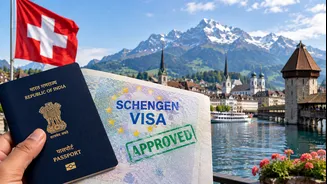








A growing number of Indians are travelling to Europe, with new data from the European Commission confirming India as the third-largest source of Schengen visa applications globally. This surge reflects a powerful trend in Indian travel aspirations.
A Global Travel Powerhouse
Recent
statistics released by the European Commission for the year 2025 paint a clear picture: India's appetite for European travel has never been stronger. Indian applicants submitted a staggering 1.15 million short-stay visa applications, placing the country third in the world for Schengen visa demand. This positions India firmly behind only China, with 1.9 million applications, and Türkiye, with 1.26 million. The numbers underscore a significant trend of growing prosperity and global mobility among Indian citizens, making India a critical market for European tourism and business.
The Story Behind the Surge
Several factors are driving this remarkable increase in demand. A burgeoning middle class with higher disposable incomes, a strong desire for international tourism, and expanding business and educational ties with Europe all contribute to the trend. The data for 2025 shows a notable increase from the 1.1 million applications filed in 2024, highlighting a consistent upward trajectory. This growing interest is not just about one-off trips. In 2025, nearly 58% of the visas issued to Indian applicants were for multiple entries, indicating a rise in repeat travel for business, family, or leisure. This signals a maturing relationship between Indian travellers and the Schengen Area, moving from novelty tourism to regular engagement.
Popular Destinations for Indian Travellers
While Europe as a whole is a major draw, Indian travellers have clear favourites. In 2025, Switzerland emerged as the most sought-after destination, receiving more applications from India than any other Schengen country. With 226,044 applications filed at its New Delhi consulate, the alpine nation has overtaken traditionally popular choices like France and Germany. France remains a significant destination, receiving the second-highest number of applications, while Germany also continues to be a top choice, known for having one of the lower refusal rates among the major consulates. The Netherlands and Spain complete the top five most-applied-to countries, though their rejection rates are comparatively higher.
The Challenge of High Rejection Rates
The surge in applications is, however, met with a significant hurdle: visa rejections. In 2025, the rejection rate for Indian applicants stood at 15.8%, a slight increase from 15% in the previous year. This figure is notably higher than the global average rejection rate of 14.6%. In absolute terms, this translated to over 181,000 Indian applications being refused, resulting in forfeited visa fees and disrupted travel plans. The rates vary dramatically depending on the country. For instance, while Germany had a rejection rate of 10.5% in 2025, countries like Slovenia had rates as high as 46.5%. This disparity highlights the complex and varied scrutiny that Indian applications face across different European consulates.
Looking Ahead: A Digitising Process
The European Union is actively working to modernise its visa and border management systems. The introduction of the Entry/Exit System (EES) and the upcoming European Travel Information and Authorisation System (ETIAS) are set to digitise and streamline border crossings. In January 2026, the Commission also announced its first comprehensive strategy for visa policy, aiming to balance easier travel for legitimate visitors with strengthened security. For the millions of Indians looking towards Europe, these changes will mean a more technologically advanced application and travel experience in the coming years, though the high demand and associated scrutiny are likely to remain key features of the process.