







The Two Sides of AI's Environmental Impact
Artificial intelligence is a double-edged sword for the environment. On one hand, it holds immense promise for tackling climate change, from optimizing power grids and predicting extreme weather to monitoring deforestation in real-time. On the other hand, the computational
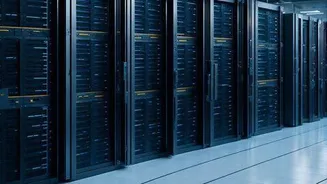
power required to train and run large-scale AI models comes with a significant environmental cost. Data centers, the backbone of the AI revolution, consume vast amounts of electricity and water for cooling, contributing to a growing carbon footprint. In response to this challenge, a new field is emerging: Environmental AI. This isn't just about using AI for environmental applications; it's about fundamentally rethinking how we build and deploy AI to be more sustainable from the start.
Inside a New Kind of Classroom
A new wave of educational programs and workshops is taking this challenge head-on, aiming to train the next generation of software engineers in the principles of sustainable software engineering. These workshops, often held by universities and tech-focused foundations, move beyond theory to provide hands-on experience. Students learn to measure the carbon intensity of their code, select energy-efficient model architectures, and optimize algorithms to reduce resource consumption. For example, a practical exercise might involve taking a standard AI model and applying techniques like quantization or pruning to shrink its size and, consequently, its energy draw, without a major loss in performance. The goal is to make energy efficiency a core consideration in software development, just like speed or functionality.
Why 'Green' Computing Skills Are in Demand
The push for these skills is coming from multiple directions. For businesses, the soaring energy demand of AI translates directly to higher operational costs. The International Energy Agency has warned that electricity demand from data centers could double between 2022 and 2026, largely fueled by AI. This makes engineers who can build less power-hungry systems incredibly valuable. Furthermore, companies are facing increasing pressure from investors, regulators, and the public to improve their environmental, social, and governance (ESG) performance. Being able to demonstrate a commitment to 'Green AI' is becoming a competitive advantage. This has created a clear demand for professionals who possess these specialized, energy-focused computing skills, a niche that these new workshops are designed to fill.
From Theory to Practical Application
The curriculum in these environmental AI workshops is intensely practical. It combines lectures on the intersection of climate science and AI with interactive coding sessions. Students work with tools like the Software Carbon Intensity (SCI) specification, a standard for measuring the carbon footprint of an application. They might participate in hackathons focused on 'Green-in AI,' with challenges like optimizing a model’s training process to use less energy, or 'Green-by AI,' using AI to solve an environmental problem like optimizing food transport routes. The key is to move from abstract awareness to concrete action, giving students the ability to analyze a system, identify its energy hotspots, and implement changes that make it more efficient. This focus on hands-on practice builds a deep, intuitive understanding of how design choices impact the real world.
Training a New Generation of Engineers
Ultimately, these workshops are about more than just a new set of technical skills; they represent a cultural shift in the tech industry. For decades, the primary focus of software optimization was on maximizing performance and speed. Energy efficiency was often an afterthought, relevant mainly for battery-powered devices. Now, the industry is beginning to recognize that sustainability is a critical pillar of responsible innovation. By embedding principles of green computing directly into educational programs, institutions are helping to cultivate a new generation of engineers who view energy efficiency as a core part of their craft. These workshops are a practical test, not just for the students, but for the idea that the tech world can and must build a more sustainable future.