






The Plant and its Place
The magic begins with a plant known as Murta (Schumannianthus dichotomus), a rhizomatous perennial that flourishes in the marshy, swampy areas of West Bengal, particularly in the Cooch Behar district. This slender, green-stemmed plant is the sole raw
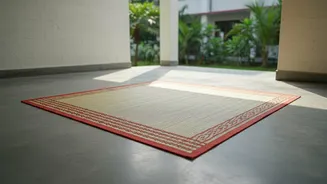
material for one of Bengal's most cherished handicrafts: the Sital Pati, or 'cool mat'. The name itself gives a clue to its most prized quality; 'sital' means cool, and these mats are renowned for providing a refreshing surface to sit or sleep on, especially during the region's hot and humid summers. While the craft is prominent in West Bengal, it is also practiced in neighbouring Assam and Tripura, as well as in Bangladesh, where the tradition of Sylhet has been recognised by UNESCO.
A Labor of Love and Skill
The journey from a plant in a swamp to a decorative mat is a meticulous and labour-intensive process, often divided along traditional gender lines. Men are typically responsible for cultivating and harvesting the Murta plants and performing the initial, crucial preparation. After harvesting, the stems are soaked in water before being carefully sliced lengthwise into fine strips. These strips, or 'patis', are not all created equal. The finest, glossiest strips come from the outermost layer of the stem and are reserved for the highest quality mats. To achieve a smooth, ivory finish, the strips are sometimes boiled in starchy rice water, washed, and dried in the sun. They might even be left out overnight to be softened by the morning dew, a step believed to enhance the fibre's finesse.
The Weaver's Intricate Dance
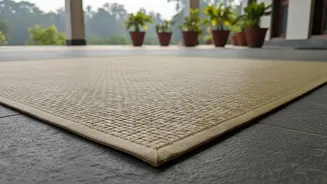
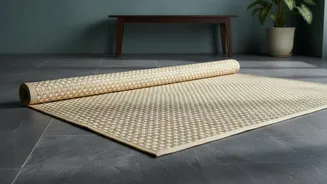
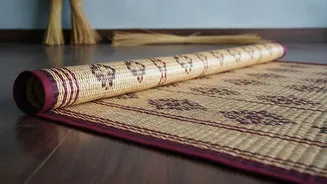
Once the strips are prepared, the weaving begins, a task predominantly carried out by the women of the community. With practiced hands, they interlace the natural cream-and-brown-toned strips, creating the mat's foundation. The quality of a Sital Pati is judged by its smoothness, fineness, and glossy texture. It is said that the finest mats are so smooth that even a snake cannot glide across them. While many mats feature the natural, earthy tones of the Murta plant, artisans also create more decorative versions, known as 'Nakshi Pati'. For these, strips are dyed using both natural extracts from fruits and flowers and modern, Azo-free dyes to weave in vibrant geometric patterns, stylised animals, and floral motifs.
A Legacy of Heritage and Livelihood
Sital Pati is more than just a handicraft; it is a vital part of the cultural and economic fabric of the regions where it is made. For thousands of families, primarily from the Kayastha community in West Bengal, it is a major source of livelihood. The craft is often a family-based enterprise that reinforces social bonds and provides a strong sense of identity. The significance of this tradition has been recognised on a global scale; the traditional art of Shital Pati weaving in Sylhet, Bangladesh, is inscribed on UNESCO's Representative List of the Intangible Cultural Heritage of Humanity. This recognition highlights the importance of preserving this living heritage.
Modern Forms and Timeless Appeal
Though rooted in tradition as sitting or sleeping mats, the Sital Pati has found new life in contemporary markets. The same weaving techniques are now used to create a range of modern products, including handbags, purses, wall hangings, and other decorative items. This evolution has allowed the craft to reach new audiences in metropolitan cities and beyond, appreciated for its aesthetic appeal, utilitarian value, and eco-friendly nature. Despite facing challenges like rising material costs and competition from mass-produced goods, the craft endures. Supported by government initiatives and craft cooperatives, the weavers of Bengal continue to spin reed into remarkable art, ensuring that the cool touch of the Sital Pati will be felt for generations to come.