




The Warming Roof of the World
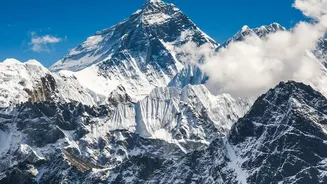
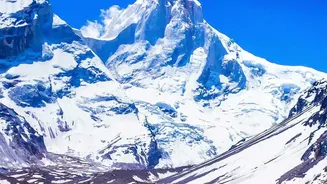
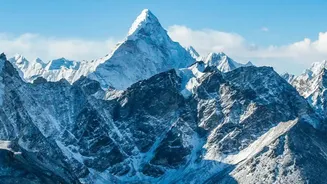
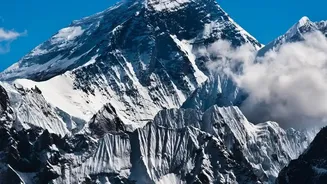
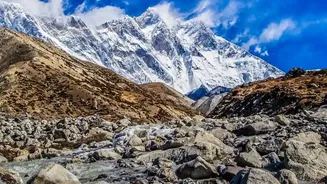
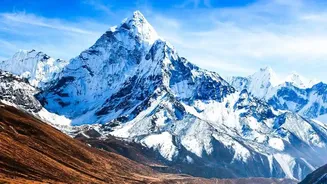
The Himalayan region is warming at a rate nearly double the global average. This accelerated warming is having a profound and visible effect on its glaciers, the vast stores of ice often called the 'water towers of Asia'. As temperatures rise, these glaciers are
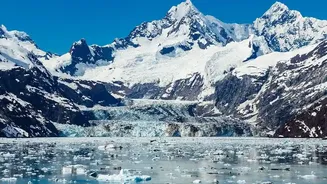
melting and retreating faster than ever before. This meltwater doesn't just disappear; it pools to form new and rapidly expanding glacial lakes, often held back by nothing more than unstable dams of loose rock and debris known as moraines. According to a report from the International Centre for Integrated Mountain Development (ICIMOD), ice loss in the Hindu Kush Himalaya has accelerated significantly since the year 2000. Nepal is home to thousands of these glacial lakes, and dozens are now considered potentially dangerous, posing a silent, looming threat to communities downstream.
The Fury of a GLOF
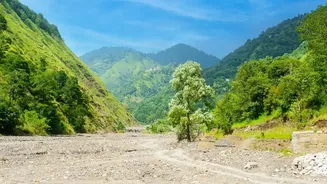
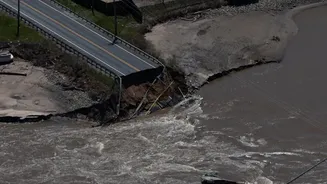
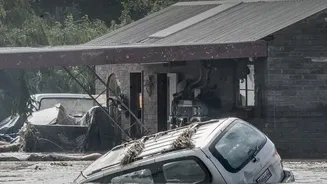
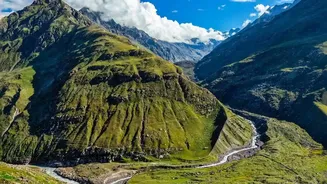
The primary danger posed by these unstable lakes is a phenomenon known as a Glacial Lake Outburst Flood, or GLOF. A GLOF occurs when the natural moraine dam holding back a glacial lake fails. This failure can be triggered by a number of events—an avalanche of rock or ice falling into the lake, the pressure of rising water levels, or even an earthquake. The result is the sudden, catastrophic release of millions of cubic metres of water. This isn't a gentle overflow; it's a violent torrent of water, mud, ice, and boulders that surges down narrow mountain valleys at immense speeds, destroying everything in its path—homes, roads, bridges, and critical infrastructure like hydropower plants. Devastating floods in Nepal in August 2026, which claimed hundreds of lives, were triggered by a massive collapse of rock and glacier ice, illustrating the terrifying power of these cascading events.
More Than Just Floods
The risks are not limited to GLOFs. The same warming that melts glaciers also thaws permafrost, the permanently frozen ground that acts like a 'cryospheric glue' holding high-altitude rock and soil together. As this glue softens, entire mountain slopes become less stable, dramatically increasing the frequency of landslides and rockfalls. These landslides can occur independently or as part of a complex chain reaction. A landslide might block a river, creating a temporary dam that, when it bursts, causes a flash flood downstream. Furthermore, climate change is altering monsoon patterns, leading to more erratic and intense rainfall, which saturates the soil on already vulnerable slopes and further heightens landslide risk. This creates a grim combination of interconnected hazards where one disaster can trigger another.
The Human Cost and a Race Against Time
For the millions of Nepalis living in mountain valleys, these threats are an existential reality. Entire communities, their farms, and their livelihoods are situated in the direct path of potential floods and landslides. The country's heavy investment in hydropower, a crucial part of its economy, is also extremely vulnerable, as power plants are often built along the very rivers that are now becoming more dangerous. The destruction of roads and bridges not only brings immediate danger but also isolates communities for long periods, hampering rescue efforts and economic activity. In response, Nepal and its international partners are in a race against time. Efforts are underway to monitor high-risk lakes, install early-warning systems, and even carefully drain some of the most dangerous lakes to reduce pressure. However, the sheer scale of the challenge across the vast Himalayan range is immense.