






An Ambitious New Journey Begins
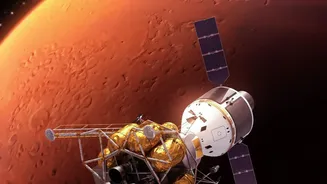
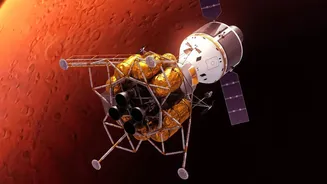
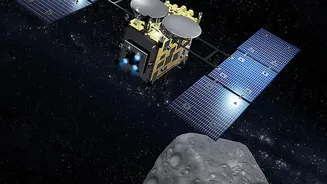
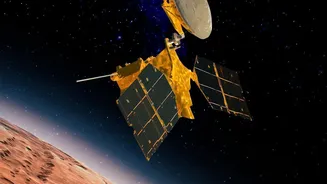
The Japan Aerospace Exploration Agency (JAXA) has successfully launched its Martian Moons eXploration (MMX) mission. On October 20, 2026, an H3 rocket lifted off from the Tanegashima Space Center, carrying the MMX spacecraft on a five-year journey to the Martian system.
This is not just a flyby; the goal is to land on Phobos, the larger of Mars's two moons, collect at least 10 grams of surface material, and return it to Earth for analysis. The mission is a major international effort, with contributions from NASA and European space agencies. If successful, it will be the first time humanity has ever retrieved a sample from a moon other than our own.
The Central Mystery: Captured Asteroid or Martian Debris?
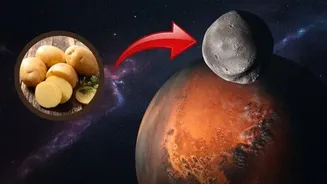
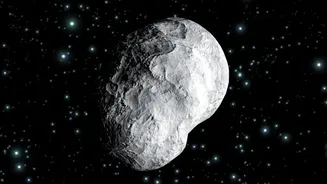
The core scientific driver behind the MMX mission is to solve a long-standing debate about the origin of Phobos and its smaller sibling, Deimos. Scientists are divided between two main theories. One theory suggests the moons are asteroids that were captured by Mars's gravity billions of years ago. The other proposes they were formed from debris that was blasted into orbit after a giant object collided with Mars in the distant past. Each scenario tells a vastly different story about the history of the Martian system. By analyzing the composition of the returned samples, scientists believe they can definitively determine which story is true.
The Plan of Action: A Multi-Stage Approach
The MMX mission is a complex, multi-year operation. The spacecraft is expected to arrive in orbit around Mars in August 2027. It will then spend a significant amount of time surveying Phobos and Deimos. Before the main spacecraft attempts to land, it will deploy a small, 25-kilogram rover developed by France and Germany. This rover, named Idefix, will explore the surface, analyze its properties, and help identify a safe landing zone. The main spacecraft will then descend to the surface—a major challenge on a body with extremely low gravity—to collect its precious samples using two different mechanisms before beginning its journey home.
What Secrets Could the Samples Hold?
The rock and dust from Phobos could be a scientific treasure trove. If Phobos is a captured asteroid, its materials could offer clues about the delivery of water and organic compounds to the inner solar system, key ingredients for life. If it was born from a Martian impact, the samples could contain ancient Martian rock, providing a snapshot of the Red Planet's early geology without the difficulty of a direct sample return from Mars itself. It's estimated that about 0.1% of the material on Phobos's surface may have originated from Mars, ejected by past asteroid impacts. This means the MMX mission is also, in a way, a Mars sample return mission, one that could reveal if the planet was ever habitable.
A Long Road to Discovery
Following the successful launch and confirmation that the spacecraft is in good health, the long cruise phase has begun. After arriving at Mars in 2027, the spacecraft will spend about three years conducting its scientific survey and sample collection, which is slated to occur in 2030. The probe will then conduct flybys of the other moon, Deimos, before firing its engines to leave the Martian system. The sample return capsule is scheduled to re-enter Earth's atmosphere and land in Australia in 2031, bringing a piece of the Martian system to our planet for the first time. Based on its previous successful sample return missions, Hayabusa and Hayabusa2, JAXA has a strong track record for this kind of ambitious undertaking.