






A Groundbreaking Cosmic Connection
In a major scientific breakthrough, data from the Chandrayaan-3 mission’s Pragyan rover has established a compelling link between the soil at its landing site and a famous lunar meteorite found in Antarctica over four decades ago. Scientists from the Physical
Research Laboratory (PRL) in Ahmedabad compared the chemical makeup of the lunar soil, analysed by Pragyan's Alpha Particle X-ray Spectrometer (APXS), with 66 known lunar meteorites on Earth. The results showed a remarkably close match with a meteorite designated ALHA 81005, the very first rock found on our planet that was confirmed to have come from the Moon. This doesn’t mean the specific rock came from that exact spot, but it strongly suggests they both represent the same unique type of lunar crust.
What Did Pragyan Actually Find?
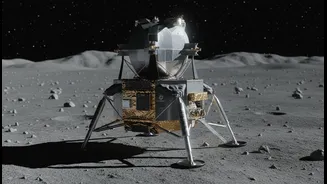
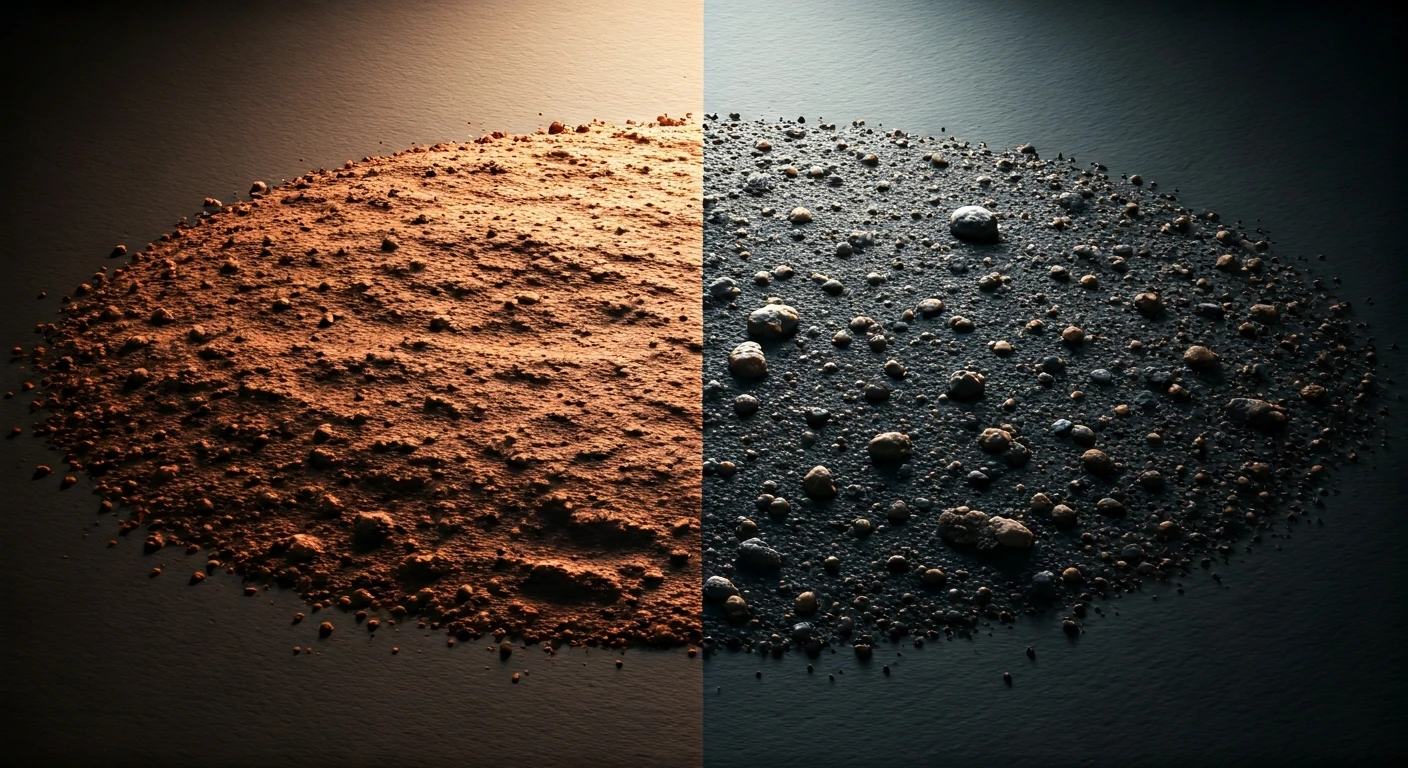
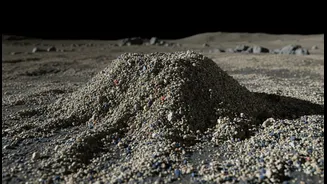
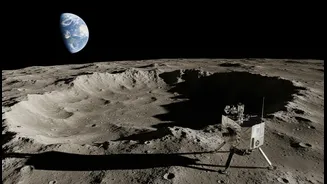
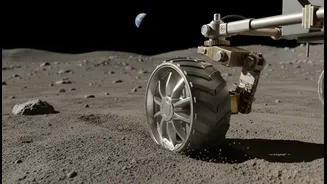
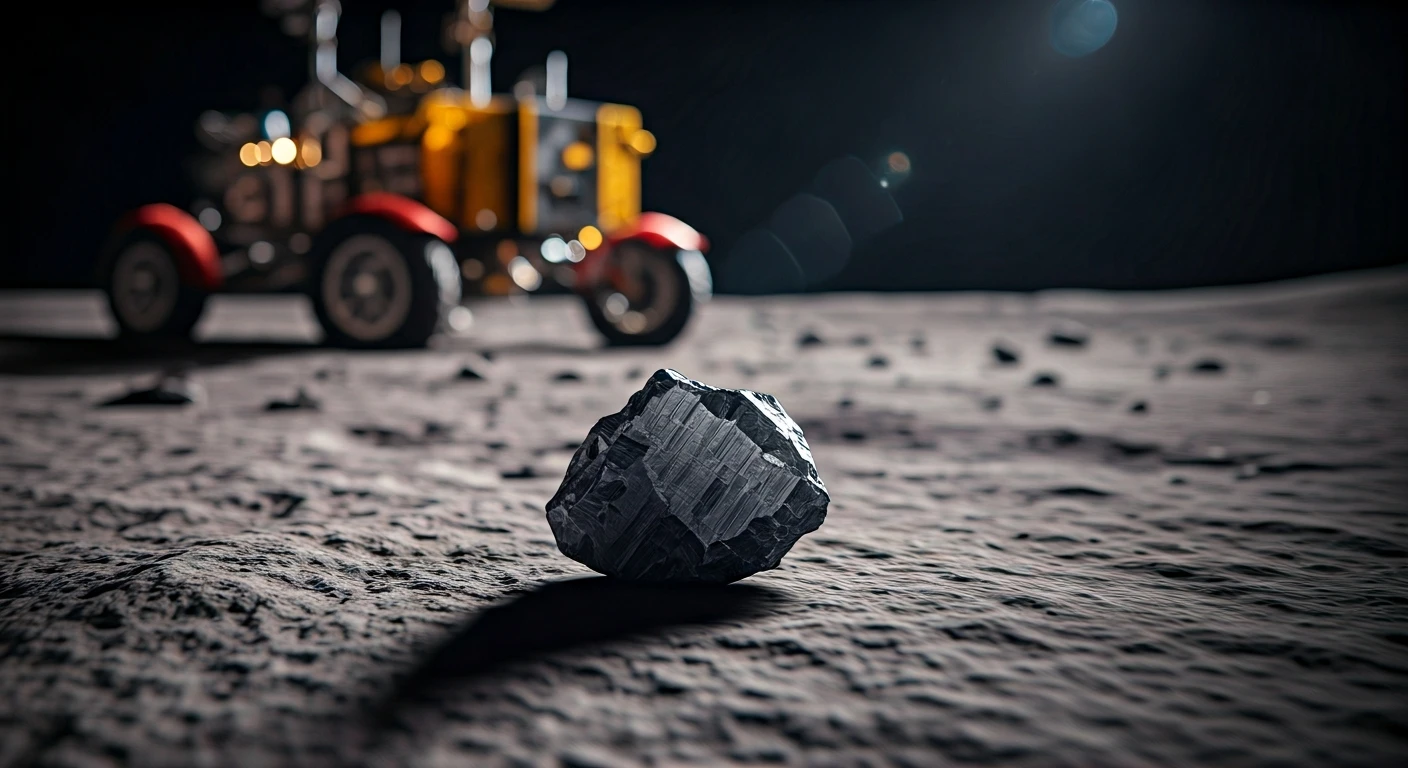
The Pragyan rover explored the soil at its landing site, now named Shiv Shakti Station, in the Moon's rugged southern highlands. The APXS instrument found the soil had a distinct chemical signature: it was lower in aluminium but richer in iron and magnesium than typical highland terrain. This composition places it in a rare category between two major lunar rock types—the aluminium-rich 'ferroan anorthosites' that form the bright highlands, and the denser, magnesium-rich 'Mg-suite' rocks believed to originate from deeper within the Moon. When scientists compared this unique profile to their database of lunar meteorites, ALHA 81005 stood out as the only close match.
From the Moon to Antarctica
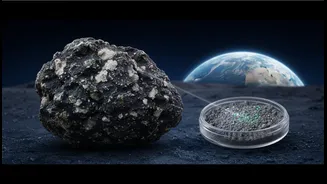
So how does a piece of the Moon end up in Antarctica? For billions of years, the Moon has been bombarded by asteroids. Some of these impacts are powerful enough to blast lunar rock fragments into space with enough force to escape the Moon’s gravity. Over thousands of years, some of these fragments are captured by Earth's gravity and fall to the surface as meteorites. ALHA 81005 was one such rock, discovered in the Allan Hills of Antarctica in 1982. While scientists knew it came from the Moon, they could never pinpoint its original location. The findings from Pragyan provide the first 'ground truth', connecting this well-studied meteorite to a specific type of terrain in the lunar highlands, solving a long-standing puzzle.
Unraveling the Moon's Violent Past
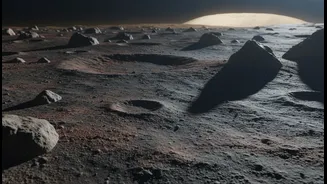
This discovery does more than just link a meteorite to a location; it provides new clues about the Moon’s chaotic formation. The high magnesium content at the Shiv Shakti site suggests the soil isn't just from the surface crust. Scientists believe this material was excavated from deep within the Moon during the cataclysmic impact that formed the South Pole-Aitken basin—one of the largest and oldest impact craters in the solar system, located about 350 km from the landing site. This evidence supports the 'Lunar Magma Ocean' hypothesis: the idea that the early Moon was covered in a sea of molten rock. As this ocean cooled, lighter minerals like anorthosite floated to the top to form the crust, while heavier minerals sank to form the mantle. The Pragyan data suggests an ancient impact dredged up some of this deeper material and scattered it across the surface.
Another Landmark Achievement for ISRO
This finding is a major scientific return from the Chandrayaan-3 mission, cementing its legacy beyond the historic landing itself. By providing a crucial link between in-situ measurements on the Moon and laboratory samples on Earth, ISRO has given scientists worldwide a new anchor point for studying lunar geology. It demonstrates the incredible capability of the Pragyan rover's instruments and the mission's value in answering fundamental questions about our solar system. This achievement not only elevates India's standing in the global space community but also paves the way for future missions to better target scientifically rich locations for sample collection and further exploration.