




What is This Personalised Vaccine?
Pharmaceutical giants Moderna and Merck have announced that their experimental vaccine, known as intismeran (or V940/mRNA-4157), succeeded in a large, late-stage trial. Unlike a traditional vaccine that prevents diseases like the flu, this is a therapeutic
vaccine designed for people who have already had high-risk melanoma. Its goal is to prevent the cancer from coming back after tumours have been surgically removed. The 'personalised' aspect is what makes it revolutionary. Scientists take a sample of a patient's surgically removed tumour and sequence its genetics to identify unique mutations. Using the same mRNA technology that powered many COVID-19 vaccines, they create a bespoke vaccine for that single patient, a process that takes about six weeks. This vaccine teaches the patient's own immune system to recognise and hunt down cancer cells specific to their tumour.
A 'One-Two Punch' Against Cancer
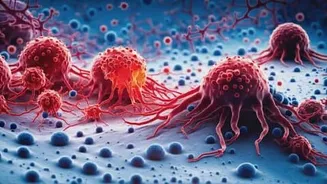
The vaccine isn't administered alone. In the trial, patients received it in combination with Keytruda (pembrolizumab), a well-established immunotherapy drug. Think of it as a coordinated attack. Cancer cells often develop a 'cloak of invisibility' to hide from the immune system. Keytruda works by blocking a protein called PD-1, effectively removing this cloak and allowing immune cells to 'see' the cancer. The personalised vaccine then acts like a training manual, teaching the immune system exactly what to look for—up to 34 unique markers (called neoantigens) from the patient's own tumour. This combination creates a powerful 'one-two punch': one drug unmasks the enemy, and the other tells the immune system precisely who to attack.
What the Landmark Trial Found
The Phase 3 trial, named INTerpath-001, enrolled 1,137 patients with high-risk melanoma (Stage IIB to IV) whose tumours had been completely removed by surgery. Patients were randomly assigned to receive either Keytruda alone (the current standard of care) or the combination of Keytruda plus the personalised vaccine. According to the companies, the combination treatment led to a "statistically significant and clinically meaningful" improvement in recurrence-free survival, meaning it extended the time patients remained cancer-free. It also improved distant metastasis-free survival, reducing the likelihood that the cancer would spread to other organs. While the detailed data has not yet been published, these topline results mark the first time a personalised mRNA cancer therapy has succeeded in a Phase 3 trial.
The Future of Cancer Treatment
Experts are calling this a 'landmark moment' and a 'new chapter in cancer care'. For years, the concept of a vaccine tailor-made for an individual's cancer was purely theoretical. This trial provides powerful proof that the principle works, opening the door for similar approaches in other cancers. Trials are already underway testing personalised vaccine technology against lung, bladder, and kidney cancer. This success could redefine how doctors approach treatment after cancer surgery, shifting focus to highly personalised, immune-boosting therapies to prevent recurrence. The success relies on a powerful combination of mRNA technology, genetic sequencing, and artificial intelligence, which helps identify the most effective targets for the vaccine.
What Happens Next?
Following these positive results, Moderna and Merck plan to present the full data at an upcoming international medical meeting. They will also begin discussions with regulatory bodies, like the US Food and Drug Administration (FDA), about filing for approval. An earlier attempt to seek accelerated approval based on smaller, mid-stage trial data was discouraged by the FDA, but these robust Phase 3 results provide a much stronger case. There is no firm timeline for when this treatment might become widely available to patients, as it must first go through the rigorous approval process. However, the success of the trial is a huge step forward, bringing this highly anticipated and innovative treatment much closer to becoming a clinical reality for patients fighting melanoma.