



For years, the conversation about artificial intelligence has been dominated by anxiety over job replacement. But as we look toward 2030, a more nuanced and optimistic forecast is emerging, one where technology elevates our most human qualities.
From Replacement to Collaboration
The initial
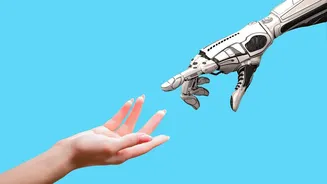
narrative surrounding AI was simple and frightening: robots are coming for our jobs. While it is true that AI and automation will displace some roles, recent analyses from institutions like the World Economic Forum and McKinsey reveal a more complex picture. They project that while millions of jobs will be disrupted, even more new roles will be created, leading to a potential net gain in employment. The focus is shifting from pure automation to augmentation, where AI handles repetitive, data-heavy tasks, freeing up human workers to concentrate on areas where we hold a distinct advantage. This collaborative model positions AI not as a competitor, but as a powerful tool that amplifies human capability. The most valuable professionals of the next decade will be those who learn to effectively partner with intelligent systems, guiding their output and applying the results strategically.
The Rise of 'Human-Centric' Skills
So, what skills will define the successful professional of 2030? The consensus points overwhelmingly toward abilities that AI cannot easily replicate. Often dismissed in the past as 'soft skills', qualities like empathy, communication, critical thinking, and creativity are now being recognized as essential 'human skills' for the new economy. According to a Workday study, a staggering 83% of business leaders believe AI adoption makes these human skills more important, not less. AI can process data, but it cannot replicate genuine emotional intelligence, build trust with a client, or navigate the complex social dynamics of a team. These abilities—to understand context, manage relationships, and reason through ethical dilemmas—are becoming the true differentiators in a workplace saturated with technology.
Where Humans Have the Upper Hand
AI excels at speed, scale, and pattern recognition based on existing data. Humans excel at everything else. The World Economic Forum notes that tasks requiring leadership, social influence, and curiosity have limited potential for automation because they rely on lived experience. Consider a few key areas: strategic decision-making in ambiguous situations, original problem-solving that requires 'out-of-thebox' thinking, and inspiring leadership. An AI can analyze a spreadsheet to identify financial trends, but it cannot rally a demoralized team, negotiate a delicate partnership, or invent a completely new product category. These functions require judgment, creativity, and a deep understanding of human motivation—qualities that remain firmly in our domain. The future of work isn't about doing a robot's job faster; it's about excelling at the tasks only a human can perform.
How to Future-Proof Your Career
Preparing for 2030 isn't about becoming a worldclass coder, though tech literacy is important. It's about consciously cultivating your human advantage. The first step is to embrace a mindset of continuous learning and adaptability. The World Economic Forum predicts that around 40% of core job skills will change by 2030, making the ability to reskill and upskill crucial. Actively seek out opportunities to develop your humancentric skills. Volunteer to lead a project to build leadership and influence. Engage in crossfunctional teams to improve collaboration and communication. Practice critical thinking by questioning assumptions and evaluating AIgenerated content rather than blindly accepting it. Pursuing interests outside of your core job, whether in the arts or humanities, can also foster creativity and a broader contextual understanding—skills that are increasingly valuable in a specialized world.