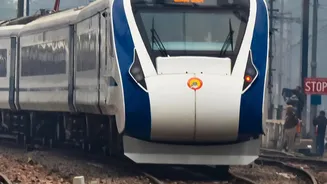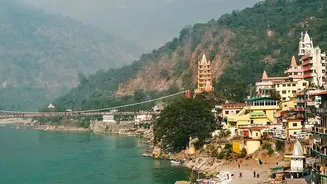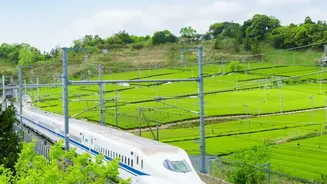






A New Era of Connectivity
Following the development of the Mumbai-Ahmedabad line, India is setting its sights on a new frontier for high-speed rail: the Northern Corridor. The Delhi-Varanasi High-Speed Rail (DVHSR) project is a centrepiece of this vision, planned as an approximately
813-km line that will connect the nation's capital with its spiritual heartland in Uttar Pradesh. Managed by the National High-Speed Rail Corporation Limited (NHSRCL), the project is one of seven high-priority corridors identified by the government. It aims to dramatically slash travel times, foster economic growth, and create an efficient transport backbone through one of India's most populous regions. Recent announcements in late 2026 confirm that the Prime Minister has approved the Northern Corridor, signalling a major step forward for the project.
The Route: Linking Capitals and Holy Cities
The proposed route for the DVHSR is designed for maximum impact, linking political, economic, and religious hubs. Starting from Sarai Kale Khan in Delhi, the line is planned to have 12 stations. Key stops will include Noida, the upcoming Jewar International Airport, Mathura, Agra, Etawah, Lucknow, Rae Bareli, Prayagraj, and Bhadohi before terminating in Varanasi. This alignment strategically connects major urban centres and pilgrimage sites, including a proposed spur line to Ayodhya. An underground station is also planned at Jewar Airport, integrating air and high-speed rail travel seamlessly. The corridor will primarily be an elevated structure, a design choice intended to enhance safety and minimize land-use conflicts.
From Half a Day to Under Four Hours
The most talked-about benefit of the bullet train is the staggering reduction in travel time. The journey from Delhi to Varanasi, which currently takes 11-12 hours by conventional rail, is expected to be cut to just around 3 hours and 33 minutes. Other key travel times are equally impressive: Delhi to Agra in just 59 minutes, Delhi to Lucknow in 2 hours and 12 minutes, and Varanasi to Prayagraj in a mere 33 minutes. These speeds, with trains operating at up to 320 km/h, will be achieved using technology similar to Japan's famed Shinkansen system, though the project is slated to be a 'Make in India' initiative. This will not only be a boon for business travellers and tourists but could also fundamentally change patterns of work and life along the corridor.
Current Status and Next Steps
As of late 2026, the Delhi-Varanasi corridor is in an advanced planning stage. The Detailed Project Report (DPR) has been submitted to the Ministry of Railways for review and will subsequently be sent to the Union Cabinet for final approval. Groundwork, including LiDAR surveys for finalizing the alignment, has already been a key focus. While no major construction has started, the government's approval of the Northern Corridor plan is a significant milestone that moves the project from a proposal to a sanctioned goal. The project is being planned in phases, with the Delhi-Varanasi section forming the first part.
Economic Impact and Future Potential
The DVHSR corridor is more than just a transportation project; it's a catalyst for regional development. By connecting the Golden Triangle tourist circuit (Delhi-Agra) with the spiritual centres of Mathura, Prayagraj, and Varanasi, it is expected to provide a massive boost to tourism. Furthermore, the high-speed link will enhance business connectivity between Delhi/NCR and Uttar Pradesh's major cities, potentially attracting investment and creating jobs. The project itself is a mammoth undertaking with an estimated cost of around ₹1.71 to ₹2.28 lakh crore, representing a major investment in the region's infrastructure. The success of this corridor will serve as a template for future high-speed lines, including a proposed extension from Varanasi to Patna and Guwahati, creating a truly national network.